


Las Vegas turf can reach blistering temperatures, sometimes up to 150 or even 180 degrees, during the peak of summer, even if the air itself is “just” a sweltering 100. If you’ve ever stepped onto artificial grass in your backyard here on a July afternoon, you know it’s not just a little warm. It can actually burn your feet. This isn’t just an inconvenience, it’s a real safety issue for kids, pets, or anyone hoping to hang out outside.
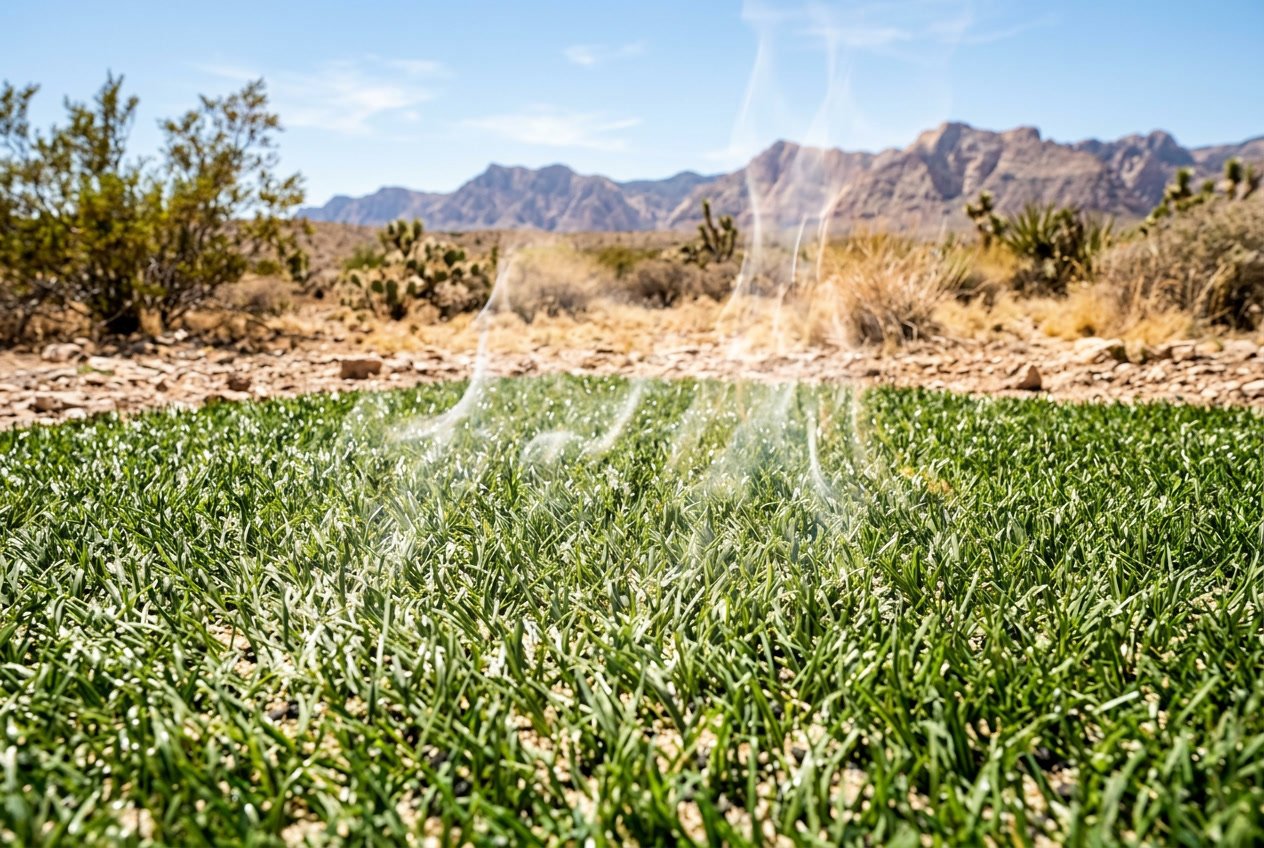
Artificial turf gets exceptionally hot in Las Vegas because it soaks up and holds onto heat from the desert sun, with dry air and clear skies making it worse. Turf surfaces often end up 50 to 70 degrees hotter than the air around them. The mix of our climate and the plastics used in synthetic grass is basically a recipe for heat overload. Figuring out why helps you pick the right solutions for your own space.
But you don’t have to just put up with burning-hot turf as a fact of Las Vegas life. Let’s dig into what’s going on, why it gets so bad here, and some practical ways to keep your artificial lawn a little more bearable, even when it feels like the sun’s out to get you.
Desert Climate and Sun Exposure in Las Vegas
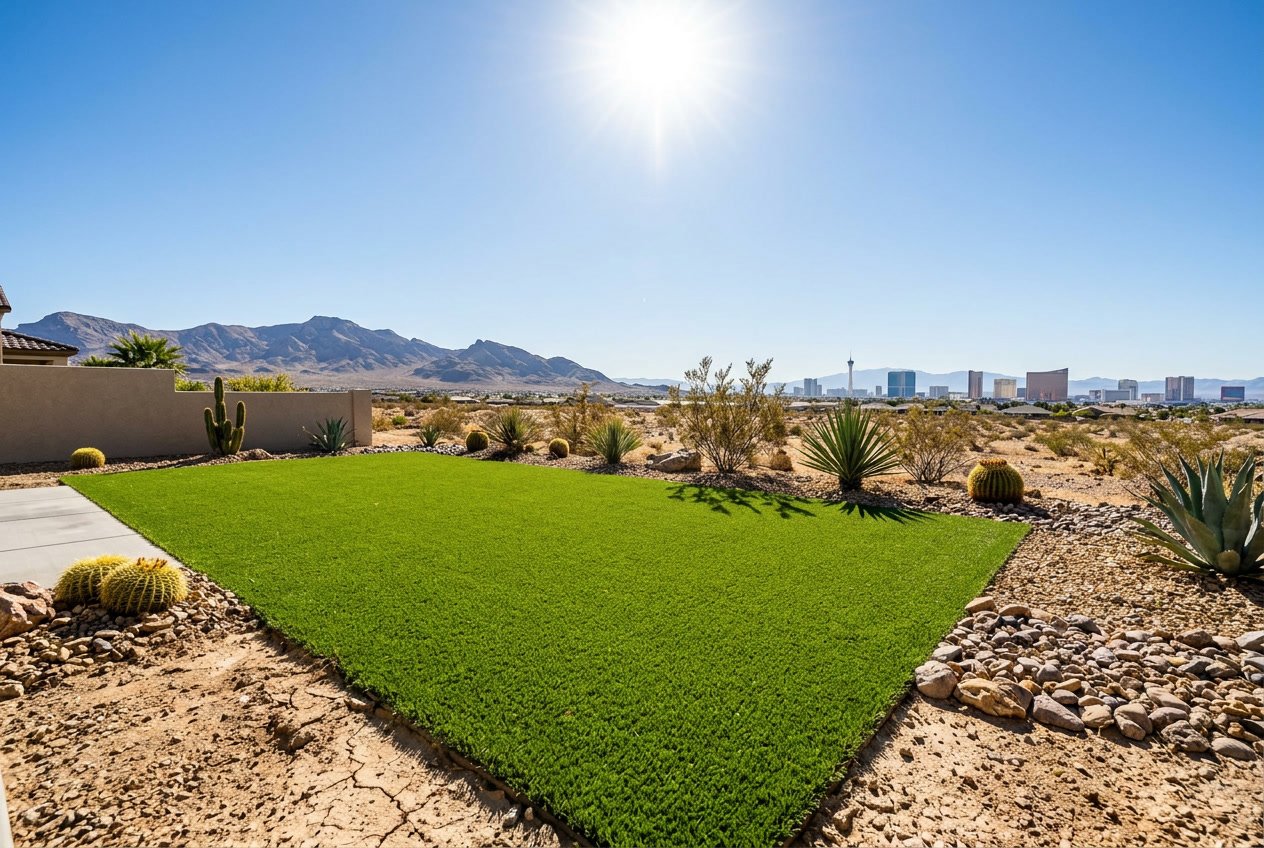
Las Vegas is smack in the Mojave Desert, which means relentless heat and sunlight that push outdoor surfaces to their limits. The combo of intense solar radiation and all the concrete and glass around here just ramps things up even more for your turf.
Intense Solar Radiation and Clear Skies
Your turf sits under direct sun most days of the year. With barely any clouds and low humidity, there’s almost nothing in the air to block or scatter the sun’s rays. That means more UV and infrared heat pounding down on everything at ground level.
It’s not unusual for summer temps to soar past 100°F, and 115°F isn’t unheard of. Surfaces like turf, concrete, and even regular grass can get much hotter than the air, especially during those brutal afternoon hours.
And because the desert air is so dry, it doesn’t help cool things down. There’s just no moisture to slow the heating or help things cool off at night, so once surfaces absorb heat, they hang onto it.
Urban Heat Island Effects
All the buildings, roads, and hardscapes in Vegas neighborhoods trap heat in what’s called the urban heat island effect. These materials soak up sunlight all day and then slowly leak it back out at night, keeping everything warmer than the open desert would.
Stuff like concrete driveways, stucco walls, and paved streets reflect extra heat onto your turf. So your artificial grass isn’t just dealing with the sun, it’s also getting blasted from the sides by heat bouncing off nearby surfaces.
With houses packed close together, airflow is limited. Less breeze means the heat just lingers, making your turf stay hot well into the evening compared to what you’d see in wide-open spaces.
How Artificial Grass and Turf Absorb Heat
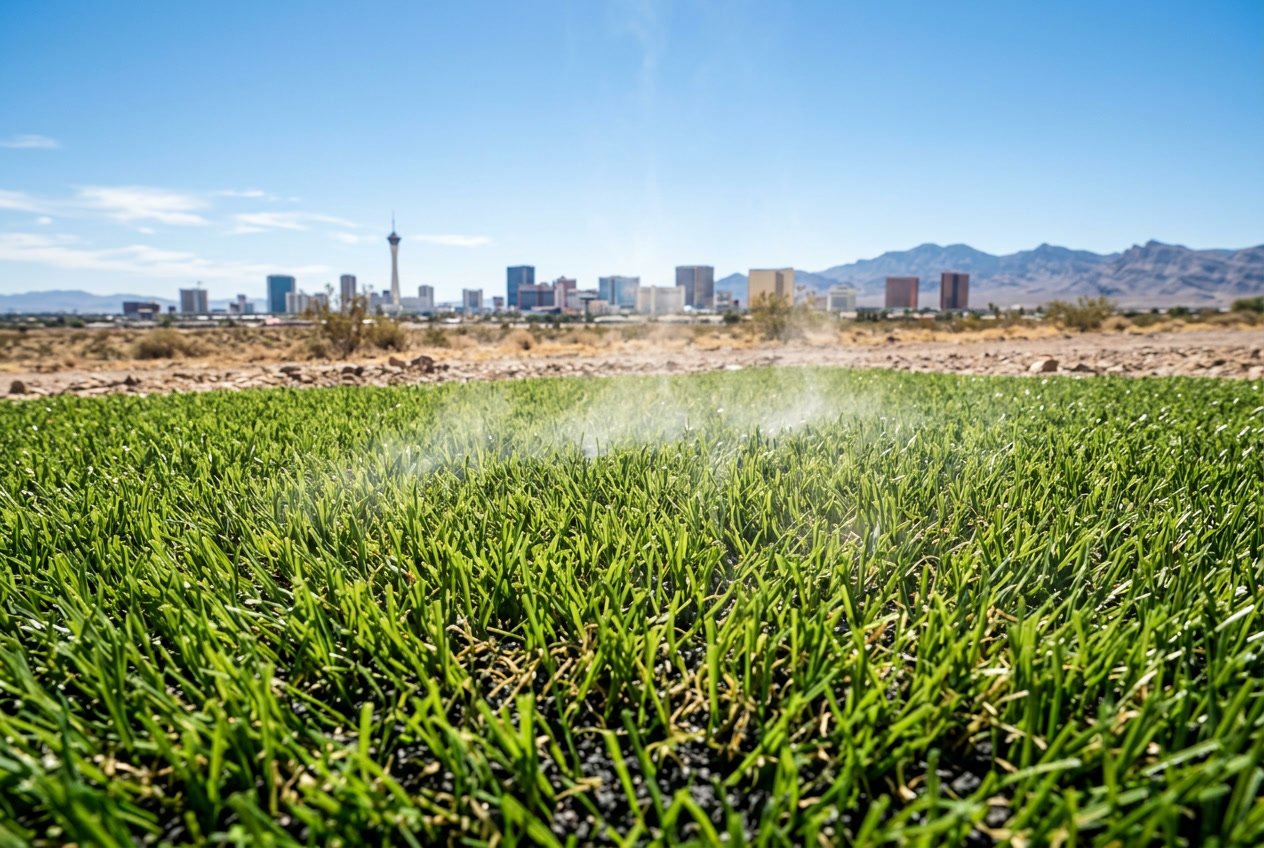
Artificial turf doesn’t behave like real grass when it comes to heat. The plastics and rubber used in turf trap warmth, and there’s no natural cooling like you get from living plants.
Material Composition and Heat Retention
Most synthetic grass is made from polymers like polyethylene, polypropylene, or nylon. These are great for durability and resisting UV damage, but they’re also a little too good at soaking up sunlight.
When the sun hits your turf, the fibers and the backing, usually latex or polyurethane, just hold onto that heat. Infill materials like silica sand or crumb rubber can trap even more warmth, and they don’t let go of it quickly.
The way turf is built, it basically acts like a heat sponge. Natural soil under real grass lets heat escape downward, but the backing on synthetic grass keeps it all near the surface. Not ideal if you’re hoping for a cool patch of green.
It’s not just theory, either, studies have shown turf can hit 180°F or higher on a hot Vegas afternoon. The materials themselves are what cause your lawn to heat up so fast and stay warm for so long.
Why Turf Gets Hotter Than Natural Grass
Real grass cools itself off with evapotranspiration, which is a fancy way of saying it sweats. The moisture from the soil and grass blades evaporates, pulling heat away and keeping things comfortable.
Artificial turf? It doesn’t sweat. There’s no water to evaporate, so it just keeps getting hotter. UNLV researchers found that artificial turf fields could be up to 69 degrees hotter than irrigated natural grass. That’s a huge difference.
Plus, natural grass creates a bit of shade at ground level, thanks to overlapping blades and soil insulation. Synthetic grass doesn’t have that layered protection.
Without these natural cooling tricks, your turf is at the mercy of the sun, unless you intervene with shade, water, or airflow.
Roles of Color and Fiber Density
Darker turf colors soak up more heat. If your artificial grass is a deep green or has black fibers, you’ll notice it gets much hotter than a lighter shade or tan option.
Fiber density matters, too. Really dense turf with tightly packed blades traps air, which heats up and can’t escape easily. That makes the surface even warmer.
Shorter blades leave more of the backing exposed to the sun, while longer blades might shade things a bit but also trap more hot air. It’s a balancing act, and honestly, not all turf is created equal when it comes to staying cool.
Some manufacturers add reflective treatments to their turf to help deflect UV rays. While this can help protect the fibers from fading, it doesn’t always make a dramatic difference in surface temperature.
Specific Challenges with Turf Heat in Las Vegas
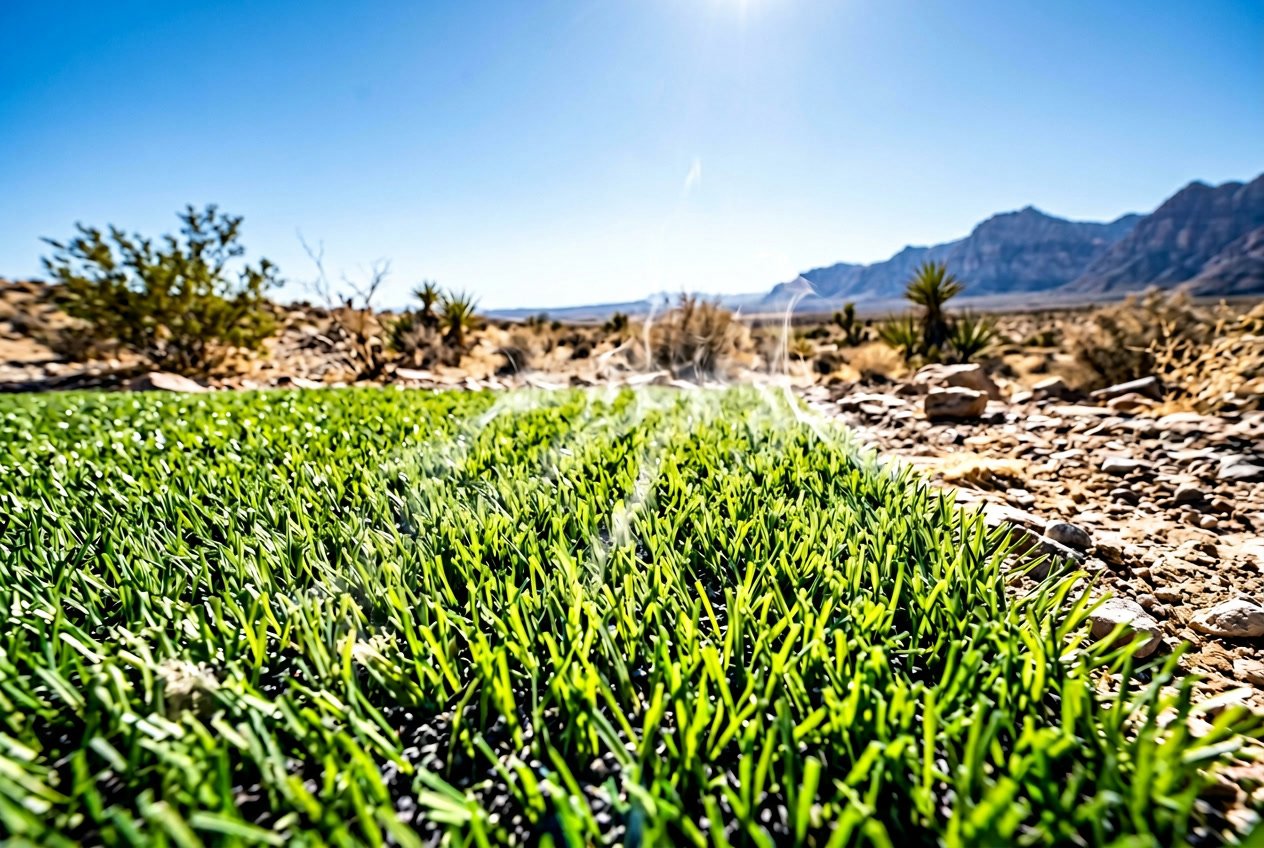
Artificial turf in Las Vegas faces heat that’s not just uncomfortable, it can be downright dangerous. We’re talking about temperatures that can literally burn skin and paws, and even shorten how long your turf lasts.
Peak Surface Temperatures in Summer
It’s not unheard of for artificial turf here to hit 165 to 169 degrees Fahrenheit in the middle of a summer day. That’s with air temps around 107. So your turf might be 60 degrees hotter than the air you’re breathing.
Green synthetic grass absorbs sunlight much faster than other surfaces. While real grass might hover around 104 degrees, artificial turf can heat up in minutes under direct sun. The plastic blades just don’t transfer heat downward, so it piles up at the surface.
Noon to 4 PM is usually the danger zone. Touch your turf then, and you’ll probably pull your hand away fast.
Burn Risks for People and Pets
Once the surface gets above 123 degrees, burns are possible with even short contact. In Las Vegas, your turf can easily surpass that by 46 degrees or more in the summer. Kids and pets are especially at risk, bare feet and paws just aren’t built for that kind of heat.
Dogs and cats, in particular, have sensitive paw pads that can get injured in seconds. Always check the turf with your hand before letting pets out in the afternoon, or you might end up with a vet bill (and a very unhappy dog).
At 165 degrees, burns can happen almost instantly. It’s really best to keep everyone off the turf during the hottest part of the day.
Impact on Turf Longevity
All that heat isn’t just bad for people and pets, it’s hard on the turf itself. Repeated cycles of extreme heating and cooling can make the fibers brittle and cause the color to fade faster. The backing and infill can also start to degrade under the stress.
UV rays plus high temps are a tough combo. You might see seams separating, fibers breaking down, or color fading way sooner than the 8 to 15 years most manufacturers promise. In Las Vegas, turf just ages quicker.
Regular exposure to 160-degree heat puts a lot of strain on adhesives and stitching. If you’re not careful, you could be looking at repairs or replacement sooner than you’d like.
Innovative Technologies for Cooler Synthetic Lawns
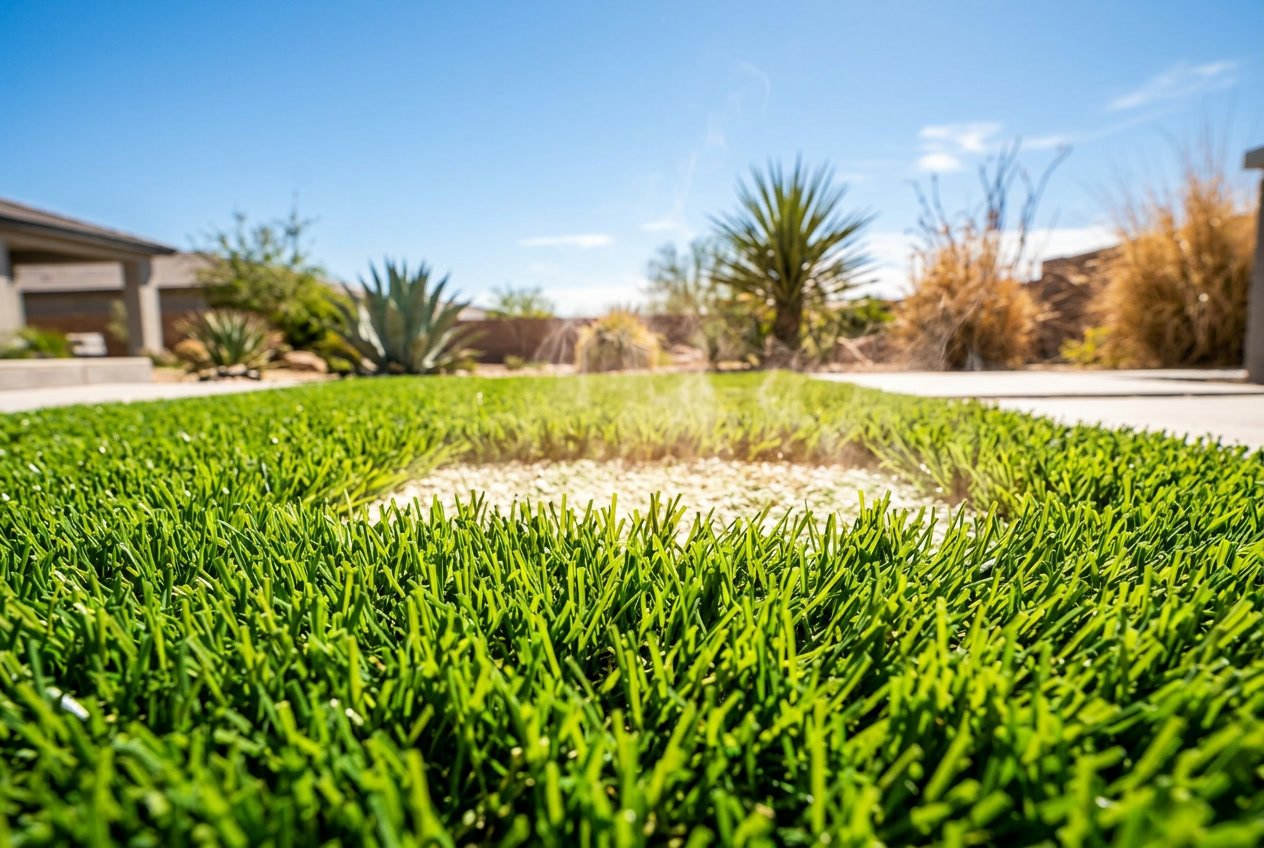
Thankfully, turf manufacturers haven’t ignored this problem. There are some clever technologies out there aimed at keeping artificial grass cooler, though none are a magic fix for desert summers.
Infrared-Reflective and UV-Protective Fibers
Infrared-reflective (IR) turf fibers are one of the bigger innovations. They’re designed to bounce back some of the sun’s infrared rays instead of absorbing them, which can drop your lawn’s surface temp by 10-15 degrees compared to regular turf.
UV protection is another bonus, it helps the fibers last longer under the sun and can contribute a bit to heat management. Many modern products combine both IR-reflective and UV-protective features in the blades themselves.
Basically, these fibers have special coatings or built-in compounds that reflect more heat away. It doesn’t make turf cool to the touch at noon in July, but it does help take the edge off during the worst hours.
Specialty Cooling Infills
Cooling infills are another option, these are materials you put between the turf blades, and they’re made to absorb less heat and release it faster than standard sand or rubber. Some use zeolite or other minerals, and a few are specially treated to stay cooler.
The infill helps stabilize the turf and can lower the surface temp by a few degrees. It’s not a huge change, but in the desert, every bit helps. Air circulation is key here; the right infill can stop hot spots from forming.
There’s a range of cooling performance depending on the infill, so it’s worth matching your choice to both your budget and how you actually use your yard.
HydroChill and Other Cooling Solutions
HydroChill is a specific infill that uses moisture for evaporative cooling. When you hose down your turf, these granules hold onto water and slowly release it as vapor, which can drop the temp by 30-50 degrees for a while.
Other similar products work on the same idea, they need a little water now and then to activate, but they still use way less than a real lawn would.
These cooling solutions work best as part of a bigger plan. The effect is temporary, and you’ll notice the most difference right after watering. They’re helpful, but not a total fix for the heat.
Design and Installation Strategies to Manage Turf Temperature
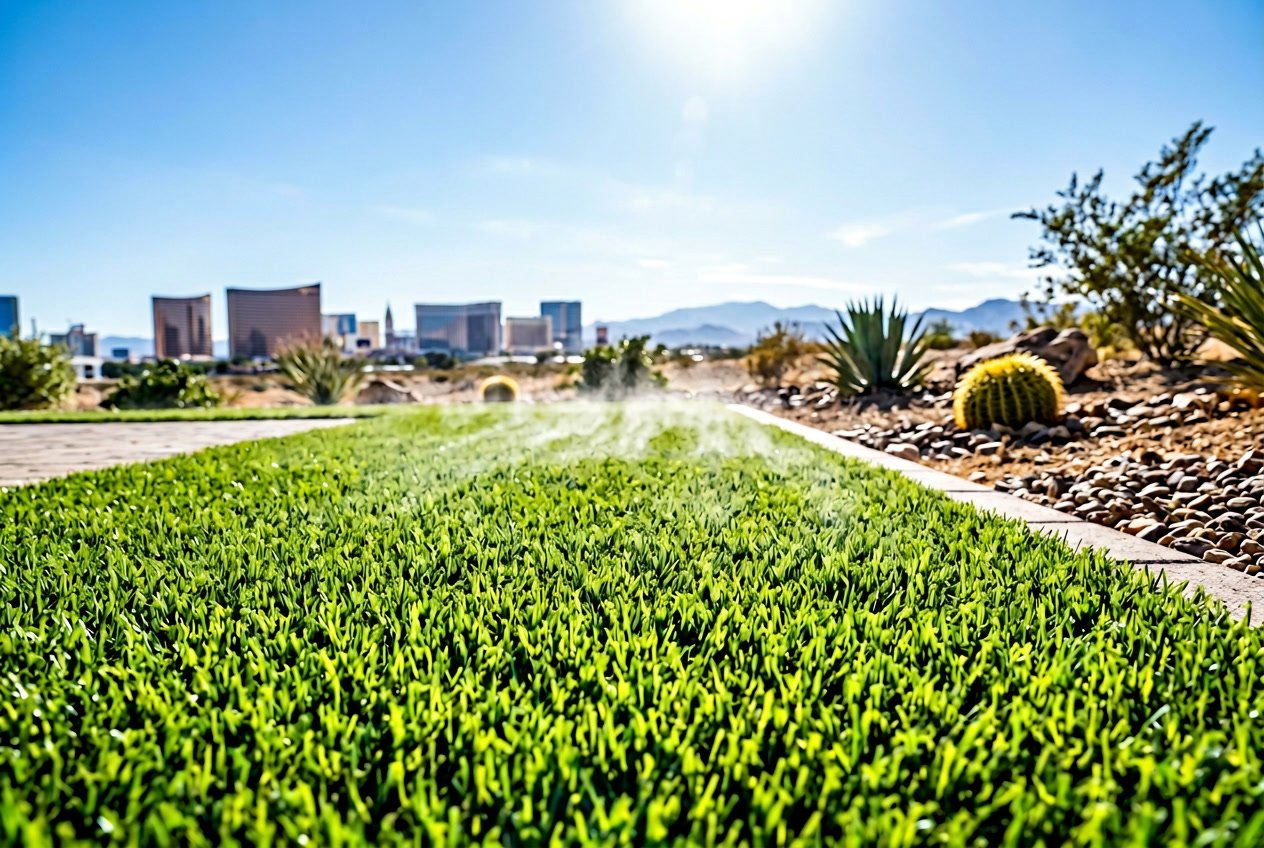
If you’re planning to install artificial grass in Las Vegas, thinking about heat management from the start really pays off. Design choices during installation can make your yard way more livable than trying to cool things down after the fact.
Maximizing Shade and Airflow
Shade is your best friend when it comes to cooler turf. Even partial shade can keep your grass 30-40 degrees cooler than areas in direct sun.
Pergolas and shade sails are solid options, they’re flexible and you can move them around as the sun shifts. Trees are great too, though they take a while to grow. Just a little shade during the hottest hours can make a big difference for bare feet.
Airflow matters, too. When you’re laying out your yard, try not to box in the turf with walls or dense landscaping. Leave some space for breezes to move through. The combo of shade and a little wind will keep your turf from turning into an oven.
If you want more details on the best turf materials and installation tips for Las Vegas, check outs Sparkly Turf got a lot of practical info and some honest opinions about what actually works in our climate.
Using Pavers and Mixed Materials
Breaking up big turf spaces with pavers and other materials creates natural cooling zones. Solid artificial grass areas tend to soak up and hold more heat than landscapes that mix in hardscape or stone.
Try alternating pavers with artificial turf in walkways or entertainment spots, this pattern disrupts heat buildup and gives you cooler places to step. Decorative stone borders, concrete paths, and other hardscape features break up the sun’s impact across your yard, making it feel less like a green frying pan in summer.
Mixing materials also helps with drainage and cuts down on how much artificial grass sits in direct sunlight. Plus, your yard just looks more interesting. It’s definitely easier to plan these transitions before you install, instead of scrambling to add them after the fact. For more inspiration, check out some ideas on sparklyturf.com.
Landscaping Techniques for Microclimates
Creating microclimates is really about designing zones with different temperature vibes. You can use plants, little hills, and where you place things to manage heat in your yard.
Plant beds next to your artificial turf act as natural barriers, helping block some of that reflected heat. If you pick desert-friendly plants or shrubs, you’ll get small pockets of cooler air, without guzzling water. It’s smart to put these planting beds on the south and west sides, where the sun’s usually harshest.
Adding some elevation changes or berms directs airflow and keeps heat from pooling in low spots. A good turf installer can grade these features in while they’re working. And don’t forget about how nearby walls or fences might bounce heat onto your artificial grass. Lighter-colored surfaces reflect less heat than dark ones, which gives you another way to manage surface temperature with a bit of planning.
Special Considerations for Putting Greens and Recreational Uses
Putting greens have their own heat issues since you’re right up against the surface for longer stretches. That makes picking the right materials and managing temperature extra important if you want to actually enjoy your green, not just admire it from the shade.
Heat Impact on Putting Green Turf
Putting green turf usually gets hotter than other artificial grass because it’s got a shorter pile and it’s packed in tighter. That dense, compact feel is great for ball roll, but it doesn’t let much air move underneath. On a summer day in Las Vegas, your putting green can easily hit 120 to 180°F. Yikes.
This kind of heat changes the way the turf plays. Hot surfaces get firmer, which can mess with ball speed and bounce. And honestly, it’s not much fun to kneel or walk barefoot out there when it’s scorching.
Temperature effects on putting greens include:
- Faster ball roll speeds on hot turf
- Reduced playability during the worst heat (11 AM to 5 PM)
- More wear and tear on your golf shoes and gear
- Uncomfortable surface for kneeling or touching
Choosing the Right Materials for Play Surfaces
Cooling infill is probably the biggest game-changer for managing putting green temperature. Some of these infills, like HydroChill or similar products, can drop the surface temp by 30 to 50°F. They work by absorbing heat and releasing it as moisture evaporates, pretty clever, honestly.
The type of backing on your turf matters too. Polyurethane backings tend to stay cooler and drain better than the usual latex. Blade composition plays a part as well; look for options with titanium dioxide or other reflective additives that help bounce solar radiation away.
| Material Component | Heat Reduction Benefit |
|---|---|
| Cooling infill systems | 30-50°F decrease |
| Reflective blade technology | 15-20°F decrease |
| Polyurethane backing | 10-15°F decrease |
Lighter turf blends, think olive, tan, or dual-toned, absorb less heat than deep emerald greens. It’s a small detail, but it makes a difference.
Maintenance Tips for Cooler Turf Surfaces
Regular maintenance can help keep your artificial grass cooler and more comfortable in the heat. Quick-cooling tricks and good material choices both matter here.
Rinsing and Temporary Cooling
When your turf gets too hot, a light rinse with the garden hose can bring the temp down fast, sometimes by 30 to 50 degrees in just a few minutes.
This trick is perfect if you need to use your lawn during the hottest part of the day. The cooling effect sticks around for maybe 20 to 60 minutes, depending on how hot and sunny it is. No need to drench the turf or make puddles; just a light misting will do.
Best practices for rinsing:
- Spray only when you’re about to use the area
- Stick to cool water, not ice cold
- Mist the whole surface lightly
- Try to time it 10-15 minutes before you head outside
Rinsing is a quick fix, not a replacement for other cooling strategies. If your turf’s in full sun without shade or airflow, it’ll heat up again in no time.
Routine Upkeep and Material Choices
Honestly, just brushing your turf every so often makes a difference. Go against the grain every few weeks, the blades stand up straighter, and you’ll notice the air moves through better, which means less heat lingering around.
Don’t overlook debris, either. Leaves, dirt, random bits from the yard, they all trap extra warmth right where you don’t want it. Especially in the summer, clearing them off once a week is a good habit.
Materials that impact turf heat:
- Infill type: Some cooling infills actually reflect heat instead of soaking it up.
- Blade color: Lighter shades don’t pull in as much sun, so things stay a bit cooler.
- Pile density: When there’s more space between fibers, heat can escape more easily.
One more thing: if you’ve got concrete or pavers next to your turf, keep those clean, too. They tend to hang onto heat and bounce it back onto your grass, especially after a hot day. A quick rinse now and then helps your whole yard feel a little more comfortable.