


Quick answer: it smells like dog pee because that is exactly what it is, soaked deep into the fibers and feeding bacteria. The high nitrogen and ammonia in dog urine crystallize in the turf backing and infill. Bacteria break it down and release the smell, which gets stronger with heat. Hosing or spraying does not reach the source. Pet-safe enzyme cleaning does. Call us for a free quote on a real cleaning, or keep reading for the full explanation.
Dog urine odors can make artificial grass less enjoyable for everyone. The smell happens because synthetic turf lacks the natural bacteria found in real grass that break down pet waste.
When dogs pee on artificial grass, the liquid can get trapped in the fibers and backing material, leading to unpleasant smells if not cleaned properly. Regular cleaning and maintenance helps prevent these odors from developing.
The good news is that artificial grass can work well with pets when properly maintained. Simple cleaning steps and the right products make it easy to keep synthetic turf fresh and odor-free, even with regular use by dogs.
Why Your Artificial Turf Smells Like Dog Pee

Artificial turf is a synthetic surface made to look and feel like natural grass. It consists of plastic fibers attached to a backing material, with infill material spread between the fibers to help them stand upright.
Unlike natural grass, artificial turf doesn’t have soil to absorb and neutralize waste. This makes it harder for the surface to naturally break down pet urine and other substances.
The synthetic fibers in artificial turf can trap liquids and bacteria. When dog urine gets trapped in these fibers, it creates an ideal environment for odor-causing bacteria to grow.
While artificial turf is known for being pet-friendly, its synthetic nature requires special maintenance to prevent odor buildup. Regular cleaning becomes essential since the turf lacks natural decomposition processes.
Key components of artificial turf:
- Synthetic grass fibers
- Backing material
- Infill (rubber granules or sand)
- Drainage holes
These materials provide durability and a grass-like appearance, but they also create spaces where urine can collect if not properly maintained.
Does Your Turf Smell?
At Sparkly Turf, we effectively remove pet odors and refresh your turf, restoring its pristine and clean look.

Common Reasons for Odor Development

Dog urine odors on artificial turf happen when pet waste isn’t cleaned up properly. The urine can get trapped in the turf fibers and infill material.
Poor drainage makes the problem worse. When urine can’t flow away properly, it sits in the turf backing and creates strong smells. This often happens with incorrect installation or clogged drainage holes.
Hot weather intensifies urine odors. The heat causes bacteria growth and makes smells more noticeable. The combination of sun, heat, and trapped moisture creates ideal conditions for odor development.
Lack of regular cleaning lets urine buildup occur. Without proper maintenance, the pet waste accumulates in the turf system over time.
Key factors that lead to odors:
- Inadequate drainage
- Poor installation
- Trapped moisture
- Insufficient cleaning
- Hot temperatures
- Bacterial growth
Regular rinsing helps prevent smell issues. Using enzymatic cleaners breaks down urine compounds and eliminates odor-causing bacteria.
Chemical Composition of Dog Urine

Dog urine contains several key chemical compounds that create strong odors. The main components are urea and ammonia, which release unpleasant smells when exposed to sunlight.
When dogs urinate on artificial turf, these chemicals don’t break down naturally like they would in regular soil. The urine contains high levels of nitrogen compounds that get trapped in the turf fibers.
The key components in dog urine include:
- Urea
- Ammonia
- Nitrogen
- Water
- Electrolytes
- Proteins
- Creatinine
These chemicals become more concentrated when a dog is dehydrated, leading to stronger chemical odors. The concentration affects how intense the smell becomes.
The nitrogen compounds in particular create persistent odors that can last for months without proper cleaning. Regular cleaning helps break down these chemical compounds before they have a chance to build up.
Interaction Between Turf Materials and Urine

Urea and ammonia in dog urine create strong odors when they interact with artificial grass. These chemicals stick to the turf fibers and infill material, especially in hot weather.
Unlike natural grass, artificial turf doesn’t absorb liquids well. The urine stays on the surface and gets trapped in the infill, which leads to bacteria growth and unpleasant smells.
The type of infill material plays a big role in odor control. Zeolite infill helps neutralize smells and absorbs moisture better than standard infill materials. This makes it ideal for areas with frequent pet use.
Common Problem Areas:
- Spots where dogs regularly urinate
- Areas with poor drainage
- Sections exposed to direct sunlight
- Places with inadequate cleaning
Regular maintenance helps prevent urine buildup. Proper turf installation with good drainage and the right infill material reduces smell issues. Quick cleaning after pets use the area also stops odors from developing.
Factors Influencing Smell Intensity

Bad odors from dog urine on artificial turf can vary in strength based on several key factors. Poor drainage systems make smells worse by trapping urine underneath the turf instead of letting it flow away.
The number of dogs using the area affects smell intensity. Multiple pets using the same spots creates stronger odors that build up over time.
Weather plays a big role too. Hot, humid days make urine smells more noticeable as heat increases bacterial growth. Trapped moisture under the turf surface can make smells linger longer.
The cleaning schedule makes a huge difference. Weekly cleaning helps prevent odor buildup, while neglecting maintenance lets smells get worse.
Key Factors Affecting Smell:
- Quality of drainage system
- Number of pets using the area
- Temperature and humidity levels
- Frequency of cleaning
- Type of infill material used
- Age of the turf installation
The type and quality of installation also matters. Proper grading and base compaction during installation helps prevent urine from pooling underneath.
Preventive Measures for Turf Odor

Regular cleaning is key to preventing dog urine smells on artificial turf. Weekly rinsing with a garden hose helps remove urine before odors can develop.
Proper drainage systems are essential for artificial grass areas used by pets. Good drainage prevents urine from pooling and causing persistent odors.
Pet owners can apply enzymatic cleaners specifically designed for artificial turf. These products break down the compounds in urine that cause unpleasant smells.
Recommended Maintenance Steps:
- Rinse turf thoroughly once per week
- Clean up pet waste promptly
- Apply pet-safe deodorizers monthly
- Check drainage systems regularly
- Deep clean every 3-4 months
Professional cleaning services can help with stubborn odors. They use specialized equipment and commercial-grade deodorizers to eliminate tough smells.
Installing antimicrobial infill materials can provide extra protection against odors. These materials help prevent bacteria growth that contributes to bad smells.
Effective Cleaning Techniques
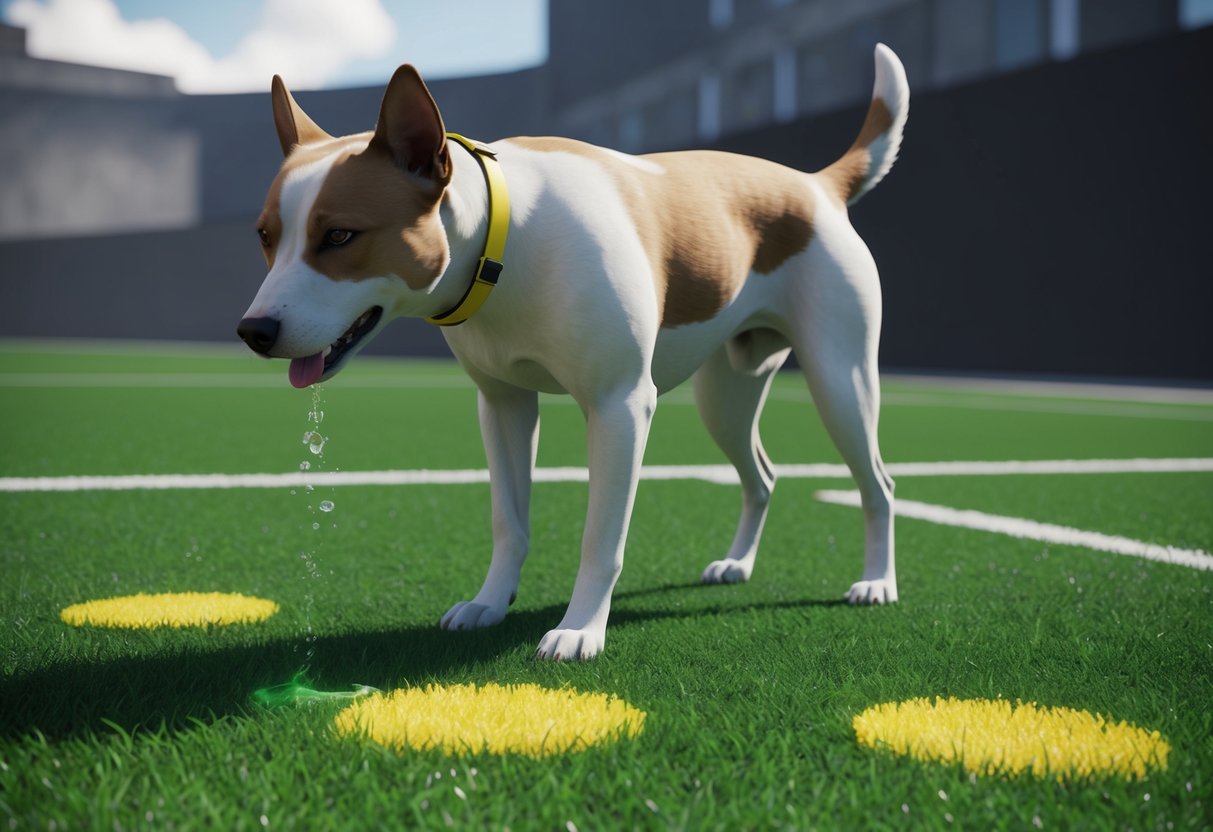
Start by thoroughly rinsing the affected area with a garden hose. Use a spray nozzle to create pressure that helps flush out urine trapped in the turf fibers.
Enzyme-based cleaners work best for breaking down urine compounds and eliminating odors. Apply the cleaner generously to the smelly areas and let it sit for 5-10 minutes.
A simple DIY solution combines equal parts water and white vinegar. This mixture helps neutralize odors naturally, though it may need more frequent reapplication than enzyme cleaners.
Essential cleaning tools:
- Garden hose with spray nozzle
- Enzyme-based turf cleaner
- Soft bristle brush
- Clean towels or rags
Regular maintenance is key to preventing odor buildup. Rinse affected areas immediately after pets urinate and perform a deep clean monthly.
Avoid using harsh chemicals or bleach-based products, as these can damage the turf fibers and backing. Proper cleaning techniques preserve the turf’s integrity while keeping it fresh and odor-free.
For stubborn smells, use a soft brush to work the cleaning solution into the turf fibers. This helps ensure the cleaner reaches all affected areas.
Professional Solutions for Odor Removal

Professional cleaning services use truck-mounted equipment to deep clean artificial turf and remove stubborn urine odors. These machines apply controlled pressure to break down urine molecules and extract them completely from the turf fibers.
One effective solution is to replace old infill with odor-fighting varieties. Anti-microbial infill materials help prevent bacteria growth and neutralize odors at their source.
Professional cleaners use specialized enzymatic solutions that are stronger than retail products. These commercial-grade cleaners break down urine compounds more effectively than basic household cleaners.
Benefits of Professional Cleaning:
- Deep extraction of trapped odors
- Restoration of turf appearance
- Long-lasting results
- Proper chemical application
- Industrial-grade equipment
Regular professional maintenance can keep artificial turf fresh and odor-free. Experts recommend scheduling deep cleaning services 1-2 times per year, depending on pet usage and weather conditions.
Professional cleaners also inspect drainage systems and base materials to ensure proper water flow. Poor drainage can trap urine and cause persistent odors that regular cleaning cannot fix.