


Artificial turf is a popular choice for many homeowners, providing a low-maintenance and visually appealing alternative to natural grass. However, it is not immune to the occasional spills and stains that are bound to happen. Knowing how to properly remove these stains will ensure that your artificial turf remains clean and in good condition.

There are several methods you can use to treat and remove stains on artificial turf. From household items like soap and water, to more specialized cleaning solutions such as ammonia or vinegar, each technique has its own unique benefits. In this article, we will explore some easy ways to clean different types of stains and maintain the appearance and durability of your artificial grass.
Preventative Measures for Stain Prevention

Artificial turf is a popular choice for homeowners and sports field managers because of its durability and low-maintenance characteristics. However, stains can occur and prolonging the life and appearance of your artificial turf requires regular care. This section highlights preventive measures to keep your turf stain-free.
Routine Maintenance
Performing routine maintenance helps to prevent the build-up of dirt, debris, and stains. Some regular maintenance practices to follow include:
- Brushing: Use a stiff brush to keep the turf fibers upright and prevent matting. Brushing ensures that dirt and debris are removed, reducing the chances of stains.
- Rinsing: Rinse the turf with water periodically to wash away dust, dirt, and residues.
- Spot cleaning: Remove any visible stains or spills using a mild detergent and water mixture. Gently scrub the affected area and rinse thoroughly.
Immediate Action for Spills
Taking immediate action when spills occur increases your chances of successfully removing stains. The key to effective stain removal is to act quickly:
- Blot the spill: Use a clean cloth or paper towel to absorb as much liquid as possible.
- Apply a mild detergent: Mix a solution of mild detergent and water. Lightly scrub the affected area with a soft brush.
- Rinse thoroughly: After treating the stain, rinse the area using a garden hose or bucket of water to remove any remaining detergent.
By incorporating these preventative measures, you can maintain the appearance and longevity of your artificial turf.
Identifying Types of Stains

Artificial turf is a great low maintenance addition to your yard, but it can still get dirty or stained. Accidents happen, and knowing the type of stain you’re dealing with is essential to treating it effectively. Here are the three main categories of stains you might encounter on artificial turf:
Organic Stains
Organic stains usually come from natural sources like food, beverages, or pet waste. Some common examples include:
- Grass or plant debris
- Pet urine or feces
- Fruit or vegetable spills
- Drink spills (soda, wine, coffee, etc.)
To treat organic stains, promptly scoop up any solids and rinse the area with a mixture of mild soap and water.
Inorganic Stains
Inorganic stains are the result of non-organic materials coming into contact with your turf. These stains include:
- Chalk or paint
- Dirt or mud
- Rust or metal debris
For inorganic stains, use a mild detergent and water mixture to scrub the area. You can also find specialized cleaning products designed to tackle specific inorganic stains.
Oil-Based Stains
Oil-based stains come from substances like grease, motor oil, or suntan lotion. These stains might require extra care to remove. Some examples include:
- Grease or oil spills from vehicles or machinery
- Sunscreen or tanning oil
- Cooking oil or butter from outdoor grilling
To remove oil-based stains, use a paper towel to absorb as much of the grease as possible, then spray the affected area with a mild detergent and warm water mixture. Let it soak for a few minutes, rinse, and allow it to air dry.
Remember, the key to successfully treating a stain is identifying its type and handling it accordingly. The sooner you act, the better your chances of preserving the appearance and longevity of your artificial turf.
Cleaning Agents and Tools
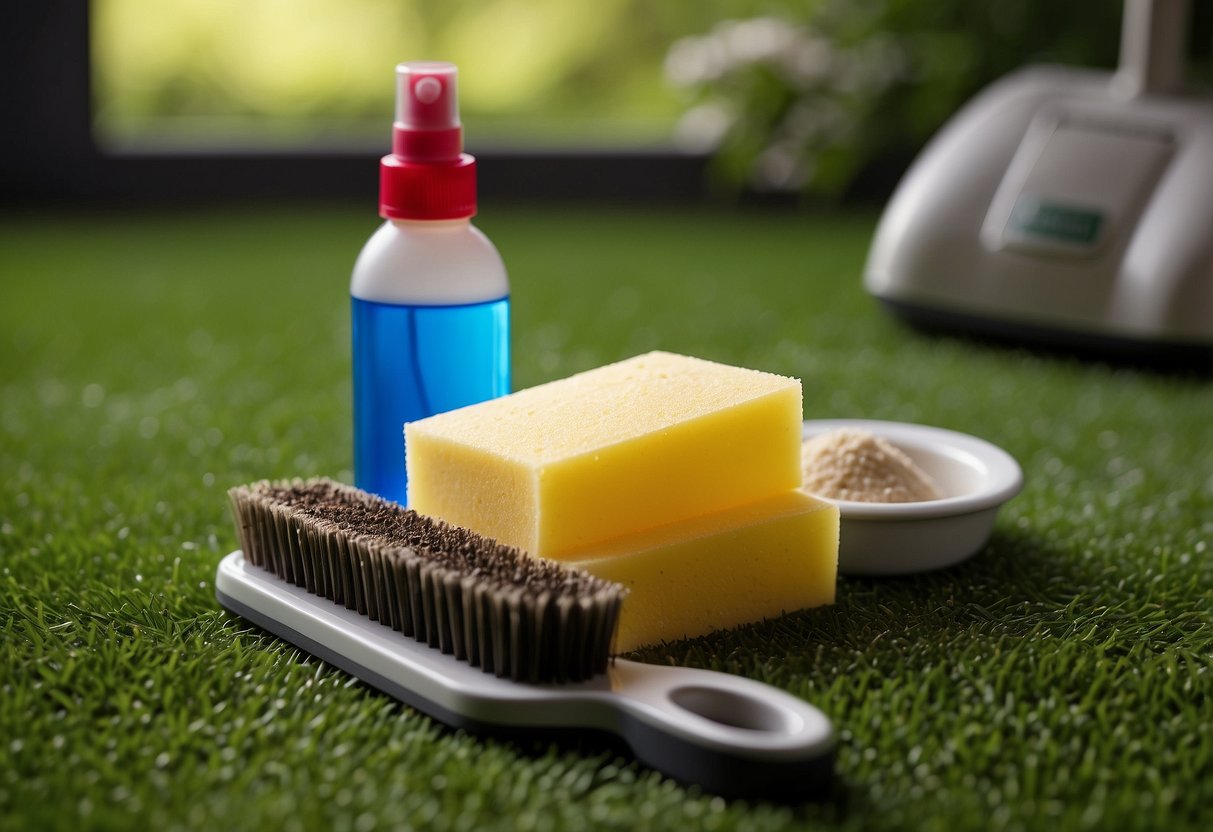
When it comes to removing stains from artificial turf, choosing the right cleaning agents and tools is essential. In this section, we will discuss eco-friendly soaps, commercial turf cleaners, and brushes and equipment to help you tackle tough stains and keep your artificial grass looking pristine.
Eco-Friendly Soaps
Using an eco-friendly soap is an excellent choice for maintaining your artificial turf while being mindful of the environment. Many eco-friendly soaps are biodegradable, non-toxic, and gentle on your artificial grass. When using soap, mix it with water and gently scrub the stained area. Afterward, rinse the turf thoroughly to remove any residue. Remember to always follow the manufacturer’s instructions for proper dilution and application.
Examples of eco-friendly soaps:
- Castile soap
- Vegetable-based soap
- Plant-based detergent
Commercial Turf Cleaners
For more stubborn stains, consider using a commercial turf cleaner. These cleaners are specifically designed to remove various types of stains from artificial grass.
Make sure to choose a cleaner suitable for your type of turf and follow the instructions carefully. Some popular commercial turf cleaners may require dilution, while others can be applied directly to the stained area.
Brushes and Equipment
Using the right brushes and equipment will make the cleaning process more effective and efficient. A soft-bristle brush or a sponge can be used for gently scrubbing the stained area. Avoid using wire brushes or abrasive materials, as they may damage your artificial turf.
Here are some basic tools you may need:
- Soft-bristle brush
- Sponge
- Hose or watering can for rinsing
- Bucket for mixing cleaning solutions
Step-by-Step Stain Removal Process
Step 1: Identify the type of stain. Before attempting to clean your artificial turf, it is essential to know what caused the stain. Common causes include pet waste, food spills, and ink or paint. Knowing the type of stain will help you choose the right cleaning solution and method for the task.
Step 2: Pick a cleaning solution. Based on the stain’s cause, select a suitable cleaning solution. For example, for general stains, a mix of mild soap and water works well. For more stubborn stains, such as marks from colored markers, you might need a solution with white vinegar and dish soap.
Step 3: Apply the solution. Once you have your cleaning solution, apply it to the stained area. You can use a spray bottle, cloth, or sponge, depending on the size and location of the stain. When applying the solution, make sure to work it into the fibers of the artificial turf to ensure thorough cleaning.
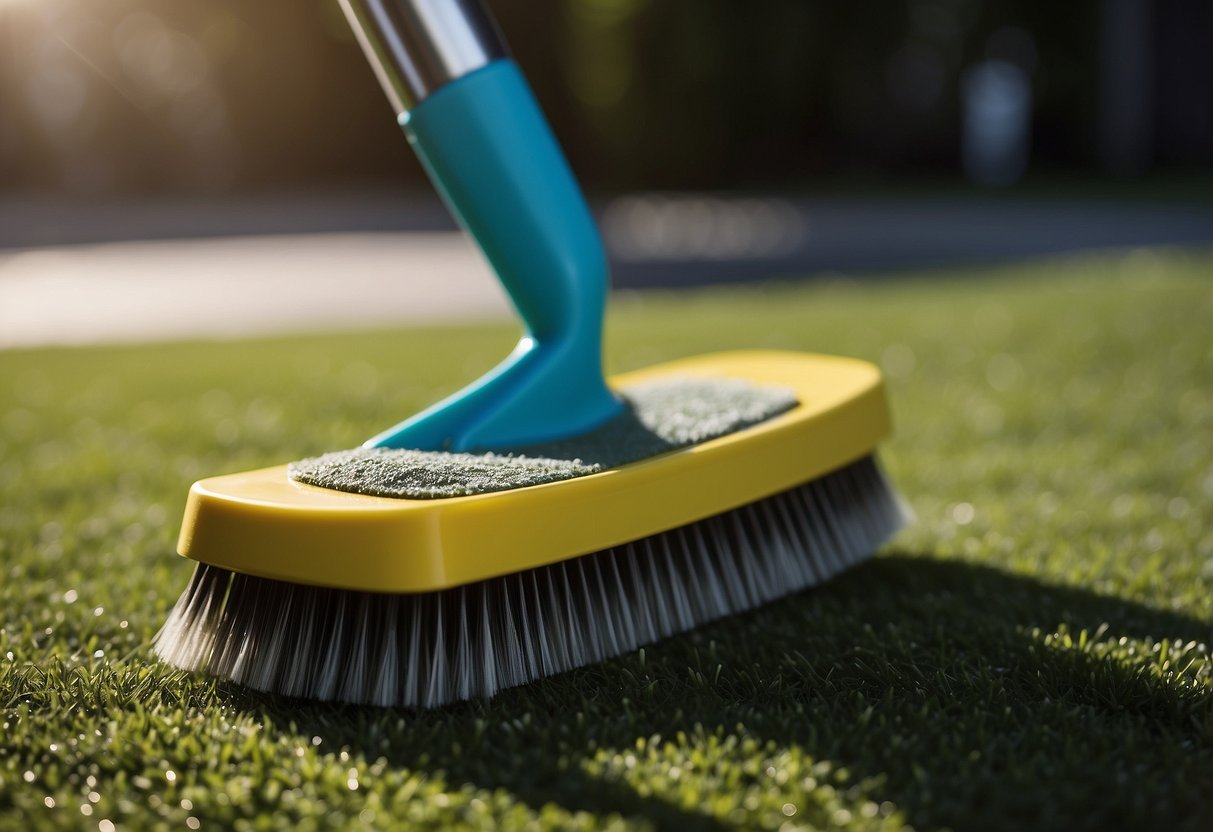
Step 4: Scrub gently. Using a soft-bristle brush, scrub the stained area in a gentle back-and-forth motion. Avoid scrubbing too hard, as this can damage the artificial fibers. The goal is to loosen the stain without causing damage to your turf.
Step 5: Rinse the area with water. After scrubbing, rinse the area with fresh water to remove any residue from the cleaning solution. Ensure to use cool water, as hot water might damage your artificial turf. If necessary, use a wet/dry vacuum to remove excess water from the area.
Step 6: Allow the area to dry. Let the cleaned area air dry completely before using it again. You can speed up the drying process by placing fans or using a leaf blower to remove excess moisture.
By following these simple steps, you can maintain the appearance and longevity of your artificial turf with ease. Remember that proper care and regular maintenance will prevent most stains from becoming a problem and keep your turf looking great for years to come.
Post-Cleaning Care

After you’ve successfully removed stains from your artificial turf, it’s essential to take proper care of your lawn to maintain its appearance and longevity. Here are some post-cleaning care tips to keep your artificial grass looking great.
Regularly brush your turf: It is crucial to brush your turf using a soft-bristle brush at least once a month. Gently brushing helps to prevent the grass blades from flattening and keeps the infill evenly distributed.
Remove debris: Ensure you remove leaves, twigs, and any other debris that may accumulate on your artificial grass. Using a leaf blower or a plastic rake can make this task quick and easy.
Spot check for stains: It’s helpful to routinely check your turf for any new stains or spills. The sooner you clean up spills or stains, the easier they will be to remove.
Monitor high-traffic areas: Keep an eye on areas of your artificial grass that experience more foot traffic, as these may show signs of wear more quickly. Consider rotating any furniture, play equipment, or other objects on your turf to distribute the wear more evenly.
Prevent weed growth: Although artificial grass generally discourages weed growth, occasional weeds may still find their way through the surface. Remove them promptly to avoid potential damage to your turf.
Professional Services for Stain Removal

Hiring a professional cleaning service can be a smart choice if you’re looking to remove stains from your artificial turf effectively while saving time. These experts have the proper knowledge, experience, and tools to handle a variety of stains. Here’s what you can expect when you opt for professional assistance.
First, professionals will evaluate the type of stain and the severity of the problem. Different stains require different treatments, so identifying the stain helps in deciding the appropriate removal technique. For example, stains from spilled drinks can be dealt with using soap and water, whereas stubborn residues may require a three percent ammonia solution for more effective results.
Another advantage of hiring professional services is that they have access to advanced and specialized equipment. This may include powerful truck-mounted cleaning systems, commercial-grade steam cleaners, or eco-friendly cleaning products. Using such equipment can help remove stains faster and more efficiently than standard cleaning methods.
In addition to their expertise and equipment, professional services often offer flexible scheduling options and competitive pricing. Be sure to Get My Free Quotes from multiple companies to find the one that suits your budget and specific needs.