


Keeping your artificial turf clean is important for its look and longevity. Many homeowners wonder if pressure washing is a good option for cleaning their synthetic grass. We’ve looked into this common question to help you make the best choice for your lawn.
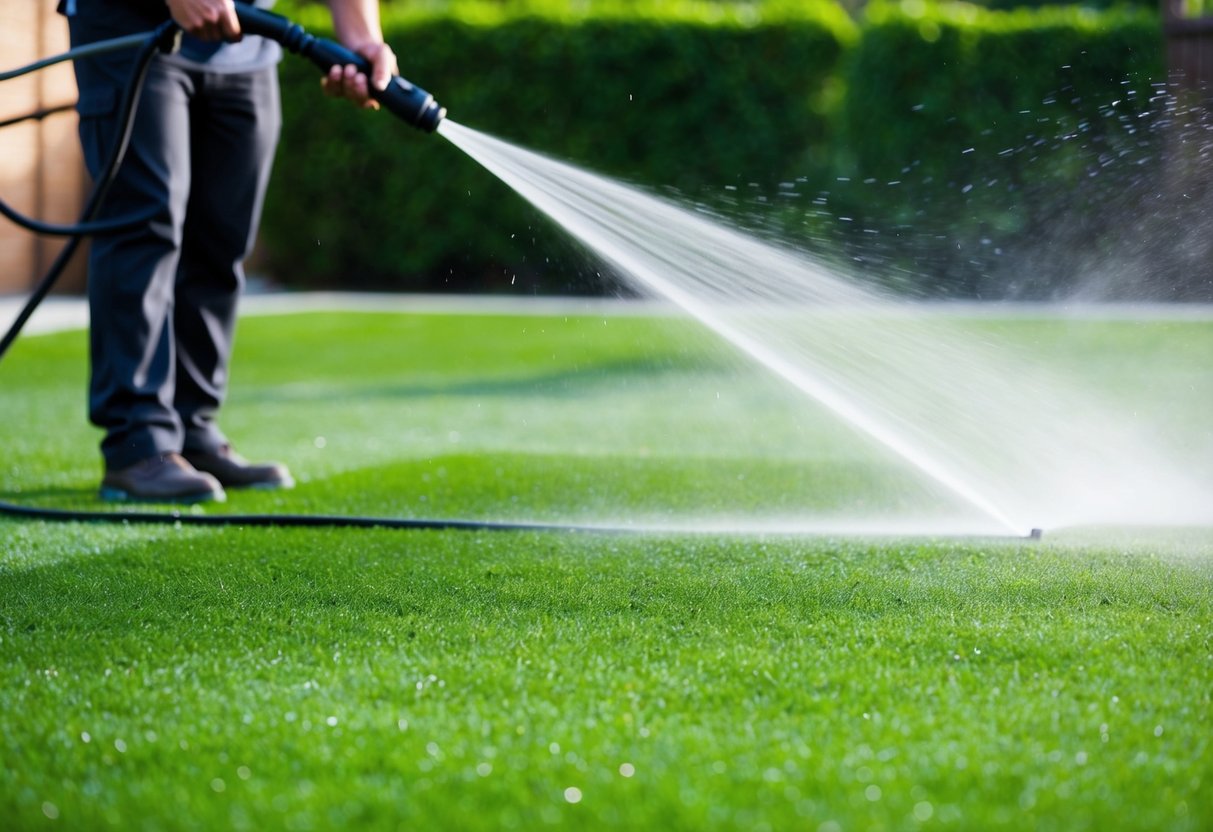
You can pressure wash artificial turf, but it’s not always the best cleaning method. While pressure washing can remove dirt and debris quickly, it may also damage the turf if not done carefully. Low-powered pressure washing can be okay in some cases, but there are often gentler and safer ways to clean your artificial grass.
We’ll explore the pros and cons of pressure washing turf, as well as some alternative cleaning methods that can keep your lawn looking fresh. By understanding the right approach, you can maintain your artificial turf effectively without risking damage.
Appropriate Uses of Pressure Washing on Turf

Pressure washing can be useful for turf maintenance in certain situations. When done correctly, it helps remove tough debris and stains from artificial grass surfaces.
Removing Surface Debris
We recommend using a pressure washer to remove surface debris from turf in some cases. It works well for clearing away leaves, twigs, and other organic matter that has built up over time.
A light pressure setting is key. We suggest using no more than 1500 PSI to avoid damaging the turf fibers. It’s best to start with the lowest pressure and increase slowly if needed.
Aim the nozzle at a 45-degree angle and keep it moving. This prevents the water from digging into the turf backing. A wide spray pattern helps cover more area safely.
For large turf areas, pressure washing can be faster than raking or blowing. It’s especially handy for cleaning hard-to-reach spots.
Combatting Mildew and Stains
Pressure washing can tackle tough stains and mildew growth on artificial turf. We find it effective for removing mud, algae, and some food stains.
Start by applying a mild detergent solution to the stained area. Let it sit for a few minutes to loosen the grime. Then use the pressure washer on a low setting to rinse.
For mildew, we suggest a mix of water and white vinegar. Spray this on before pressure washing. The acidity helps kill the mildew without harming the turf.
Be extra careful around seams and edges. Too much pressure can lift or separate turf sections. Always test a small, hidden area first to check for any negative effects.
Potential Risks of Pressure Washing Turf

Pressure washing artificial turf can lead to several issues that may harm its appearance and function. We’ll explore the main risks to consider before using this cleaning method.
Damage to Turf Fibers
Pressure washing can damage artificial turf fibers. The high-pressure water stream is often too strong for the delicate synthetic grass blades. It can cause the fibers to fray, tear, or become misshapen.
Over time, this damage adds up. The turf may start to look worn and matted. Its color might fade faster than normal. In severe cases, entire sections of fibers may come loose from the backing.
We recommend using gentler cleaning methods for routine maintenance. Save pressure washing for rare, heavy-duty cleaning needs. When you do use it, keep the pressure low and test a small area first.
Displacement of Infill Material
Infill is crucial for artificial turf’s performance and appearance. It helps the blades stand upright and provides cushioning. Pressure washing can easily dislodge this material.
The strong water stream can wash away sand, rubber crumbs, or other infill types. This leaves bare spots and uneven areas on your turf. The grass may look patchy or feel less comfortable to walk on.
Replacing displaced infill is time-consuming and costly. It’s better to avoid this problem by using gentler cleaning methods when possible.
Water Penetration and Drainage Concerns
Pressure washing may force water deep into the turf system. This can lead to drainage issues and potential damage to the turf’s foundation.
Excess water might not drain properly, creating puddles or soggy areas. This can breed mold, mildew, or bacteria. It may also weaken the adhesives holding the turf in place.
In colder climates, trapped water can freeze and expand. This puts stress on the turf structure and may cause it to lift or separate from the ground.
We advise checking your turf’s drainage system regularly. If you must pressure wash, do it sparingly and make sure the area dries fully afterward.
Preparation and Safety Measures
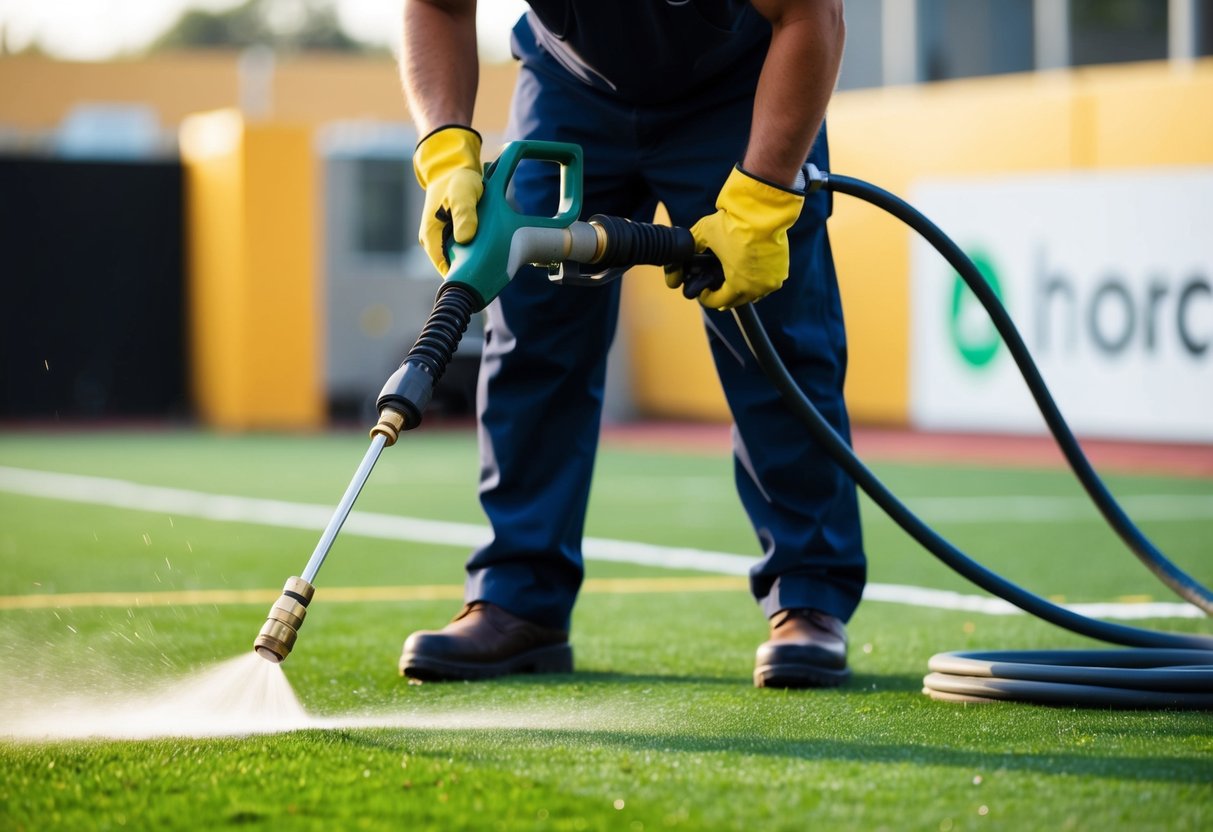
Proper preparation and safety measures are key when pressure washing turf. We’ll cover how to choose the right equipment, use protective gear, and inspect the area beforehand.
Choosing the Correct Pressure Washer
Selecting the right pressure washer is crucial for turf cleaning. We recommend using a pressure washer with adjustable settings between 1500-4000 PSI. This range provides enough power to clean without damaging the turf fibers.
Look for models with different nozzle attachments. A wide-angle nozzle (40 degrees) works best for most turf cleaning tasks. It spreads the water over a larger area, reducing the risk of damage.
Consider an electric pressure washer for smaller areas. They’re quieter and easier to maneuver. For larger spaces, a gas-powered unit might be more suitable due to its higher power output.
Protective Gear and Safety Tips
Safety should always come first when using a pressure washer. We strongly advise wearing the following protective gear:
- Safety goggles to shield eyes from debris
- Closed-toe shoes with non-slip soles
- Long pants and sleeves to protect skin
- Ear protection if using a loud gas-powered washer
Keep a firm grip on the washer wand to prevent kickback. Never point the nozzle at people, pets, or animals. The high-pressure stream can cause serious injuries.
Maintain a safe distance of at least 6 feet from others while operating the machine. Be aware of your surroundings and potential hazards like electrical outlets or loose objects.
Pre-Cleaning Inspection
Before starting, we need to carefully inspect the turf area. Look for any loose or damaged fibers that might be worsened by pressure washing. Remove any large debris, toys, or furniture from the area.
Check for areas where water might pool or not drain properly. These spots may need extra attention or a different cleaning approach.
Identify and mark sprinkler heads, drainage areas, and other sensitive spots. We want to avoid damaging these during the cleaning process.
Test the pressure washer on a small, inconspicuous area first. This helps ensure the pressure and nozzle choice won’t harm the turf. Adjust as needed before tackling the entire area.
Step-By-Step Guide to Pressure Washing Artificial Turf
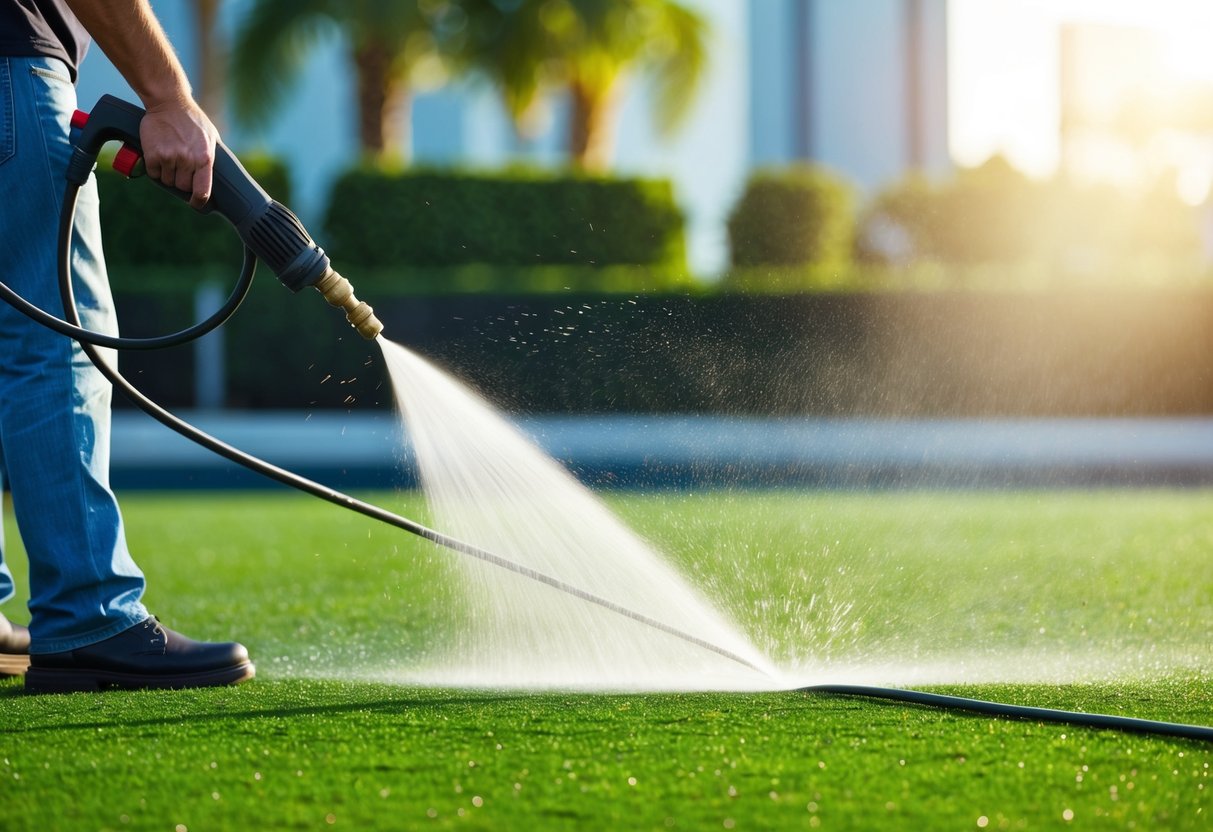
Pressure washing artificial turf requires careful preparation and technique. We’ll cover the essential steps to safely clean your turf without causing damage.
Setting Up the Equipment
First, gather the necessary tools. You’ll need a pressure washer, a wide spray nozzle, and mild detergent.
Choose a pressure washer with adjustable settings. We recommend using low to medium pressure, around 1500-4000 PSI.
Attach the wide spray nozzle to distribute water evenly. This helps prevent damage to the turf fibers.
Fill the soap dispenser with a mild, turf-safe detergent. Avoid harsh chemicals that could harm the grass or infill.
Before starting, clear the area of debris. Use a leaf blower or rake to remove loose dirt and leaves.
Effective Pressure Washing Techniques
Begin by wetting the entire turf area. This helps loosen dirt and prepare the surface for cleaning.
Hold the wand about 12 inches above the turf. Move in smooth, overlapping strokes to ensure even coverage.
Work in small sections, moving from one end to the other. This prevents missed spots and ensures thorough cleaning.
For stubborn stains, apply detergent and let it sit for a few minutes. Then rinse thoroughly with clean water.
Avoid concentrating the spray on one spot for too long. This can displace infill or damage turf fibers.
Post-Washing Inspection and Maintenance
After washing, inspect the turf for any signs of damage. Look for loose seams or displaced infill.
Use a soft brush to gently restore the turf’s upright position. This helps maintain its natural appearance.
Allow the turf to dry completely before use. This typically takes a few hours, depending on weather conditions.
Check the infill levels and add more if needed. Proper infill helps support the turf fibers and improve drainage.
Consider applying a turf deodorizer to eliminate any lingering odors. This is especially helpful for areas with pets.
Alternatives to Pressure Washing
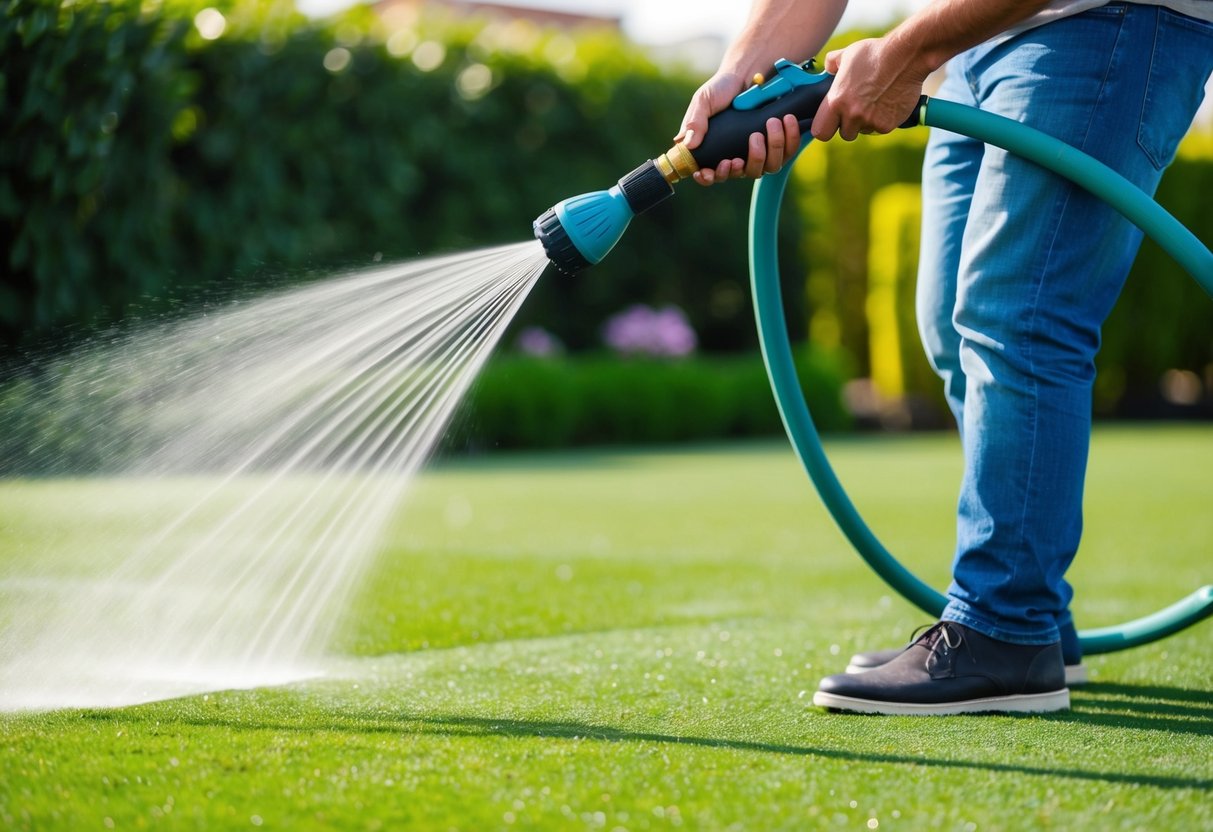
Pressure washing isn’t the only way to clean artificial turf. We’ve found some effective alternatives that can keep your turf looking great without the risks of high-pressure water.
Manual Cleaning Methods
Manual cleaning is a safe and effective way to maintain artificial turf. We recommend using a soft brush and soapy water for regular cleaning. This method is gentle on the turf fibers and can remove dirt and debris without causing damage.
Another option is using a leaf blower to remove loose debris. For tougher stains, a mixture of mild detergent and warm water can be applied with a sponge or soft cloth. Rinse the area thoroughly with clean water after cleaning.
A garden hose with a spray nozzle attachment can also be useful. It provides enough water pressure to clean the turf without the risks associated with pressure washing.
Professional Turf Cleaning Services
When manual cleaning isn’t enough, professional turf cleaning services can be a great alternative to pressure washing. These experts have specialized equipment and techniques to deep clean artificial grass without damaging it.
Professional cleaners often use low-powered machines designed specifically for artificial turf. They can remove stubborn stains, pet odors, and built-up grime that regular cleaning might miss.
Many turf cleaning services also offer treatments to prevent weed growth and maintain the turf’s appearance. While more expensive than DIY methods, professional cleaning can extend the life of your artificial grass and keep it looking its best.
Long-Term Turf Maintenance and Care
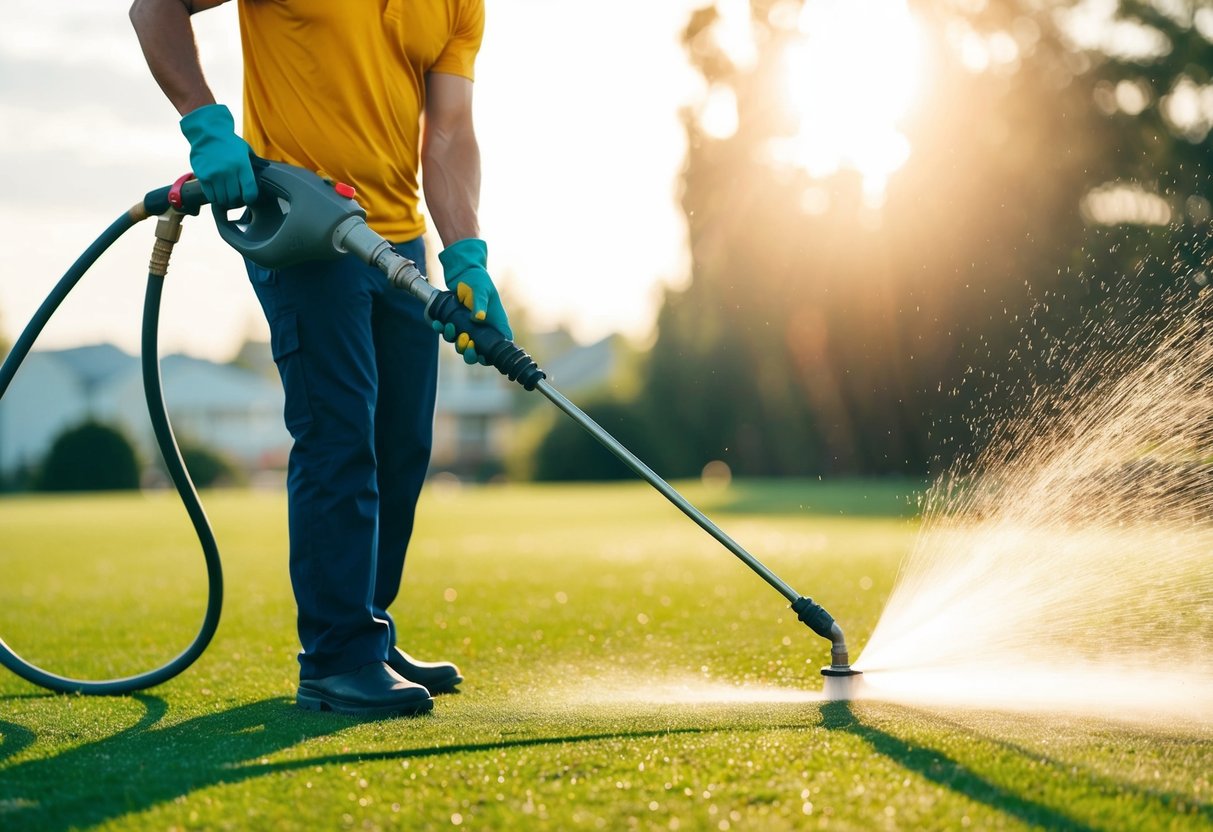
Proper care keeps artificial turf looking great for years. Regular cleaning and quick stain removal are key to maintaining its appearance and function.
Routine Cleaning Recommendations
We recommend brushing your turf weekly to prevent matting and keep fibers upright. Use a stiff brush or rake designed for artificial grass. This helps distribute infill evenly and prevents compaction.
Rinse the turf monthly with a garden hose to remove dust and debris. Let rainwater clean your turf naturally when possible. Avoid using harsh chemicals or detergents that could damage the fibers.
For high-traffic areas, brush more often to prevent wear patterns. Consider rotating heavy items like furniture or planters to avoid permanent indentations.
Spot Treatment and Stain Removal
Act quickly when spills happen. Blot liquids with a clean cloth or paper towels. Don’t rub, as this can spread the stain.
For most stains, mix mild soap with warm water. Apply the solution gently and rinse thoroughly. Tough stains may require a mix of water and vinegar or a commercial turf cleaner.
Remove solid waste promptly. Pick up leaves, twigs, and other debris regularly. For pet waste, clean the area with an enzymatic cleaner to neutralize odors.
Avoid using heat or harsh chemicals on stubborn stains. These can damage turf fibers and backing.
Conclusion
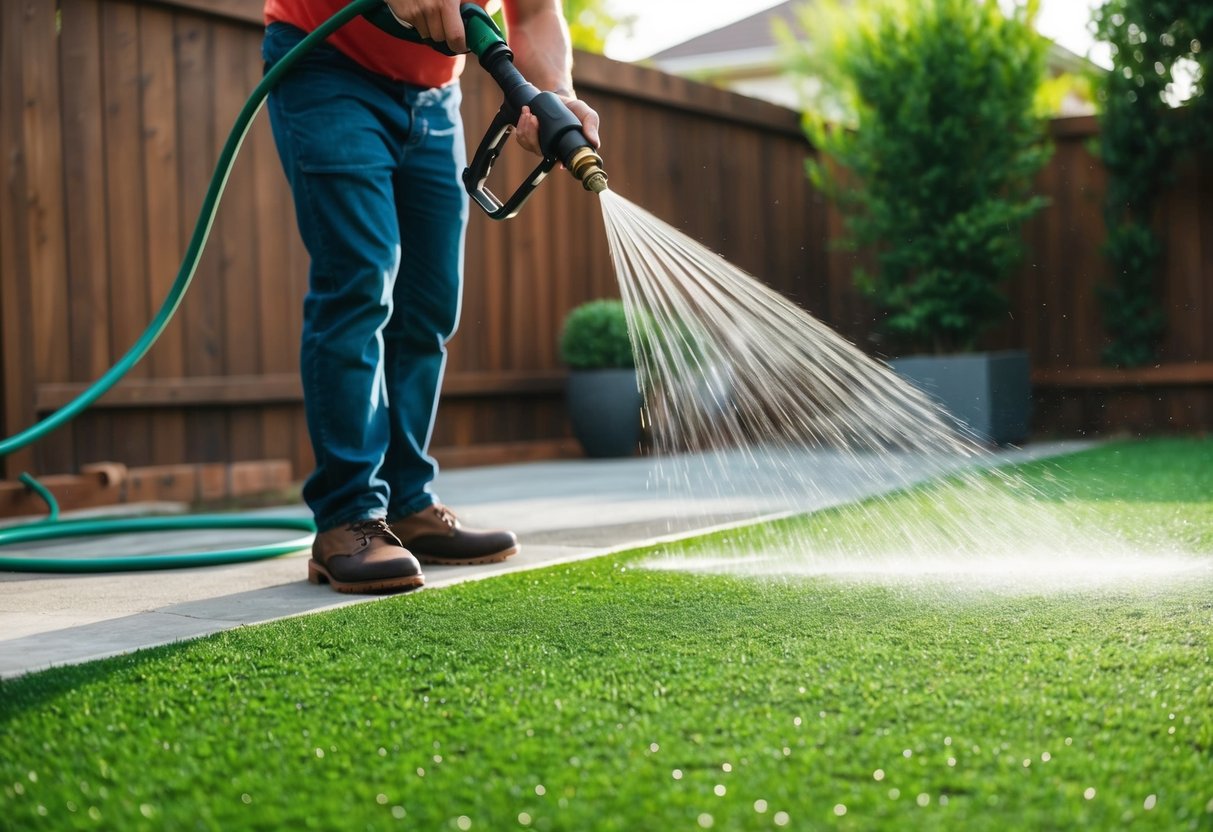
Pressure washing turf is not recommended in most cases. The high-pressure water can damage the artificial grass fibers and backing. It may also wash away the infill material.
For routine cleaning, we suggest using a leaf blower, rake, or soft brush. These tools can remove debris without harming the turf. Regular maintenance keeps artificial grass looking fresh and vibrant.
In rare situations, a very low-pressure washer may be used carefully. We advise consulting the turf manufacturer first. Their guidelines can prevent accidental damage.
Professional cleaning services are another option. They have specialized equipment and expertise for safe artificial turf cleaning. This can be helpful for stubborn stains or odors.
We recommend sticking to gentle cleaning methods for artificial grass. This approach preserves the turf’s appearance and extends its lifespan. With proper care, artificial grass can stay attractive for many years without pressure washing.