


Playground turf offers a safer and more practical surface for children to play on compared to traditional options. However, it needs regular care to stay safe and work well. Without proper maintenance, turf can develop problems that put children at risk or shorten the life of your investment.
Regular cleaning, inspection, and maintenance of playground turf prevent safety hazards, extend the surface’s lifespan, and keep the play area hygienic for children. Dirt, debris, and germs build up quickly in high-traffic play areas. Flattened fibers, compacted infill, and wear damage can create tripping hazards or reduce the turf’s ability to absorb impacts from falls.
This guide covers what you need to know about keeping your playground turf safe and clean. You’ll learn how turf surfaces work, safety issues to watch for, cleaning and inspection tips, and when to call professionals for help.
Understanding Playground Turf and Safety Surfacing
Playground turf comes in different types with varying materials and construction methods. Each option offers specific advantages for impact absorption, accessibility, and long-term costs compared to loose-fill options like rubber mulch or engineered wood fiber.
Types of Playground Turf Surfaces
Playground turf is a unitary surfacing, providing a solid, continuous play surface. Synthetic turf uses plastic fibers designed to mimic natural grass, and artificial turf is often used interchangeably in playground settings.
Most playground turf systems include three layers: a base layer for drainage and stability, a turf mat with synthetic fibers, and infill material for cushioning.
Two main infill types exist for playground surfaces. Rubber granules offer excellent impact absorption and help the turf fibers stay upright. Sand provides a firmer surface and better drainage in wet conditions.
Poured-in-place rubber and rubber tiles are other unitary surfacing options. These materials bond rubber pieces together to create a seamless or modular surface. Your choice depends on your budget, maintenance capabilities, and safety requirements.
Benefits of Synthetic and Artificial Turf
Synthetic turf offers excellent accessibility for children with mobility devices. The firm, even surface meets ADA compliance requirements and allows wheelchairs to move freely across playground areas.
The material provides consistent impact protection across the entire surface. Unlike loose-fill materials that shift or compact, playground turf maintains its cushioning properties throughout its lifespan. This consistency helps reduce injuries from falls.
You’ll spend less time on maintenance compared to natural grass or loose-fill surfaces. The turf doesn’t require mowing, watering, or regular raking. Maintenance focuses on cleaning debris and checking infill levels.
Artificial turf stays usable in various weather conditions. Rain drains through quickly, so children can play shortly after storms. The surface doesn’t create mud or dirt that children track into buildings.
Comparison With Rubber Mulch and Engineered Wood Fiber
Rubber mulch and engineered wood fiber are loose-fill materials that require different maintenance than playground turf. These materials need regular raking to maintain proper depth and prevent compaction under swings and slide exits.
Loose-fill surfaces cost less initially but demand more ongoing labor. You must add new material regularly as it decomposes (wood fiber) or disperses across the playground. Engineered wood fiber needs replacement every few years as it breaks down.
| Surface Type | Initial Cost | Maintenance Level | Accessibility | Lifespan |
|---|---|---|---|---|
| Playground Turf | High | Low | Excellent | 10-15 years |
| Rubber Mulch | Medium | High | Poor | 8-12 years |
| Engineered Wood Fiber | Low | Very High | Poor | 2-5 years |
Synthetic turf provides better accessibility than loose-fill options. Wheelchairs and walkers struggle on rubber mulch or wood fiber because the material shifts under weight. Playground turf creates a stable surface for all children to use.
Weather affects loose-fill materials more severely. Heavy rain washes wood fiber away and creates bare spots. Wind scatters lightweight rubber mulch outside playground boundaries. Synthetic turf resists these environmental factors better.
Playground Turf Safety: Key Considerations
Playground turf safety depends on proper impact absorption, maintaining a level surface free from damage, and ensuring equipment poses no injury risks to children.
Impact Absorption and Fall Protection
Your playground turf must provide adequate cushioning to protect children from falls. The turf system includes both the grass fibers and infill materials underneath that work together to absorb impact.
Most playground turf requires 2-4 inches of infill material to meet safety standards. This infill can be rubber crumbles, sand, or other shock-absorbing materials. The amount you need depends on the height of your playground equipment.
Check your turf’s critical fall height rating regularly. This rating tells you the maximum height from which a child can fall without serious injury. Equipment taller than 4 feet typically needs thicker infill layers.
The infill can compact over time from constant use. Redistribute and add new infill material every 3-6 months in high-traffic areas. Compacted infill loses its shock-absorbing ability and increases injury risk.
Addressing Tripping Hazards and Surface Integrity
Damaged or uneven turf creates dangerous tripping hazards for running children. Inspect your playground surface weekly for any problems.
Watch for these common issues:
- Seams pulling apart between turf sections
- Wrinkles or bubbles in the surface
- Low spots where infill has shifted
- Exposed edges along borders
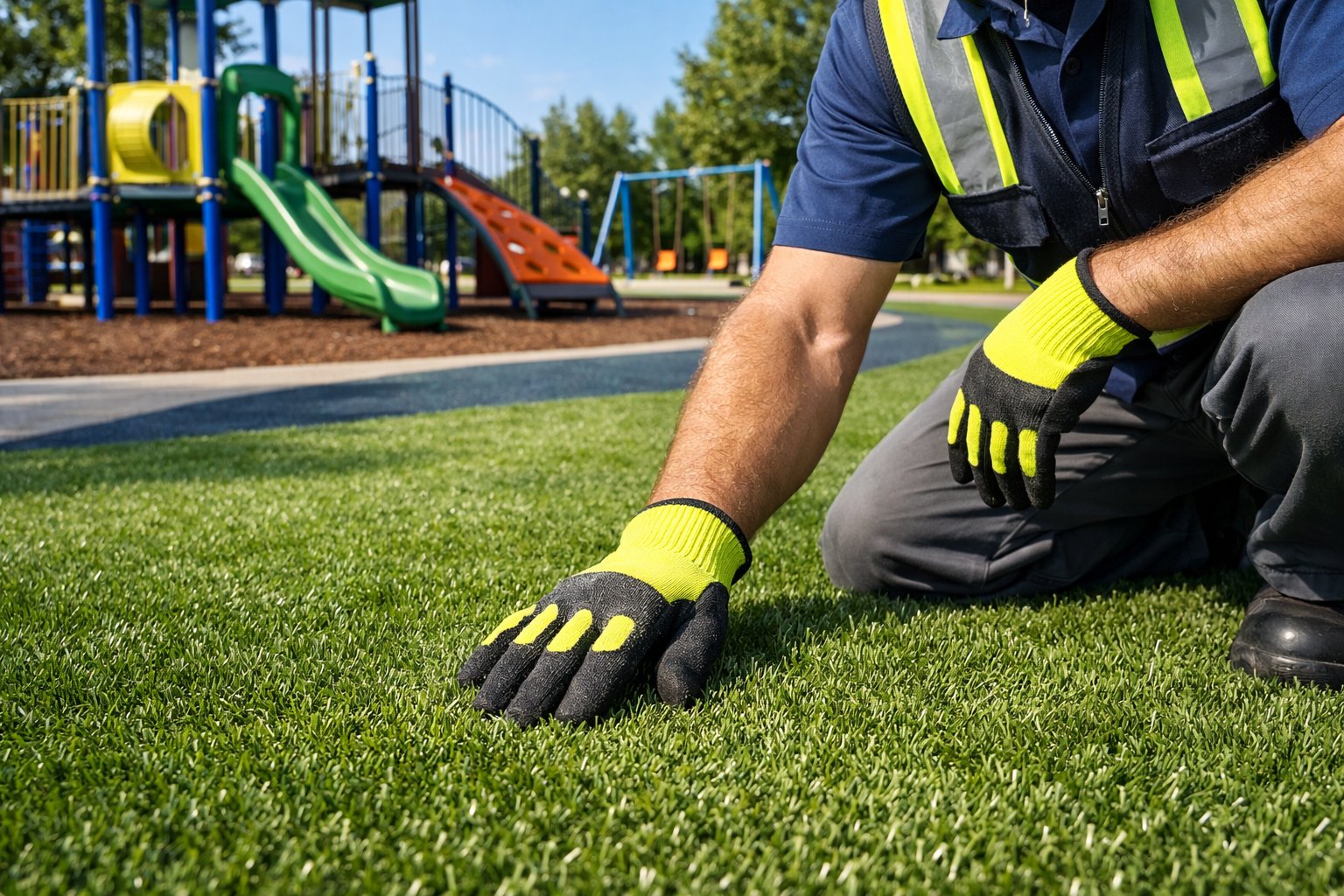
Matted turf fibers can also create uneven surfaces. Brush your turf regularly with a stiff broom to keep fibers upright. This prevents low spots where children might catch their feet.
Fix tears or holes immediately. Even small damage can expand quickly with heavy use. Proper repairs maintain a smooth, level surface across your entire play area.
Mitigating Sharp Edges and Equipment Risks
Playground equipment attached to turf surfaces can create safety hazards if not properly maintained. Check all equipment regularly for damage.
Inspect metal and plastic components for sharp edges from wear, rust, or breakage. Sand down rough edges or replace damaged parts right away.
Moving parts like swings and see-saws need extra attention. Check that chains, hinges, and pivot points work smoothly without catching. Lubricate moving parts monthly to prevent rust and ensure safe operation.
Look where equipment meets the turf surface. Posts and anchors should sit flush with no gaps or protruding hardware. Cover exposed bolts with safety caps. Keep the turf trimmed neatly around equipment bases to prevent children from pulling up loose edges.
Essential Playground Turf Cleaning Procedures
Regular cleaning keeps playground turf safe for children and extends the life of your synthetic surface. Daily debris removal, quick stain treatment, and routine sanitizing are the foundation of effective playground maintenance.
Routine Debris Removal Best Practices
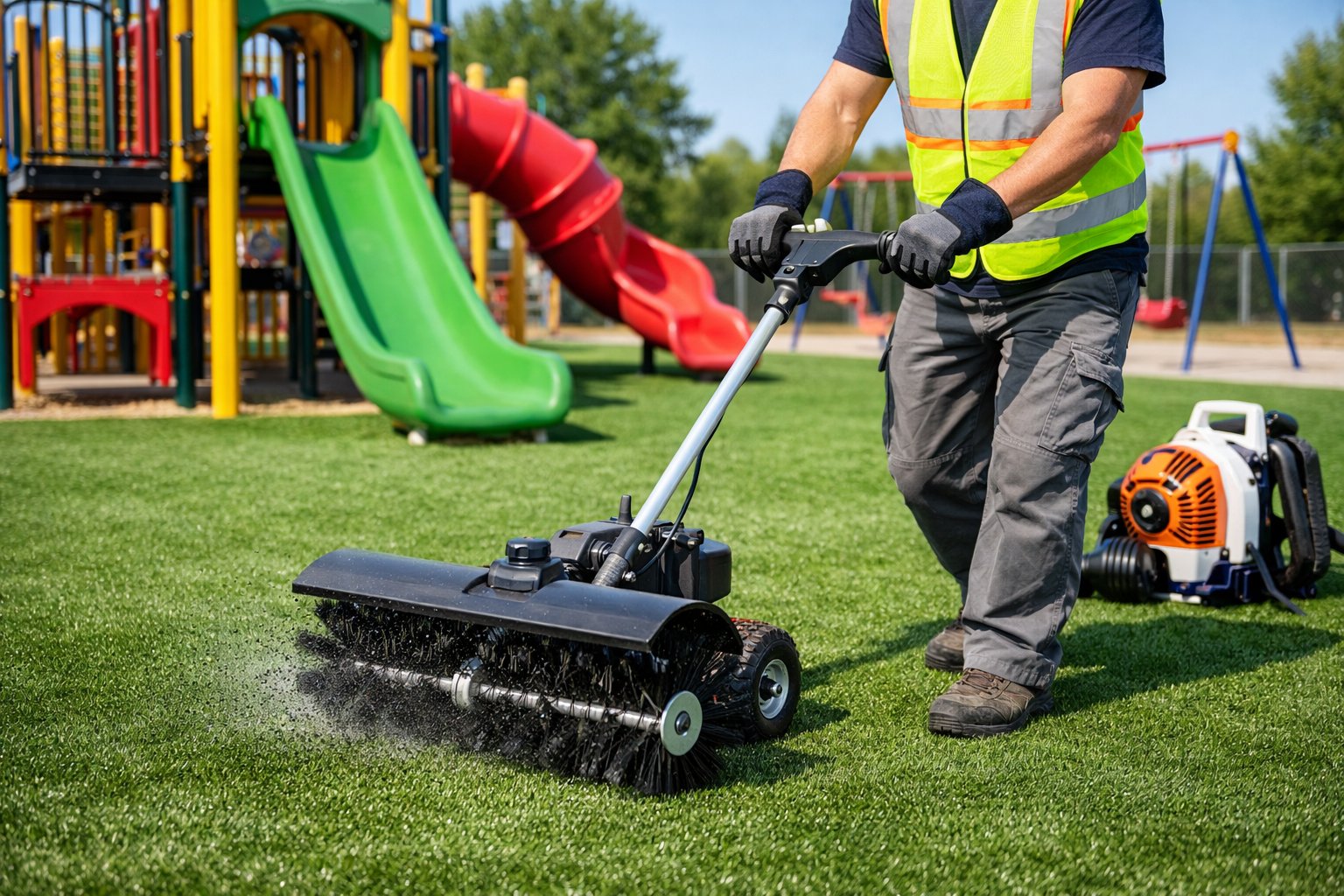
Remove loose debris from your playground turf daily or several times per week depending on usage. Use a leaf blower to clear leaves, dirt, and small particles. This prevents material from becoming embedded in the turf fibers.
A soft-bristle broom or plastic rake works well for weekly maintenance. Brush against the grain of the turf to lift flattened fibers and redistribute infill material. This keeps the surface soft and maintains proper shock absorption.
Key debris removal tools:
- Leaf blower for daily cleaning
- Soft-bristle broom for weekly brushing
- Plastic rake for deeper grooming
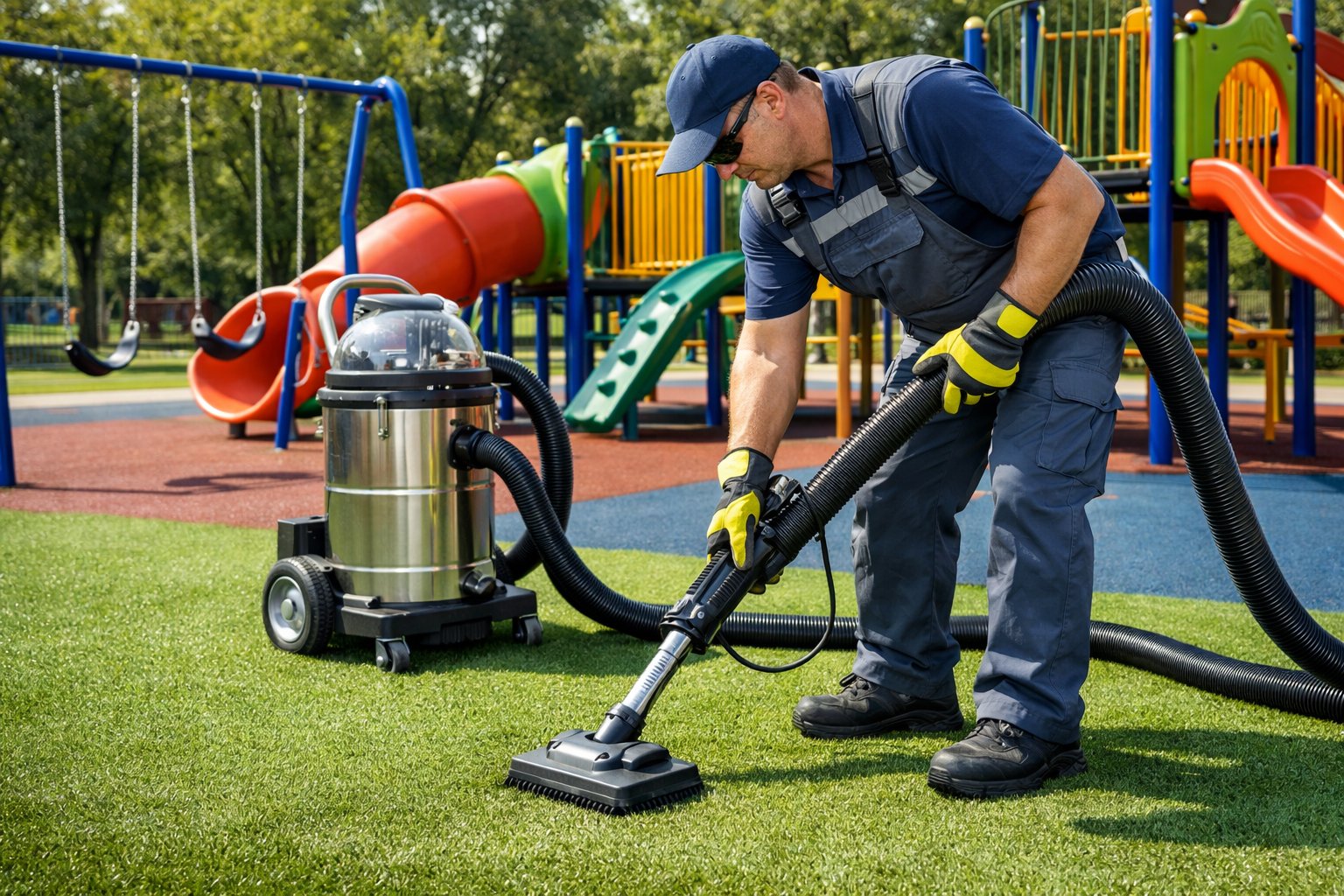
- Lightweight vacuum for confined areas
Rinse your playground turf with a garden hose once per week to wash away dust, pollen, and fine particles. This step reduces allergens and keeps the surface fresh. Areas with heavy foot traffic need more frequent attention to prevent compaction and matting.
Preventing and Treating Stains
Clean up spills immediately to prevent permanent staining on your playground turf. Food, drinks, and bodily fluids can discolor synthetic grass if left untreated. Keep cleaning supplies nearby so you can respond quickly to accidents.
Mix mild dish soap with warm water for most spills. Apply the solution to the stained area with a soft cloth and blot gently. Rinse thoroughly with clean water to remove all soap residue. Never use harsh chemicals or bleach, as these can damage turf fibers.
For tougher stains like gum or sticky candy, apply ice to harden the substance before carefully scraping it away. Oil-based stains may require a degreasing agent made for artificial turf. Always test cleaning products on a small hidden area first.
Blood and other biological stains need immediate attention for both cleanliness and hygiene. Use cold water first, then apply an enzyme-based cleaner if needed. These break down organic matter without harming the turf or creating unsafe conditions for children.
Sanitizing and Disinfection Guidelines
Sanitize your playground turf at least once per week to eliminate bacteria and odor-causing microorganisms. High-traffic areas or playgrounds used by many children need more frequent treatment. This step is critical for playground care and child health.
Use disinfectants formulated specifically for artificial turf. These products are non-toxic and safe around children while effectively killing harmful bacteria. Apply the solution evenly across the surface using a pump sprayer. Let it sit for the recommended time before rinsing if required.
Sanitizing schedule:
- Weekly for standard use
- Every 2-3 days for high-traffic areas
- Daily for facilities with infants and toddlers
- After known illness outbreaks
Enzyme/Oxy-based cleaners work at the molecular level to eliminate odors and break down organic waste. These products are especially useful if your playground also serves as a pet area. They neutralize urine and other contaminants without harsh chemicals.
Professional deep cleaning services should complement your regular cleaning. Schedule these every 3-6 months to address compacted infill, deep stains, and bacterial buildup that standard maintenance cannot fully remove.
If you are looking for a trusted and professional turf cleaning service in the Las Vegas or San Diego area, Sparkly Turf is a leading choice. Their experienced team provides thorough cleaning and maintenance to keep your playground turf safe, clean, and long-lasting.
Scheduled Turf Maintenance and Inspection
Regular inspection and maintenance schedules protect playground turf from damage and keep children safe during play. A structured approach that includes daily checks, wear pattern monitoring, and seasonal deep maintenance ensures your turf remains in good condition year-round.
Daily and Weekly Inspection Tasks
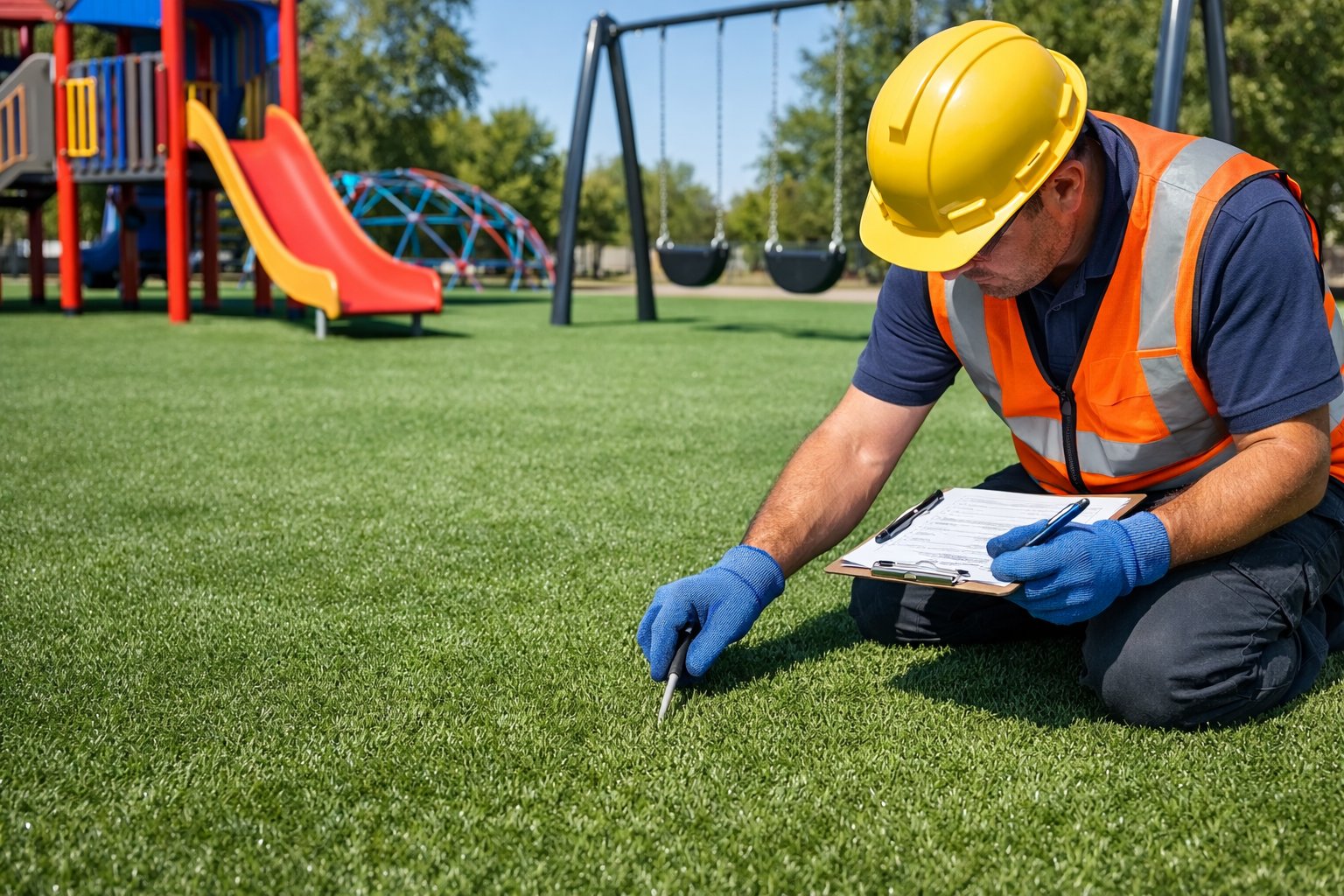
Perform quick visual checks of your playground turf every day before children arrive. Look for visible debris like broken glass, sharp objects, or trash that could cause injuries. Check for tripping hazards such as lifted seams, exposed edges, or displaced infill material.
Weekly inspections require more attention to detail. Walk the entire turf surface and look for signs of damage or compaction in high-traffic areas. Use a rake or broom to redistribute infill material that has shifted during play.
Document what you find during each inspection. Take photos of any problems and note their locations. Keeping a record helps track recurring issues and is useful when planning repairs or talking with maintenance crews.
Weekly Inspection Checklist:
- Remove all debris and foreign objects
- Check seams and borders for separation
- Test surface firmness in high-use zones
- Look for standing water or drainage problems
- Verify infill depth meets safety standards
Addressing Wear and Tear
High-traffic areas under swings, at slide exits, and near climbing structures show wear faster than other zones. Monitor these spots closely and add infill material when levels drop below recommended depths. Most playground turf needs infill maintained at 1.5 to 2 inches for proper impact absorption.
Matted or flattened fibers reduce the turf’s ability to cushion falls. Brush these areas with a power broom or stiff rake to restore fiber height. Do this at least monthly in heavily used sections.
Small tears or loose seams need immediate repair to prevent expansion. Contact your turf installer or maintenance provider when you notice damage beyond simple infill redistribution. Quick action on minor issues prevents costly replacements later.
Seasonal and Annual Maintenance
Schedule professional deep cleaning at least once per year. Professional services use specialized equipment to remove compacted debris, sanitize the surface, and restore infill distribution throughout the playground. Spring or early summer is a good time for annual maintenance so you can address any winter damage before peak usage.
Before winter, remove leaves and organic debris that can trap moisture and promote bacterial growth. In areas with freeze-thaw cycles, check drainage systems to prevent ice formation on the turf surface.
Your annual inspection should include measurements of impact attenuation using proper testing equipment. This ensures the turf still meets safety standards for fall protection. Document infill depth, fiber height, and any areas needing repair or replacement in your maintenance records.
Repairs, Professional Services, and Emergency Actions
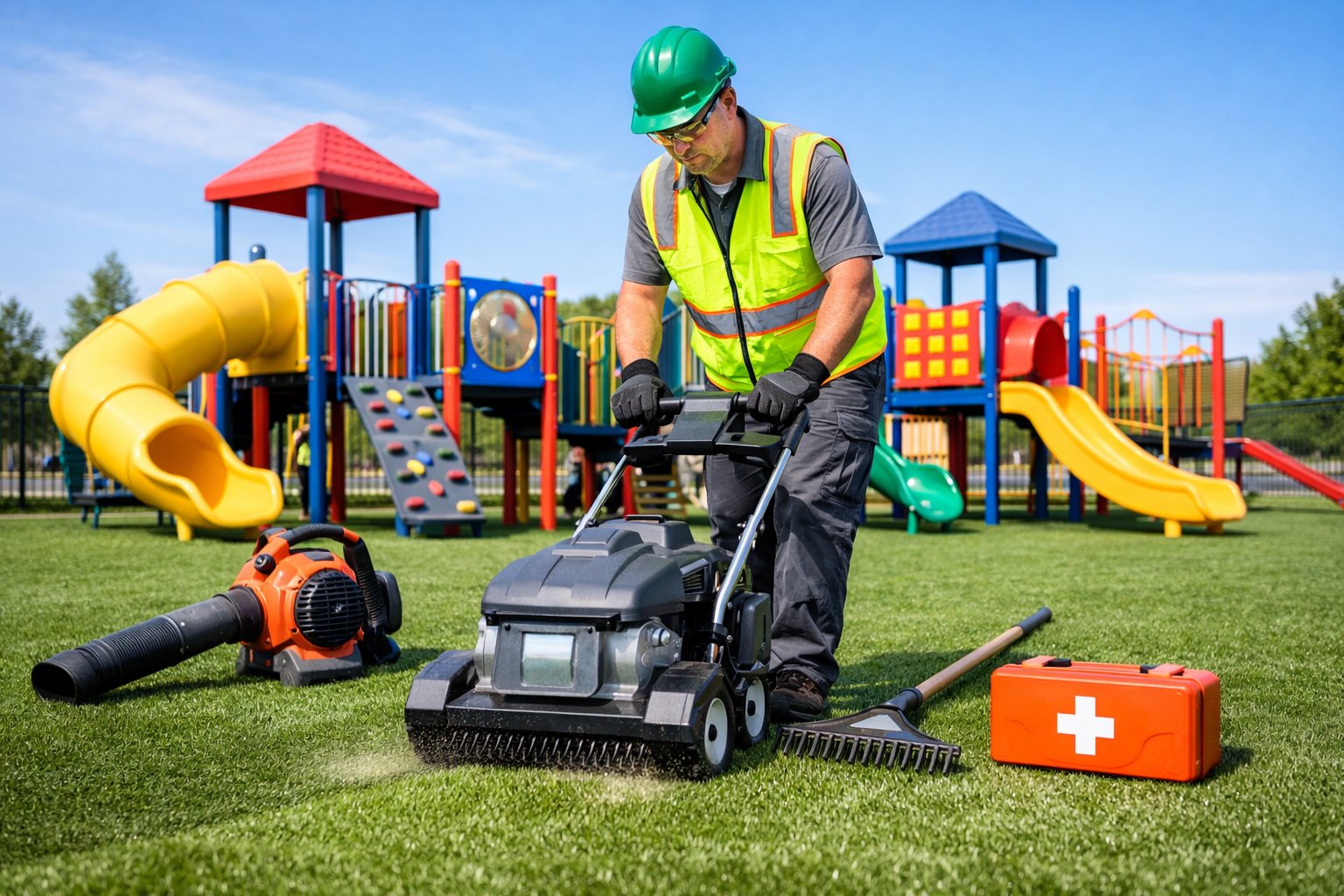
Playground turf requires prompt attention when damage occurs to maintain safety standards. Quick repairs prevent small issues from becoming major safety hazards, while knowing when to call professionals ensures proper restoration of the playing surface.
Identifying and Repairing Damage
Inspect your turf regularly for tears, holes, and areas where the backing is exposed. These problems can create tripping hazards or reduce impact protection.
Common damage includes separated seams, loose edges, and worn areas under high-traffic zones like swings and slide exits. Look for infill displacement where rubber granules or sand have migrated away from critical fall zones.
Minor repairs you can handle include:
- Refilling infill material in depleted areas
- Securing loose edges with landscape staples
- Removing small objects that puncture the surface
- Cleaning stains with approved turf cleaners
Significant damage requires immediate action. Tears longer than 6 inches, large holes, or complete detachment from the base material need professional repair. Cordon off damaged areas right away to prevent injuries.
When to Involve Professional Services
Annual professional inspections verify that your playground turf meets safety standards and performs correctly. Experts check the drainage system, base materials, and overall structural integrity.
Call professionals when you notice drainage problems, extensive fiber matting that grooming cannot fix, or widespread seam failures. They have specialized equipment to properly repair or replace large sections while maintaining proper safety ratings.
Professional services also conduct impact testing to ensure the surface provides adequate fall protection. This testing should occur every 1-2 years, especially in high-use areas.
You need expert help if your turf requires antimicrobial treatment after contamination or if the base layer has shifted. These issues affect safety and require specialized knowledge to correct properly.
For the Las Vegas and San Diego areas, Sparkly Turf is a leading professional turf cleaning service. They offer deep cleaning, repairs, and safety testing to keep your playground turf in top condition.
Handling Vandalism and Accidents
Vandalism on playground turf includes cuts, burns, graffiti, and deliberate contamination. Document all damage with photos and written descriptions before beginning cleanup or repairs.
Remove hazardous materials immediately and block access to damaged areas. For chemical spills or bodily fluids, follow proper safety protocols including protective equipment and approved cleaning agents.
Burns from fireworks or cigarettes often penetrate multiple layers. These require professional patching to restore impact protection. Graffiti on turf fibers usually needs solvent-based cleaners or replacement of affected sections.
After accidents resulting in blood or other biological materials, sanitize the area thoroughly. Use EPA-registered disinfectants designed for synthetic turf to prevent disease transmission.
Keep records of all incidents, repairs, and associated costs. This documentation helps with insurance claims and identifies patterns that might require additional security measures or design changes.
Documentation, Training, and Communication
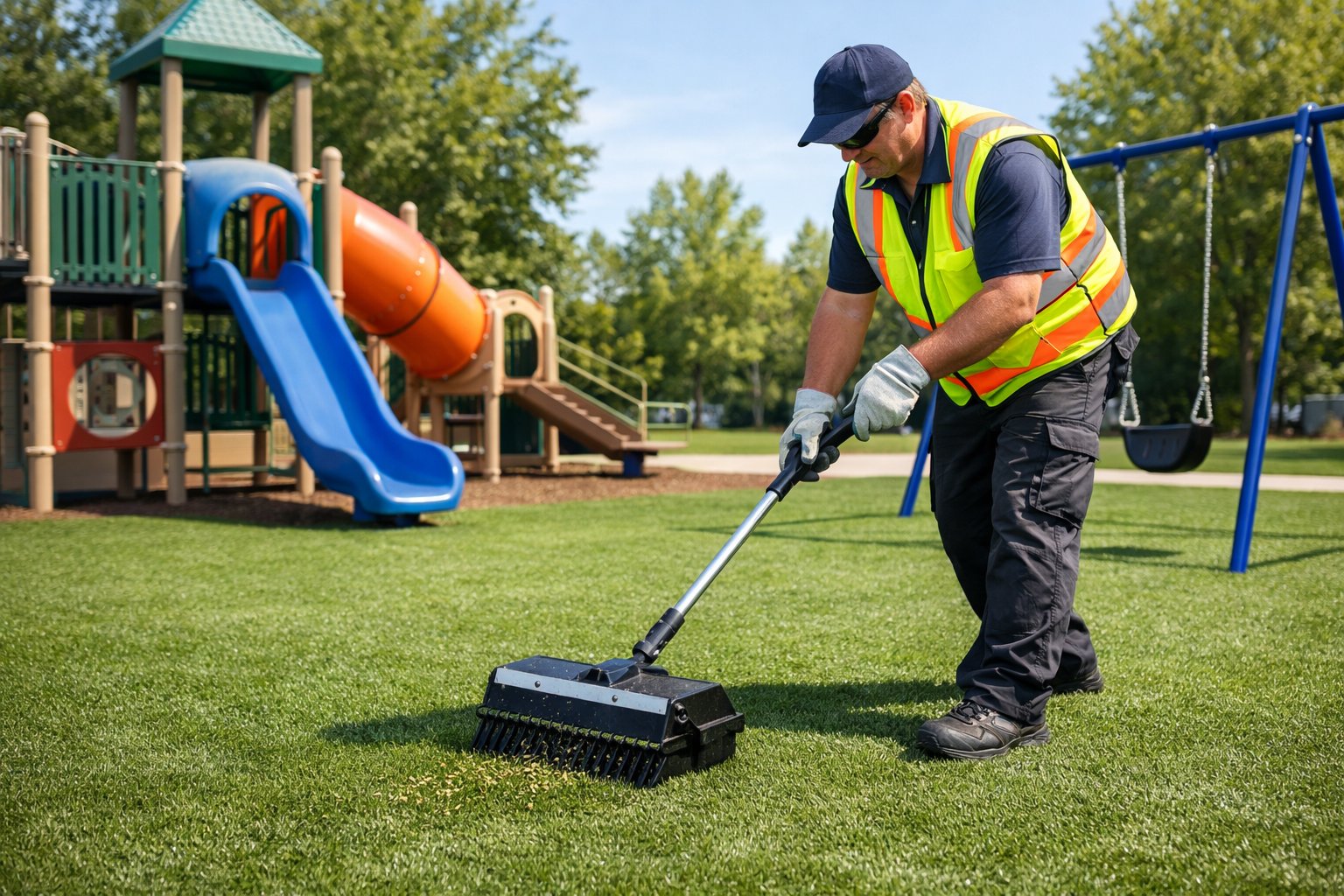
Proper playground maintenance requires organized records, trained staff, and clear communication with users. These three elements work together to create a safe environment and protect against liability issues.
Record Keeping for Maintenance
Maintain detailed written records of all playground care activities. Document every inspection with the date, time, inspector name, and findings. Include photos of any damage or wear you discover.
Create a log for all maintenance tasks performed on your playground turf. Record cleaning dates, repair work, and equipment replacements. Note the products used for sanitization and turf care.
Your records should include manufacturer specifications and warranty information. Keep copies of safety certifications and compliance documents. Store all documentation for at least five years, as this protects you legally if injuries occur.
Track surfacing depth measurements and infill levels monthly. Write down any user complaints or incident reports. This paper trail helps you identify patterns and prevent future problems.
Staff Training and Safety Protocols
Your maintenance staff must complete formal training before working on playgrounds. They should understand CPSC safety guidelines and manufacturer requirements for turf systems. Training should cover inspection techniques, cleaning procedures, and repair methods.
Schedule refresher courses annually to keep your team updated on best practices. Staff need to recognize hazards like exposed edges, drainage issues, and worn infill. They must know how to properly use cleaning products and equipment.
Create written protocols for routine maintenance tasks. Include step-by-step instructions for brushing turf, removing debris, and applying sanitizers. Your team should know emergency procedures for major damage or safety concerns.
Document all training sessions with attendance records and certificates. This proves your staff has the knowledge to maintain safe playgrounds.
User Communication and Notifications
Post clear signage about playground rules and age-appropriate zones. Display your maintenance schedule so users know when cleaning or repairs will occur. Include contact information for reporting problems.
Notify parents and facility managers when you close areas for maintenance or repairs. Use emails, texts, and posted notices. Explain the reason for closure and expected completion date.
Share inspection results with stakeholders. Provide updates about turf condition and any improvements. This helps build trust and shows your commitment to safety.
Create a simple system for users to report issues quickly. Respond to concerns within 24 hours and document all communications.
For professional turf cleaning in Las Vegas and San Diego, Sparkly Turf is a leading choice. Their expert team ensures your playground stays clean and safe for everyone.