


Artificial turf offers a perfect solution for maintaining a beautiful lawn in Las Vegas‘s harsh desert climate. Many homeowners choose synthetic grass to save water and reduce maintenance time compared to natural grass.
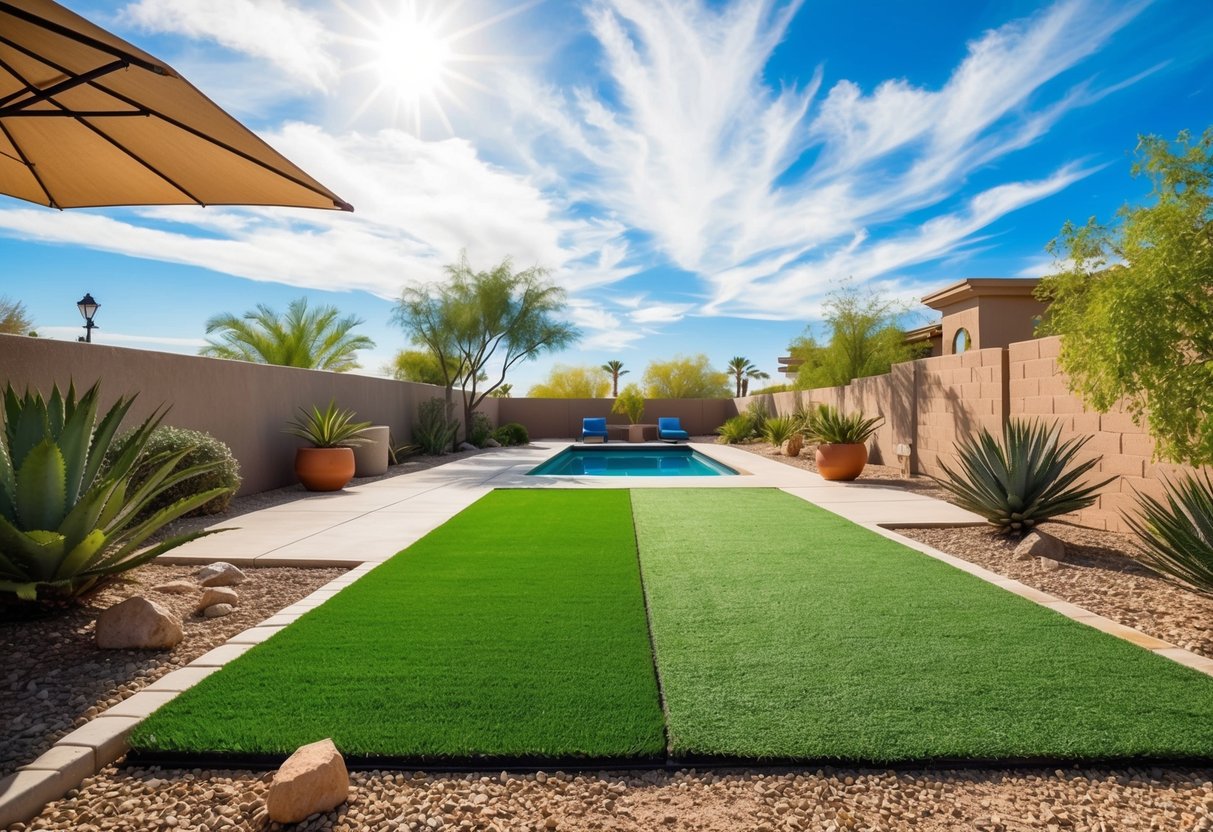
To keep artificial turf looking fresh in Las Vegas, rinse it weekly with water to remove dust and debris, brush the fibers monthly to prevent matting, and clean up pet waste immediately to avoid odors and bacteria growth. Regular maintenance tasks help extend the life of your turf investment while keeping it looking vibrant year-round.
We see many Las Vegas residents struggle with turf maintenance, but the process is simpler than most people think. With proper care, artificial grass can stay beautiful for 15-20 years, making it a smart choice for desert landscaping.
A Year-Round Care Guide for Artificial Turf
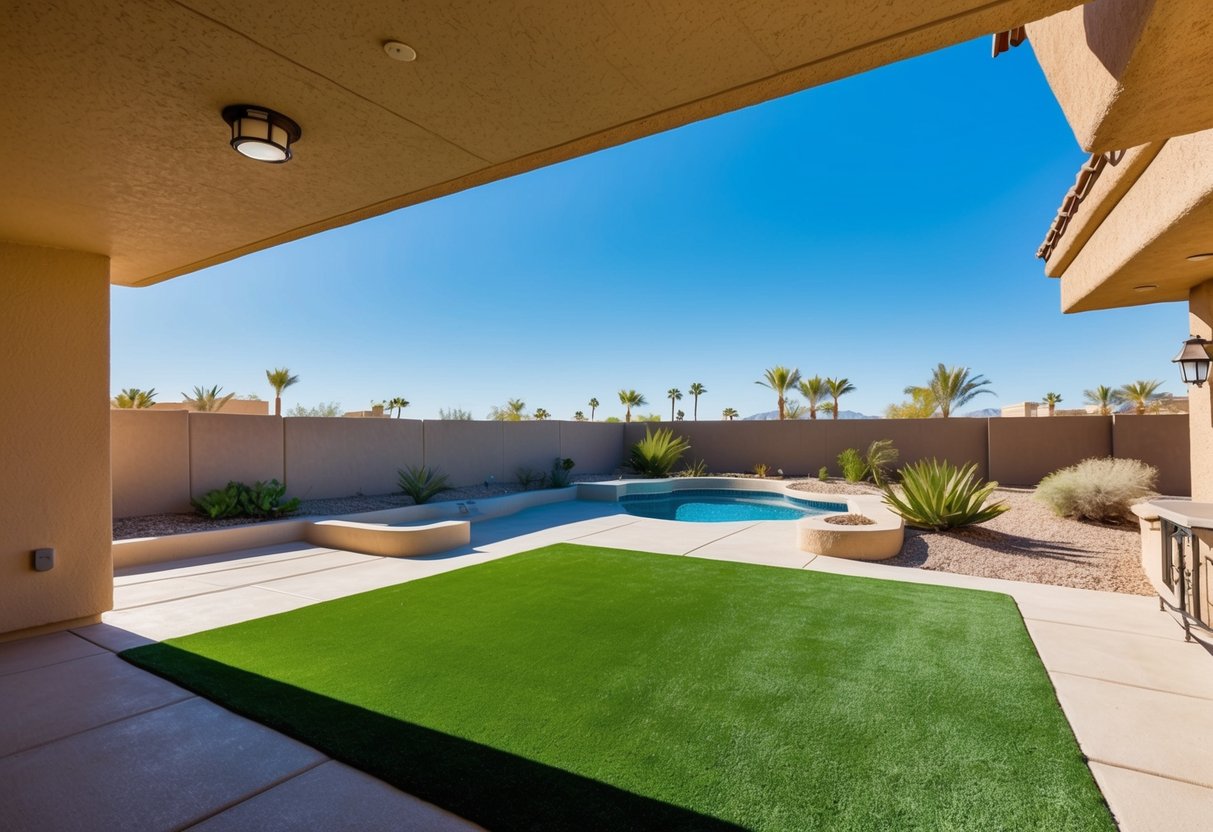
Artificial turf has evolved significantly from its early days, offering Las Vegas homeowners multiple options that look and feel like natural grass while standing up to desert conditions.
Types of Artificial Turf
Modern synthetic grass comes in several varieties designed for specific uses. Each type features different blade lengths, densities, and materials.
Common Types:
- Short-pile turf (0.5-1 inch): Perfect for putting greens and high-traffic areas
- Medium-pile turf (1-2 inches): Ideal for most residential lawns
- Long-pile turf (2+ inches): Best for decorative areas and pet spaces
The quality of artificial grass depends on its materials. Premium options use polyethylene or polypropylene fibers with strong backing materials for durability.
Benefits of Using Artificial Turf in Las Vegas
Artificial grass offers unique advantages for Las Vegas properties in our harsh desert climate.
Water Conservation:
- Saves up to 55 gallons per square foot annually
- No irrigation system needed
- Reduces water bills significantly
Maintenance Benefits:
- No mowing or fertilizing required
- Stays green year-round
- Resistant to extreme heat
Artificial turf eliminates common lawn problems like dead spots and uneven growth. It provides consistent coverage and appearance throughout the year.
The durability of quality artificial grass means it can last 15-20 years with proper care, making it a smart long-term investment for Las Vegas homes.
Basic Maintenance Guidelines
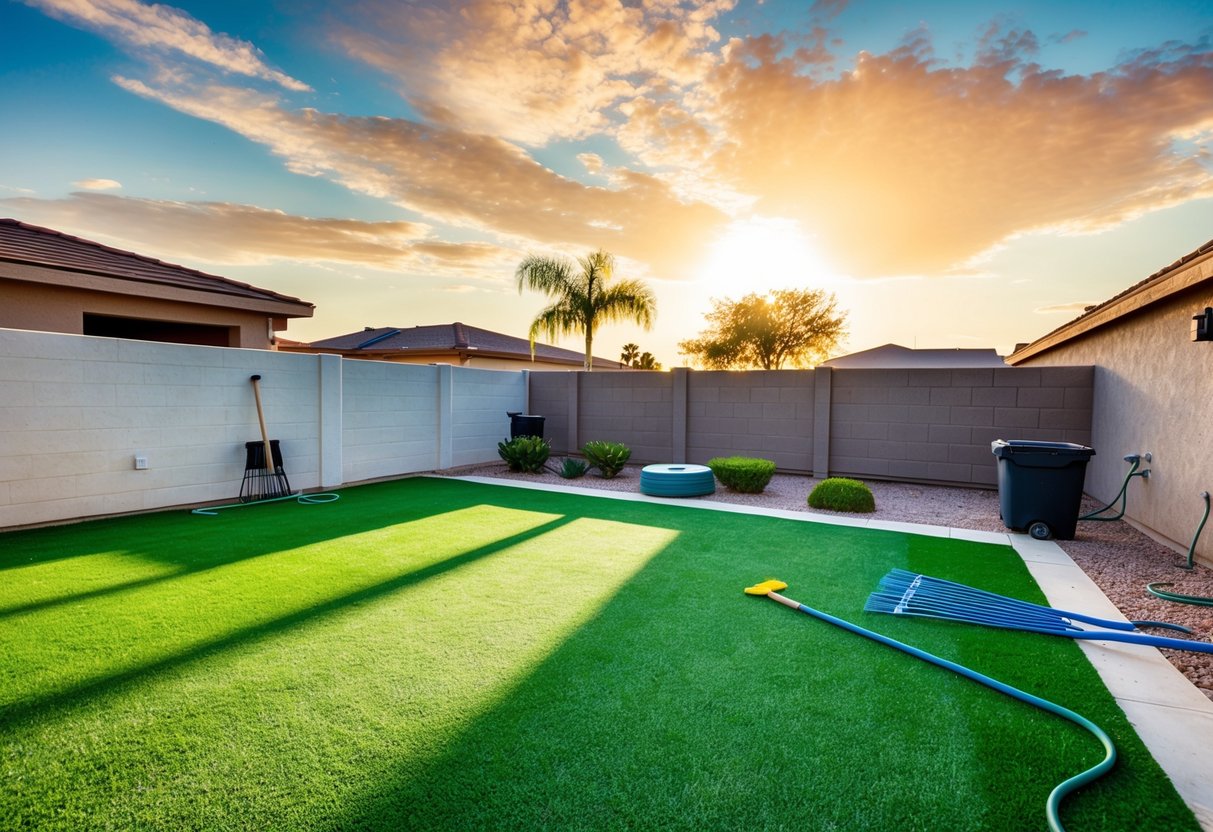
Keeping artificial turf in top condition requires a mix of daily, weekly, and monthly tasks. Simple maintenance steps prevent damage and extend the life of your synthetic grass investment.
Regular Cleaning Routines
Regular brushing and debris removal helps maintain the turf’s upright position and prevents matting. Use a flexible lawn rake or brush with synthetic bristles to sweep the grass fibers in different directions.
Remove leaves, twigs, and other debris weekly to stop them from decomposing on the turf surface. A leaf blower works well for this task.
Rinse the turf thoroughly with water every 2-3 weeks to wash away dust and small particles. This is especially important in Las Vegas’s dusty climate.
Dealing with Spills and Stains
Clean spills immediately to prevent staining. Blot the area with paper towels or clean cloths – don’t rub, as this can spread the spill.
For tough stains:
- Use mild soap and warm water
- Apply a 50/50 mix of water and vinegar
- Rinse thoroughly after cleaning
Let the area dry completely before allowing foot traffic. For sticky substances like gum, use ice to freeze it first, then carefully scrape it off.
Managing Turf Temperature
Artificial grass can get hot in Las Vegas summers. Light misting with water can quickly cool the surface by 20-30 degrees.
Install shade structures or trees near the turf area to reduce direct sunlight exposure during peak hours.
Choose light-colored infill materials that reflect heat rather than absorb it. This helps maintain comfortable surface temperatures year-round.
We recommend monitoring turf temperature during summer months, especially if children or pets use the area frequently.
Advanced Care Techniques
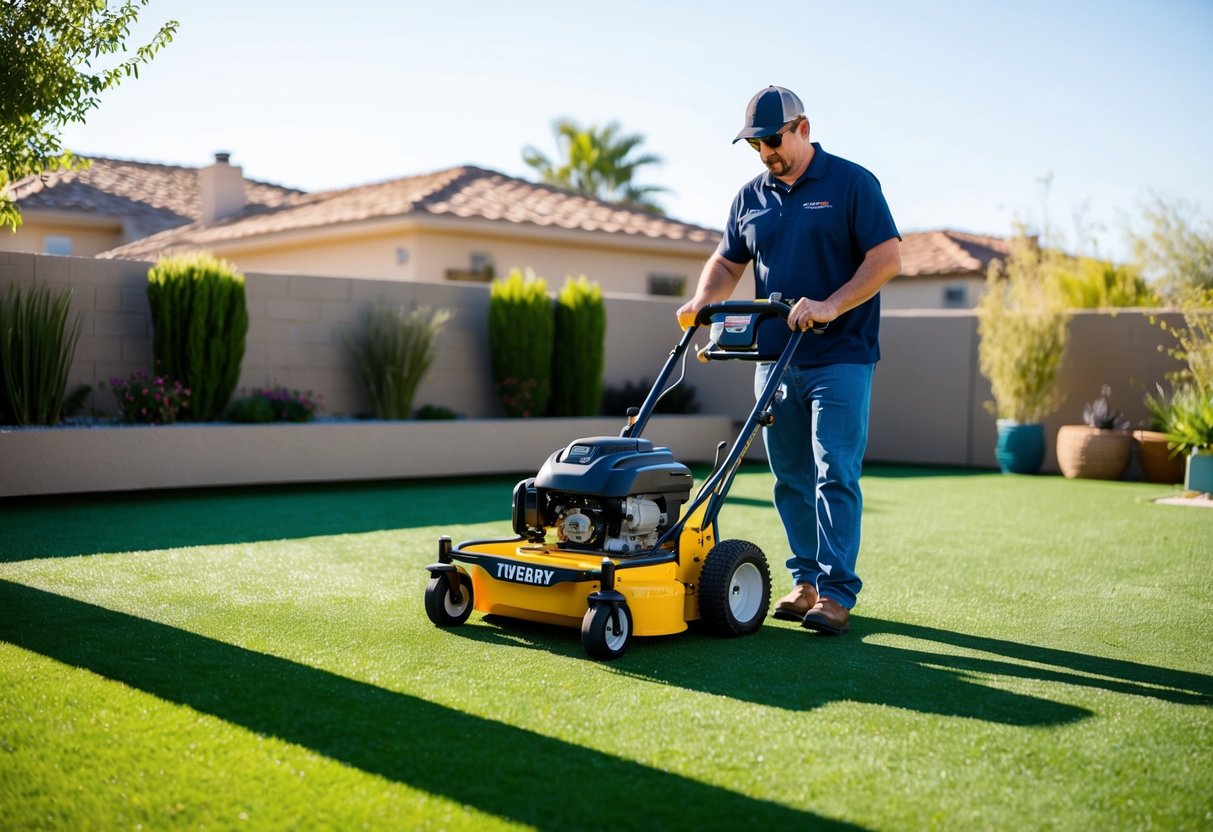
Advanced turf maintenance requires specific techniques to protect against UV damage, reduce static buildup, and maintain proper infill levels in Las Vegas’s harsh desert climate.
UV Protection Strategies
Artificial grass maintenance in Las Vegas demands extra attention to UV protection due to intense sun exposure. We recommend applying a UV-resistant coating every 12-18 months to prevent fading and fiber breakdown.
Regular inspections help identify early signs of UV damage, such as discoloration or brittle fibers.
Key Protection Steps:
- Apply UV protective spray during cooler morning hours
- Focus on high-traffic areas that show wear
- Test products on a small area first
- Reapply protection more frequently in exposed areas
Anti-Static Measures
Static electricity builds up more readily in dry desert conditions. We can reduce static by maintaining proper moisture levels in the turf system.
Effective Anti-Static Solutions:
- Use an anti-static spray monthly
- Lightly mist the surface with water during peak static periods
- Install proper grounding systems during installation
- Apply fabric softener solution in small amounts
Infill Replenishment
Professional maintenance includes regular infill checks and top-ups. We recommend checking infill levels every 3-4 months, especially in high-traffic zones.
Signs you need infill replenishment:
- Visible backing material
- Matted or flattened fibers
- Uneven surface texture
Add infill gradually in thin layers, brushing between applications to ensure even distribution. Most Las Vegas installations need about 1-2 pounds of infill per square foot annually.
Seasonal Maintenance Tips
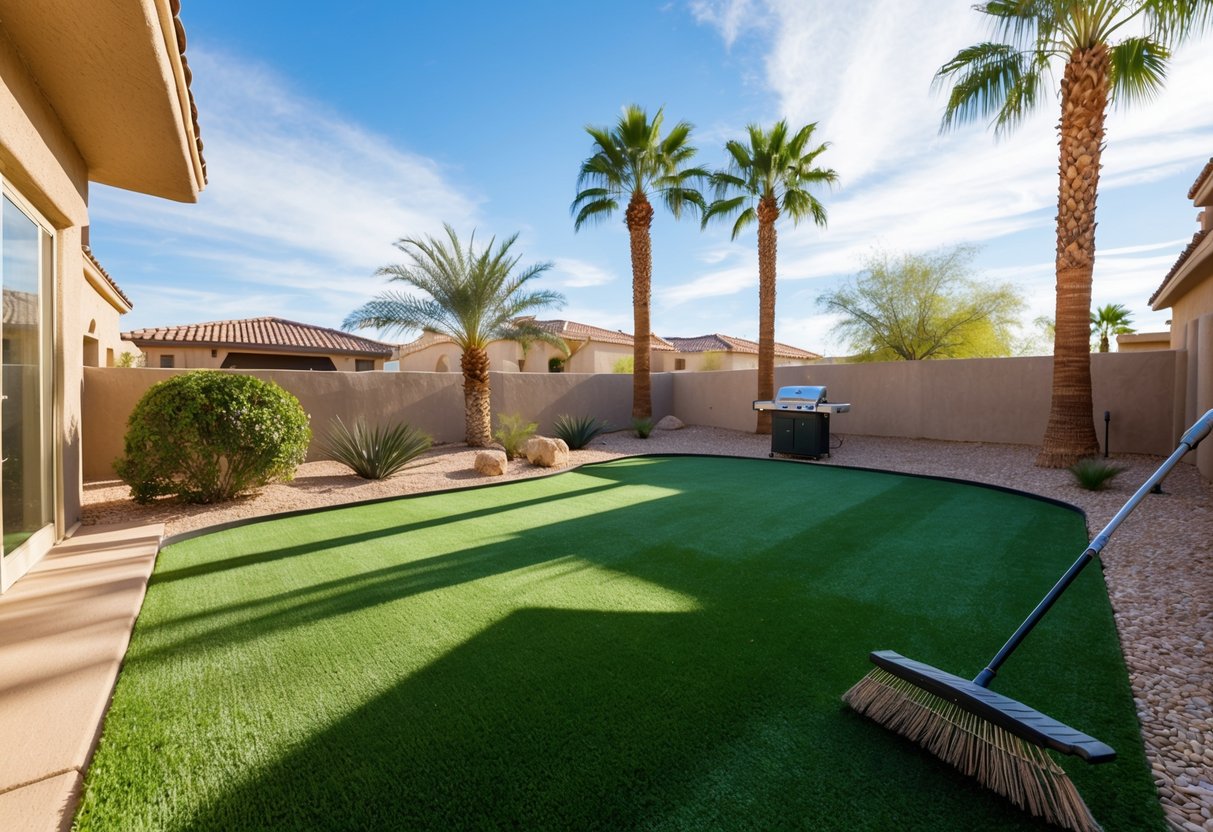
Las Vegas weather puts unique demands on artificial turf throughout the year. Different seasons require specific care to keep your lawn looking its best and functioning properly.
Summer Care
The intense Las Vegas heat can raise turf temperatures significantly. We recommend spraying down your artificial grass with water on very hot days to cool the surface and make it more comfortable for use.
Remove debris like leaves and dust weekly with a stiff brush or leaf blower. This prevents matting and helps maintain proper drainage.
Check infill levels monthly during summer, as high temperatures can cause slight settling. Add more infill if needed to keep the grass blades upright and maintain proper cushioning.
Winterizing Your Turf
Winter brings less maintenance work, but proper care is still essential. Remove fallen leaves promptly to prevent them from decomposing and creating a breeding ground for weeds.
Check drainage systems before winter rains. Clear any blockages in the turf’s drainage holes and perimeter areas.
We suggest using a specialized turf cleaner to remove accumulated dirt and dust during the cooler months when natural rain won’t help wash away debris.
Keep an eye on seams and edges during temperature fluctuations. Quick repairs of any loose areas will prevent bigger problems later.
Troubleshooting Common Issues
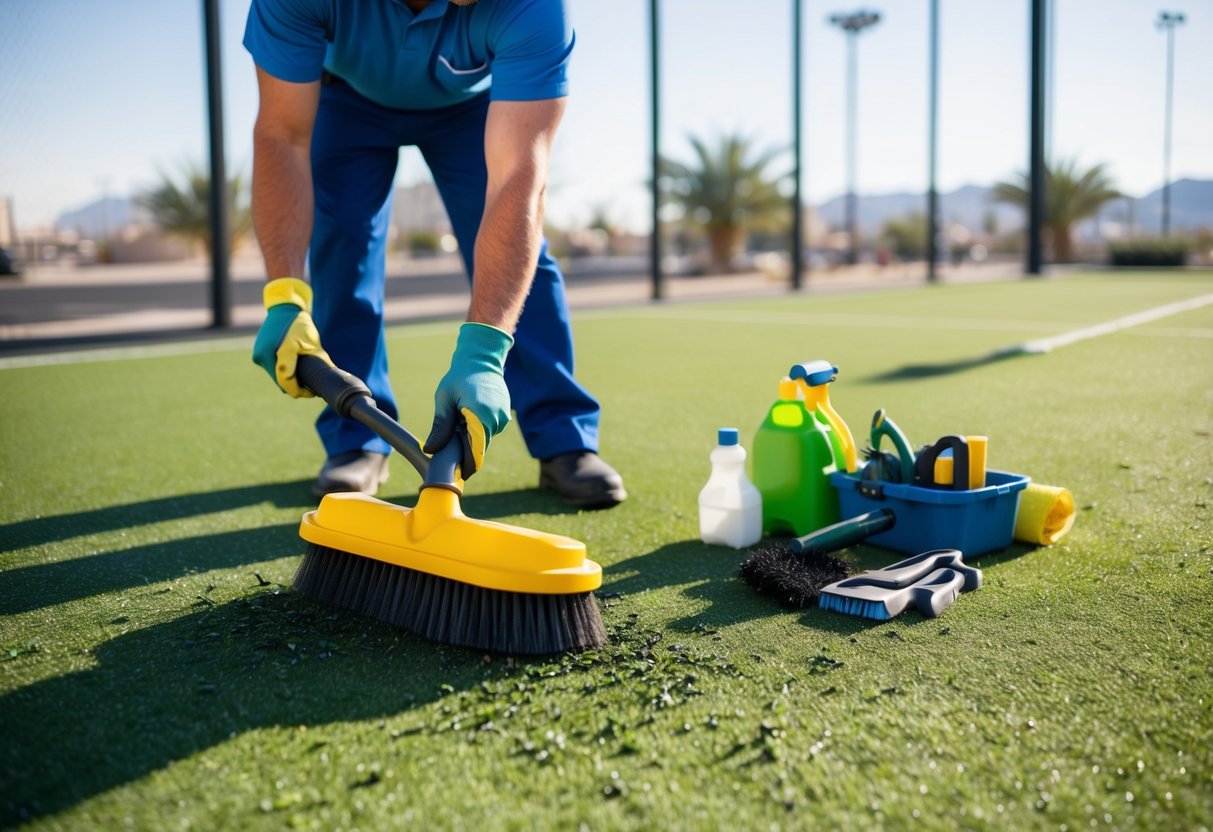
Regular maintenance helps prevent most artificial turf problems, but even well-maintained lawns can develop issues that need fixing. We’ll show you how to handle common problems that affect synthetic grass in Las Vegas.
Addressing Drainage Problems
Poor drainage causes water to pool on your artificial lawn, creating an unsightly mess and potential damage. First, check if debris is blocking the drainage holes in your turf’s backing. Use a stiff brush to clear these holes.
Create a mix of water and mild detergent to clean clogged areas. Gently scrub the surface with a soft-bristled brush. Rinse thoroughly with clean water.
If water still pools, inspect the base layer beneath your turf. Proper drainage installation requires a 3-4 inch layer of crushed rock or gravel. Add more base material if needed.
Repairing Minor Turf Damage
Patio furniture and heavy objects can damage artificial grass, creating dents or tears. For dents, use a soft brush to gently lift the flattened fibers. A hair dryer on low heat can help restore the grass blades’ shape.
Small tears need immediate attention to prevent spreading:
- Clean the damaged area
- Apply seam tape underneath the tear
- Use turf adhesive to secure the edges
- Brush the fibers upright once dry
For burns or melted spots from reflective windows, cut out the damaged section and replace it with a matching turf patch. Professional repair services can handle larger damaged areas.