


White spots covering artificial turf are signs of calcium buildup from hard water. This common problem happens when water with high mineral content evaporates and leaves behind deposits of calcium and magnesium. The buildup makes the turf look dirty and can damage its appearance over time.
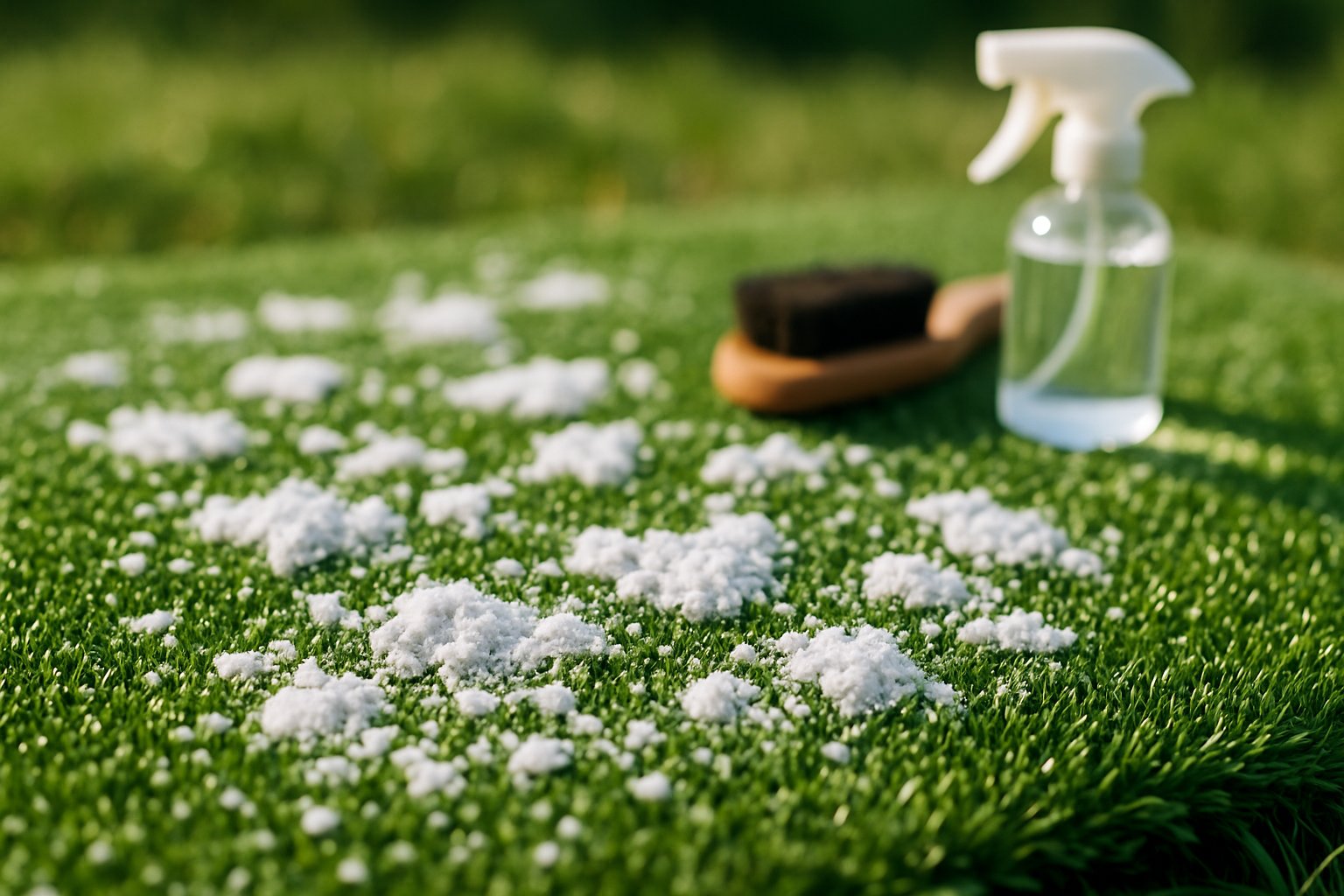
Regular cleaning and proper water management can prevent calcium deposits from forming on synthetic grass. Many homeowners don’t realize that simple maintenance steps can stop this problem before it starts. Without proper care, the white stains become harder to remove and can make expensive artificial turf look worn out.
This guide explains what causes calcium buildup and how to remove existing stains safely. It also covers ways to protect artificial turf from future mineral deposits through smart installation choices and cleaning routines. Understanding these issues helps homeowners keep their synthetic grass looking new for years.
What Is Calcium Buildup on Artificial Turf?
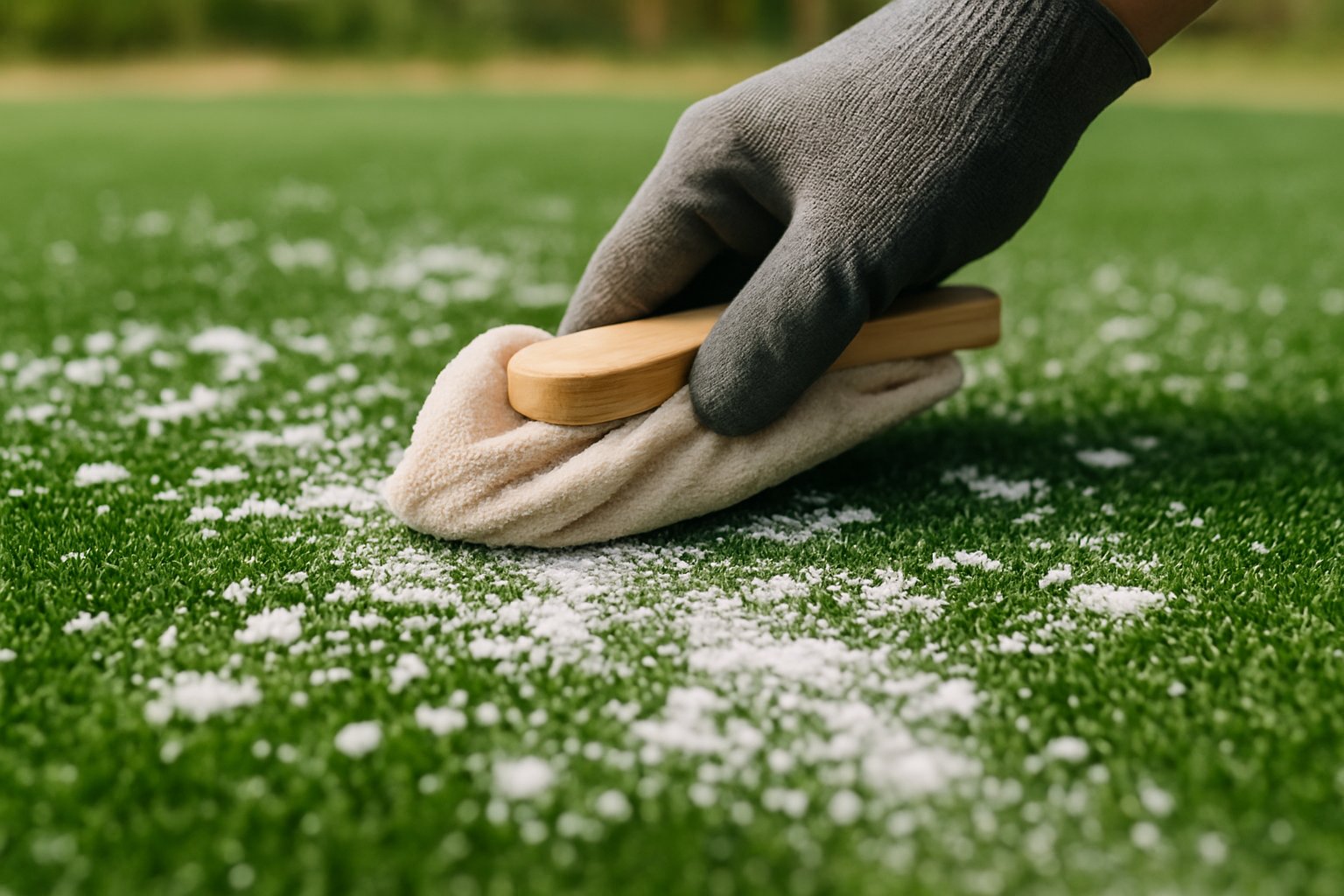
Calcium buildup appears as white or gray deposits on synthetic grass surfaces, caused by minerals in hard water that remain after evaporation. These deposits sit on top of the turf fibers rather than penetrating them, making them different from permanent stains.
Definition and Appearance
Calcium buildup is a collection of mineral deposits that forms on artificial turf when hard water evaporates. The deposits primarily contain calcium and magnesium from the water supply. They create a visible white or gray haze across the synthetic grass surface.
The buildup looks like a dull, chalky powder or crusty layer on the turf blades. Some people mistake these deposits for permanent stains, but they remain on the surface of the fibers. The white residue becomes more noticeable over time as minerals accumulate.
Hard water deposits make synthetic grass look less vibrant and worn out. The affected areas may appear discolored or faded compared to clean sections of turf.
How Calcium Deposits Form
Hard water contains high levels of dissolved minerals, especially calcium and magnesium. This occurs when water passes through underground limestone deposits before reaching the water supply. Areas with mineral-rich groundwater experience more problems with hard water.
When hard water lands on artificial turf through sprinklers, rain, or pool splashing, it sits on the grass blades. As the water evaporates, it leaves behind the minerals it carried. Each watering session adds another thin layer of mineral deposits.
The minerals bond to the turf fibers as they dry. Over weeks and months, these layers build up into visible white spots and films. The deposits accumulate faster in areas that get frequent water exposure or direct sprinkler spray.
Primary Causes of Calcium Buildup
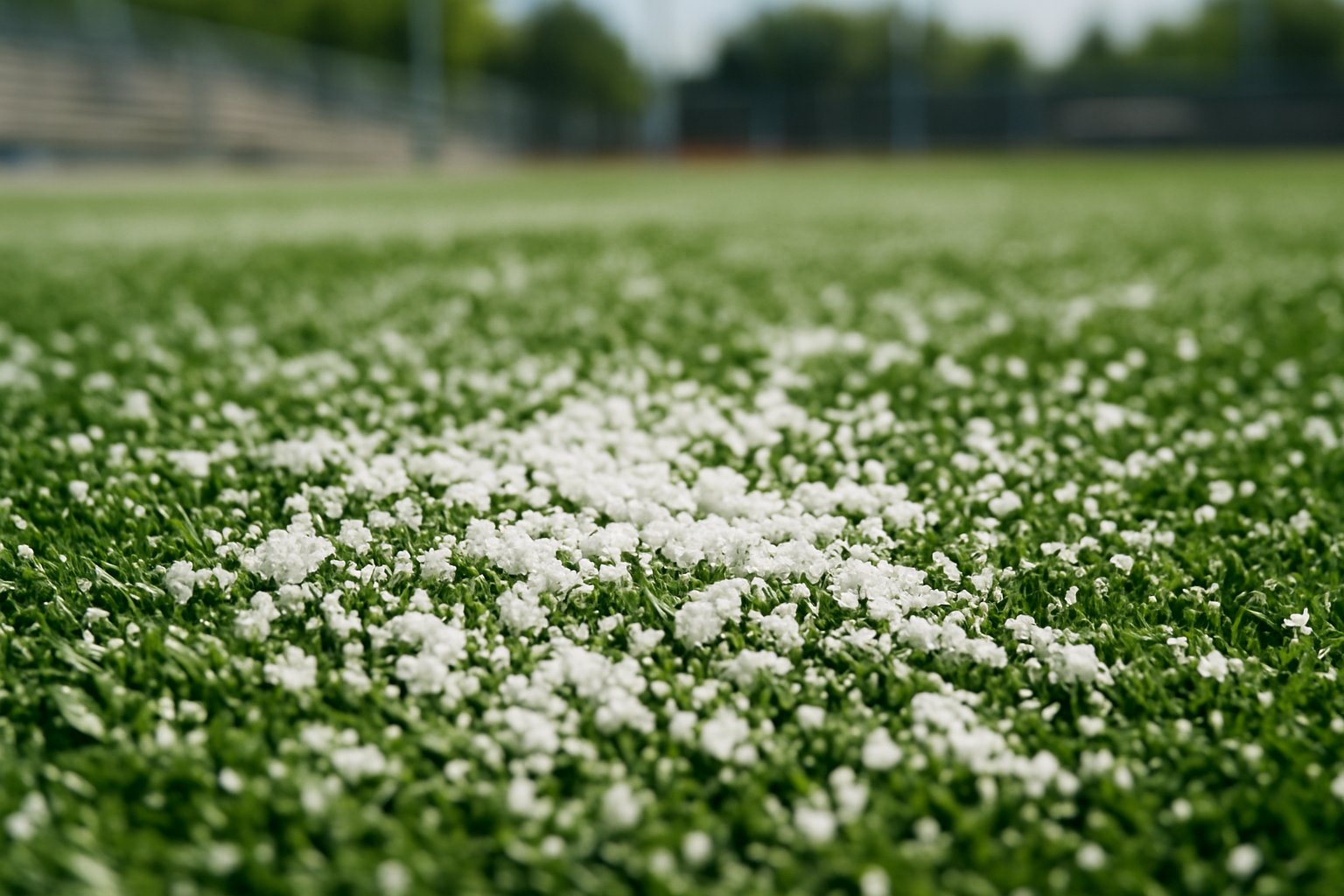
Calcium buildup on artificial turf stems from mineral-rich water sources and environmental factors that deposit microscopic particles onto synthetic fibers. Understanding these causes helps property owners address the root of the problem rather than just treating visible symptoms.
Hard Water and Irrigation Practices
Hard water contains high levels of dissolved minerals, primarily calcium and magnesium. These minerals enter the water supply when groundwater passes through limestone deposits made up of calcium, magnesium, bicarbonates, and sulfates.
When hard water lands on artificial grass through sprinkler systems or hoses, the water evaporates. The minerals stay behind on the synthetic fibers as white, chalky deposits.
Irrigation systems pose the biggest risk for calcium buildup. Sprinklers that spray water directly onto turf deliver a constant stream of mineral-laden water. Over time, repeated watering cycles create layers of mineral deposits that accumulate on the grass blades.
The problem intensifies in areas with naturally high mineral content in groundwater. Properties located near limestone-rich geology experience more severe calcium buildup than those with softer water sources.
Environmental Sources of Mineral Deposits
Rainfall contributes to calcium buildup, especially in regions where atmospheric moisture passes through mineral-rich air. Rain picks up particles as it falls and deposits them on artificial turf surfaces.
Pool splash and overflow water create concentrated mineral deposits. Pool water often contains added chemicals and higher mineral content than regular tap water. When this water splashes onto nearby artificial grass, it leaves behind thick residue.
Nearby construction sites and landscaping activities release dust and mineral particles into the air. These particles settle on turf surfaces and combine with moisture to form calcium deposits.
Role of Debris in Accumulation
Debris traps moisture against artificial grass fibers and accelerates mineral buildup. Leaves, dirt, and organic matter act as collection points for calcium-rich water.
When debris sits on turf, it prevents proper drainage and creates pockets where hard water pools. These standing water areas produce concentrated mineral deposits as the water slowly evaporates.
Common debris contributors:
- Fallen leaves and plant matter
- Dirt and soil particles
- Pollen and airborne dust
- Pet waste and outdoor residue
The combination of debris and hard water creates a cycle where minerals bond to both the synthetic fibers and trapped organic material. This makes removal more difficult than deposits on clean turf surfaces.
How Calcium Buildup Affects Synthetic Turf
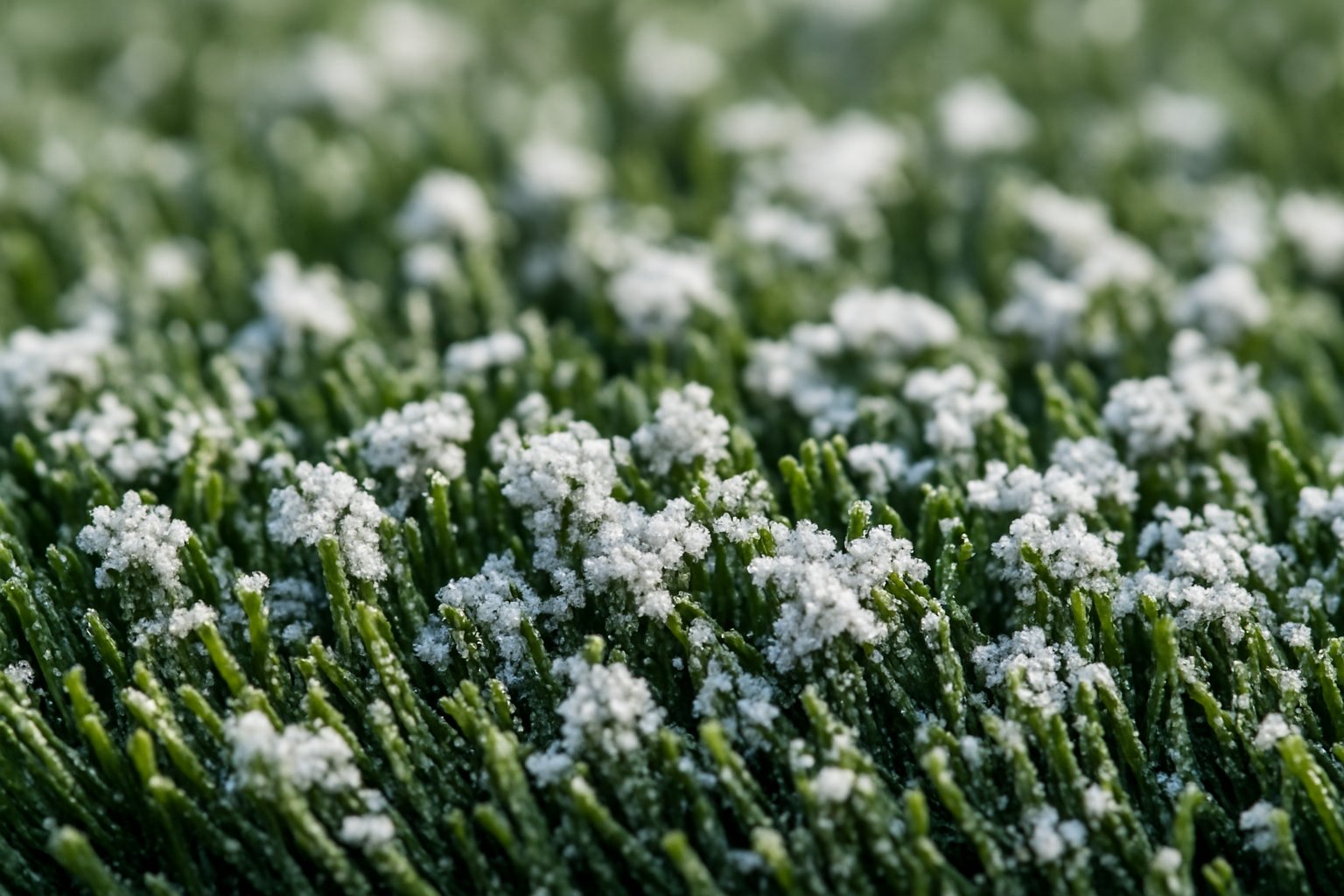
Calcium deposits create visible and functional problems for artificial turf that go beyond simple aesthetics. These mineral accumulations alter the appearance of the grass, may compromise the fibers themselves, and can interfere with how water moves through the system.
Visual Impact and Discoloration
Calcium buildup leaves a white or chalky film across the surface of synthetic grass. This residue sits on top of the blades and creates a dull, hazy appearance that makes the turf look dirty or poorly maintained.
The white powder is most noticeable on darker green turf colors. It forms a visible contrast that draws attention to affected areas. Heavy mineral deposits can make an artificial lawn look faded or aged even when the turf itself remains in good condition.
These deposits don’t absorb into the fibers like traditional stains would. They rest on the surface as a crusty layer that catches light differently than clean grass blades. The buildup often appears in patches where water collects or evaporates most frequently, creating an uneven appearance across the lawn.
Damage to Turf Fibers
The synthetic fibers in artificial turf are delicate and can suffer from prolonged exposure to mineral deposits. While calcium doesn’t penetrate the fibers, accumulated minerals can trap dirt and debris against the blades.
This trapped material creates friction when people walk across the turf or when maintenance equipment brushes the surface. The added friction can cause fibers to fray or break down faster than normal. Heavy mineral buildup may also cause the blades to stick together or lay flat instead of standing upright.
The backing material of synthetic grass can also be affected when minerals accumulate in large quantities. Excessive deposits may work their way into the backing over time, though this typically only occurs with severe neglect.
Impact on Drainage and Maintenance
Calcium deposits can slow down water drainage by blocking the small holes in the turf backing. When minerals accumulate around drainage points, water pools on the surface instead of flowing through properly.
Poor drainage creates additional problems beyond the calcium itself. Standing water leads to more mineral deposits as it evaporates, creating a cycle that worsens over time. The pooling also makes the turf less usable after rain or irrigation.
Regular maintenance becomes more difficult when calcium builds up on synthetic turf. Brushes and cleaning equipment work less effectively when mineral deposits coat the fibers. This means property owners need to clean more frequently or use stronger cleaning methods to maintain the same results.
Effective Methods for Calcium Buildup Removal
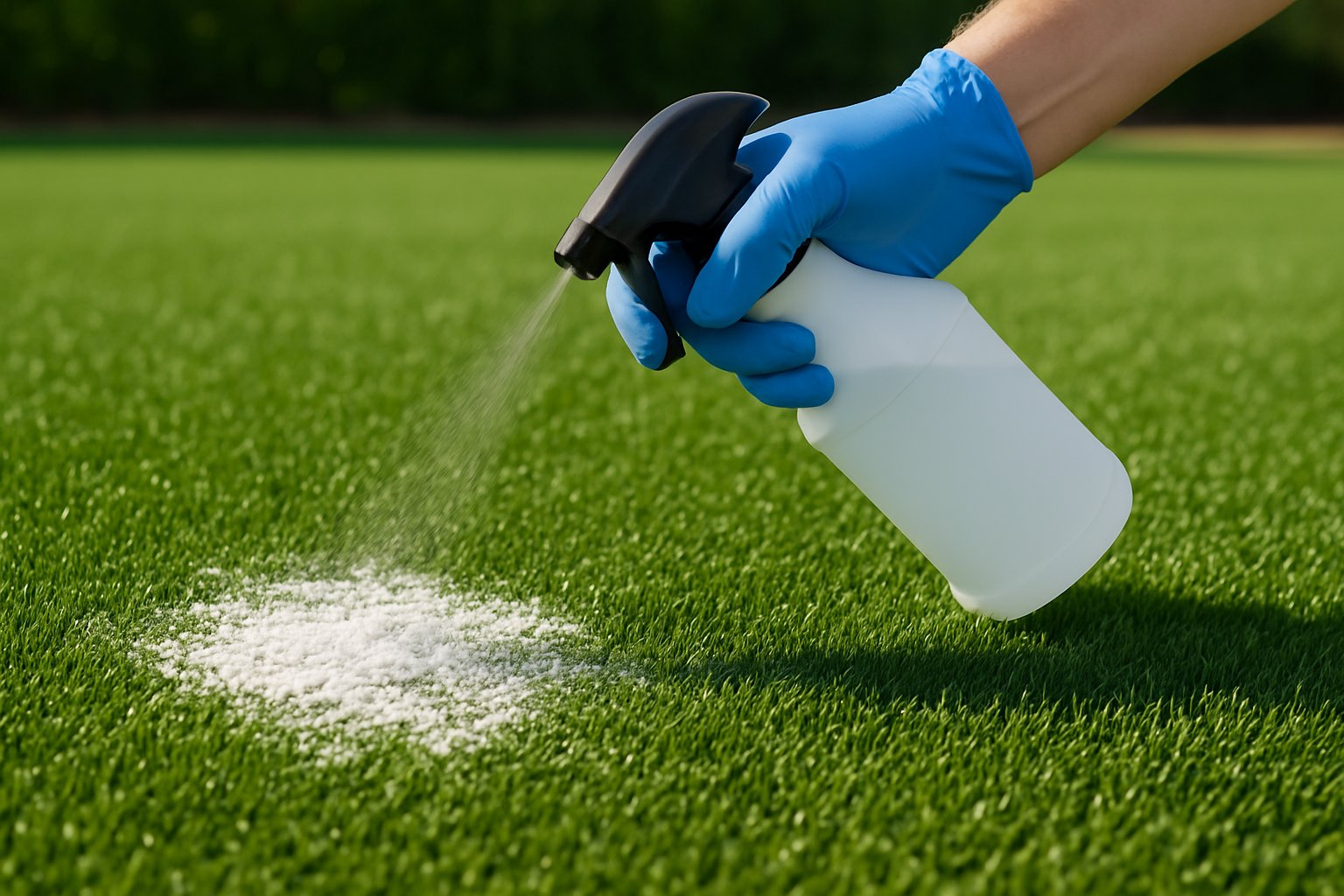
Removing calcium deposits from artificial turf requires the right approach and materials to protect the synthetic fibers while eliminating white, chalky residue. Natural acids, specialized cleaners, and gentle mechanical methods can all restore turf appearance without causing damage.
Using Natural Solutions (Vinegar, Baking Soda, Lemon Juice)
White vinegar stands as the most effective natural solution for dissolving calcium deposits on artificial turf. The acetic acid in vinegar breaks down calcium carbonate into water-soluble compounds that rinse away easily.
Basic Vinegar Treatment:
- Mix equal parts white vinegar and water in a spray bottle
- Spray directly onto affected areas
- Let sit for 15-20 minutes
- Rinse thoroughly with clean water
For stubborn deposits, homeowners can apply undiluted vinegar. The solution works best when applied during warm weather, as heat accelerates the chemical reaction between acid and minerals.
Lemon juice offers similar results due to its citric acid content. Users should dilute fresh lemon juice with an equal amount of water before application. This method requires the same 15-20 minute waiting period.
Baking soda serves as a gentle abrasive when mixed with water into a paste. This combination helps lift deposits without scratching synthetic lawn fibers. Homeowners should apply the paste, scrub gently with a soft brush, then rinse completely.
Safe Chemical Cleaners for Artificial Turf
Commercial cleaners designed specifically for artificial turf offer stronger solutions for heavy calcium buildup. These products contain chelating agents that bind to minerals and facilitate their removal.
Key Features to Look For:
- pH-neutral formulations
- Non-toxic ingredients
- Biodegradable components
- Turf manufacturer approval
Users must avoid bleach, ammonia, or harsh alkaline cleaners. These chemicals can damage the synthetic lawn backing and cause fiber discoloration. Products labeled for use on synthetic materials provide the safest option.
Application requires following manufacturer instructions precisely. Most commercial cleaners need dilution before use and specific contact times to work effectively. Thorough rinsing after treatment prevents residue buildup that could attract dirt.
Mechanical Techniques for Removing Deposits
Light brushing with a soft-bristled broom helps remove loose calcium deposits from artificial turf surfaces. This method works best as a regular maintenance practice rather than for heavy buildup.
A stiff brush can address more stubborn deposits when combined with cleaning solutions. Users should brush in the direction of the turf fibers to avoid damage. Synthetic lawn materials tolerate gentle scrubbing without fiber separation.
Power washing remains an option for severe cases but requires caution. The pressure setting should stay below 1500 PSI to prevent backing damage. Operators must keep the nozzle at least 12 inches from the turf surface and use a wide spray pattern.
Regular rinsing with filtered water prevents new deposits from forming after removal. This maintenance step reduces the frequency of intensive cleaning treatments.
Prevention Strategies for Long-Term Protection
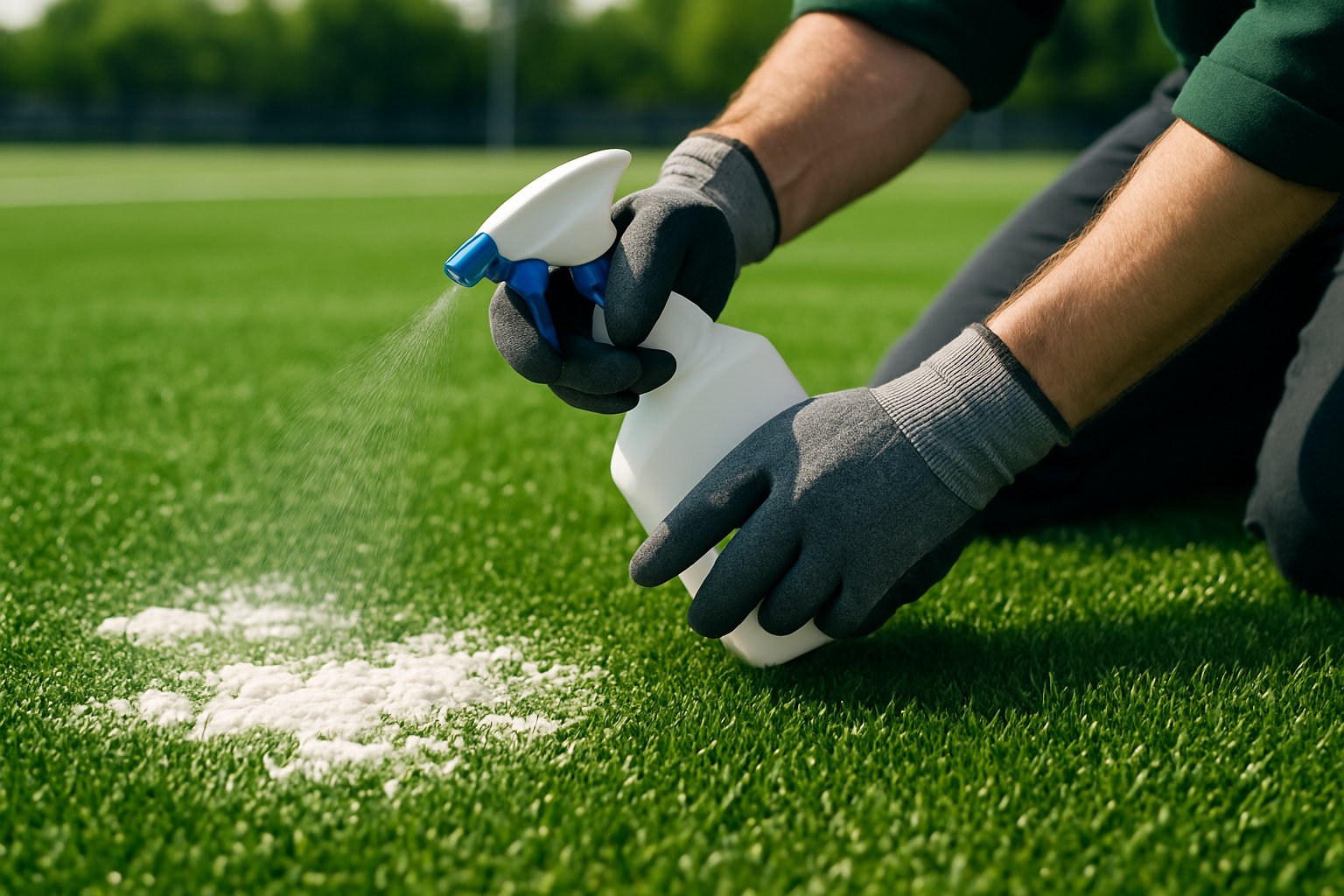
Stopping calcium deposits before they form saves time and protects the artificial turf investment. Using soft water, adjusting irrigation habits, and maintaining a regular cleaning schedule keeps turf looking clean for years.
Adjusting Watering and Irrigation Systems
The amount and timing of watering directly affect calcium buildup on artificial lawns. Overwatering increases the volume of mineral-rich water that contacts the turf fibers, which leads to more deposits forming on the surface.
Property owners should water during early morning hours when evaporation rates are lower. This reduces the concentration of minerals left behind as water dries. Adjusting sprinkler heads to minimize overspray onto artificial turf areas also helps limit exposure to hard water.
Installing a timer on irrigation systems prevents accidental overwatering. The timer ensures only necessary amounts of water reach the landscaping near the turf. Reducing water volume by 30-50% in areas adjacent to artificial grass cuts down on runoff and splashing that carries minerals onto synthetic fibers.
Routine Maintenance and Regular Cleaning
Weekly light cleaning removes mineral deposits before they harden and become difficult to eliminate. A simple rinse with a garden hose washes away dust and early-stage calcium formation.
Monthly deep cleaning should include:
- Hosing down the entire turf surface
- Using a soft-bristle broom to brush fibers upright
- Inspecting edges and seams where water pools
- Removing any visible white spots immediately
Quarterly maintenance involves checking drainage systems to ensure water flows away from the turf properly. Standing water accelerates mineral deposit formation. Property owners should also inspect infill levels and add more if the turf appears flat or compacted.
Filtration and Water Softening Solutions
Water softener systems treat hard water before it reaches artificial turf. These systems exchange calcium and magnesium ions for sodium ions, which prevents mineral deposits from forming.
Whole-house water softeners provide the most complete protection. They treat all water used for outdoor irrigation and cleaning. Point-of-use softeners can be installed specifically on outdoor faucets or irrigation lines as a more affordable option.
Scale inhibitors offer an alternative to traditional softeners. These products change the structure of minerals so they stay dissolved in water rather than bonding to turf fibers. Products like FiberArmor create a protective barrier on synthetic grass that resists calcium attachment and makes cleaning easier when deposits do occur.
Installation and Product Selection Considerations
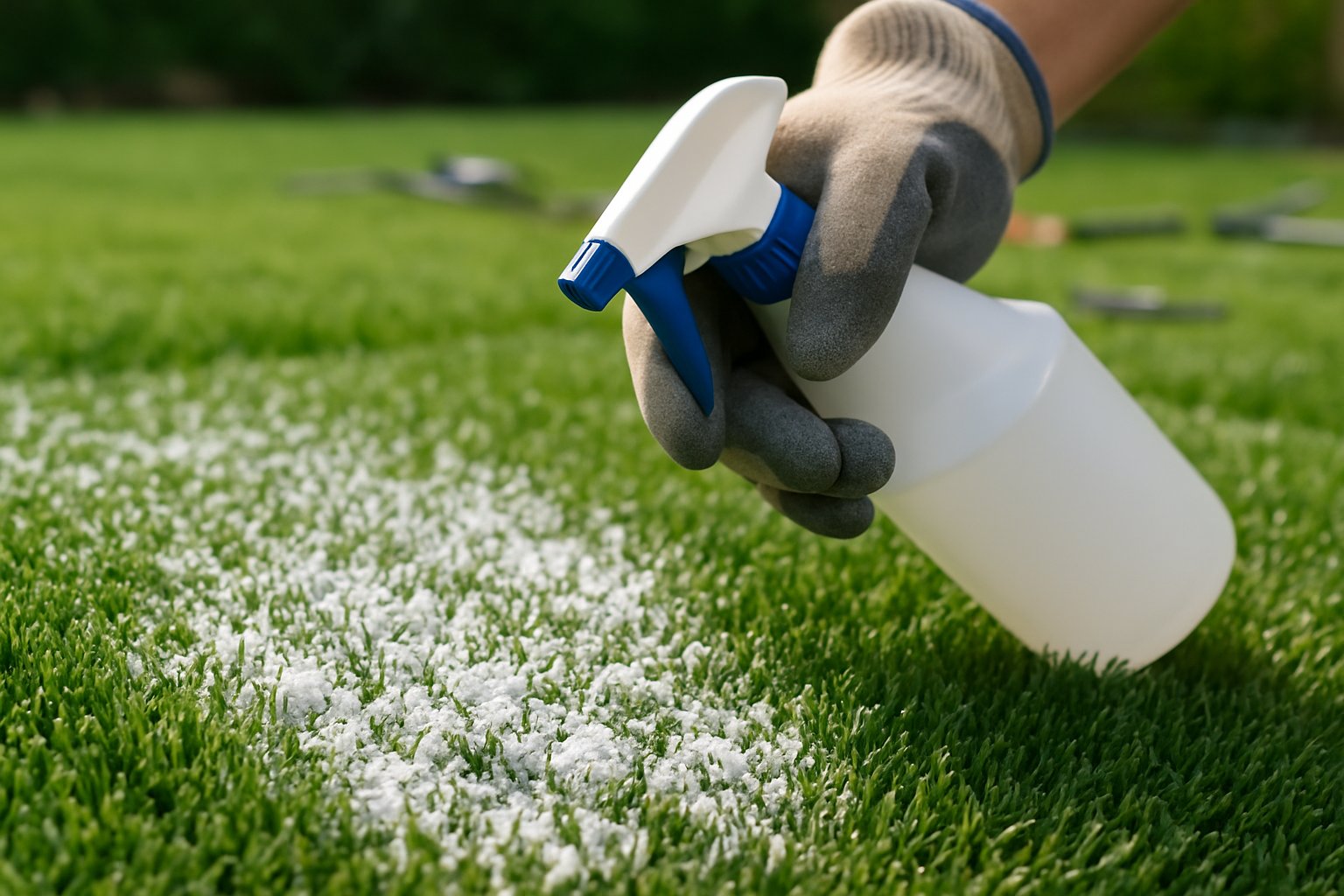
Proper installation and material choices play a major role in preventing calcium buildup on artificial turf. The right products and techniques create better drainage and reduce areas where hard water minerals can accumulate.
Choosing Quality Materials to Minimize Risk
High-quality artificial turf features better drainage capabilities that prevent water from pooling on the surface. Turf with a higher permeability rating allows water to drain through quickly, reducing the time minerals have to settle and create deposits.
The backing material matters significantly. Turf with polyurethane backing typically drains more efficiently than latex-backed options. This improved drainage means less standing water and fewer opportunities for calcium to build up on the grass fibers.
Infill selection also affects calcium accumulation. Some infill materials are more resistant to mineral adhesion than others. Silica sand and certain rubber infills tend to shed hard water deposits more easily than organic materials.
The turf fiber quality impacts how minerals attach to the surface. Premium fibers with smoother surfaces make it harder for calcium deposits to grip and accumulate. These fibers also clean more easily when deposits do form.
Best Installation Techniques for Drainage and Protection
A properly graded base is critical for preventing calcium buildup on a synthetic lawn. The installation area should slope at least 1-2% away from structures to ensure water flows off the turf rather than pooling.
The base layer composition directly affects drainage performance. A crushed stone base with fine gravel or decomposed granite provides excellent drainage. This base should be at least 3-4 inches deep and properly compacted to prevent settling.
Installing drainage systems beneath the turf helps in areas with poor natural drainage. French drains or perforated pipes channel excess water away from the installation. This prevents water from sitting beneath the turf where it can wick up through the backing.
Proper seam placement reduces mineral accumulation points. Seams should follow the natural water flow direction rather than cutting across it. This prevents water from collecting along seam lines where calcium deposits often form.
Edge restraints must allow for drainage while keeping the turf secure. Gaps between restraint sections let water escape rather than trapping it at the perimeter where minerals concentrate.