


Artificial grass looks great, but it needs care to stay clean and fresh. Many homeowners wonder how the pros tackle this task. We at Sparkly Turf have the answers.
Professional artificial grass cleaning involves specialized equipment, eco-friendly cleaners, and expert techniques to remove dirt, debris, and odors while preserving the turf’s appearance and longevity. Our team uses turf-specific cleaning solutions that are safe for pets and kids.
We start by removing loose debris with blowers or rakes. Then we apply our cleaning agents and use brushes to work them into the fibers. Finally, we rinse the turf thoroughly. This process helps keep artificial grass looking its best for years to come.
Benefits of Professional Cleaning for Artificial Grass

Professional cleaning of artificial grass offers many advantages. We know that regular maintenance keeps your turf looking great and working well.
One key benefit is the removal of debris and stains. Pros have special tools to get rid of leaves, dirt, and tough marks.
Another plus is improved drainage. Over time, dirt can clog the turf backing. Pro cleaning helps water flow through easily.
Professional cleaning also extends the life of your grass. It prevents wear and tear from built-up grime.
We’ve seen how pro cleaning keeps artificial turf fresh and vibrant. This means your lawn looks great year-round.
Proper cleaning helps maintain the turf’s softness and bounce. This is key for sports fields and play areas.
Pro cleaners use safe, eco-friendly products. This protects both your grass and the environment.
Lastly, professional cleaning saves you time and effort. You can enjoy your beautiful lawn without the hard work.
Does Your Turf Smell?
At Sparkly Turf, we effectively remove pet odors and refresh your turf, restoring its pristine and clean look.

Pre-Cleaning Inspection and Assessment

Before we start cleaning artificial grass, we always do a careful check of the area. This helps us plan the best way to clean and spot any issues.
We look for these things during our inspection:
- Debris like leaves, twigs, and trash
- Stains from spills or pet waste
- Worn or damaged areas of the turf
- Weeds or moss growth
- Odors that need special treatment
Our team uses a checklist to assess the turf’s condition. We note things like how dirty it is and if there are stubborn stains.
We also check the infill levels. Infill is the material between the grass blades that keeps them upright. If it’s low, we may need to add more after cleaning.
This inspection helps us pick the right cleaning tools and products. For example, we might use special treatments for pet odors or tough stains.
We take photos to track the turf’s condition over time. This helps us spot any long-term issues and keep the grass looking great.
By doing this careful check first, we can clean the artificial grass more effectively. It ensures we don’t miss any spots and use the best methods for each area.
Materials and Tools Required for Professional Cleaning
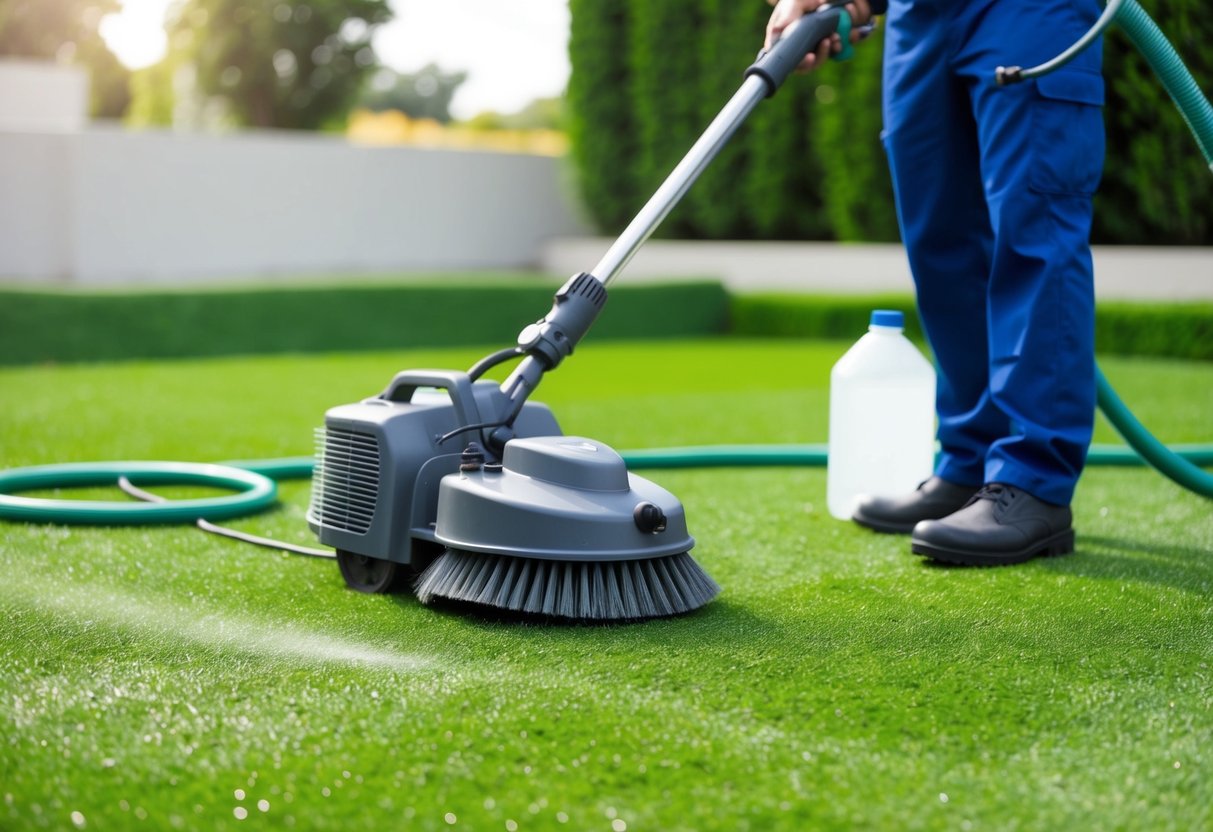
Professional artificial grass cleaning requires specific tools and materials. We’ll outline the essential items needed for a thorough clean.
A leaf blower is crucial for removing loose debris. It’s faster than raking and keeps the grass fibers safe from damage.
We use specialized brushes designed for synthetic turf. These are vital for removing debris and maintaining the grass’s appearance.
For deep cleaning, we employ a power washer or hose with adjustable nozzles. This helps us control water pressure and avoid damaging the turf.
Eco-friendly cleaning solutions are a must. We use mild dish soap mixed with water for most stains. For tougher spots, we have specialized artificial grass cleaners.
Rakes with plastic tines help us groom the grass and remove embedded debris. Metal rakes are too harsh and can damage the fibers.
We also use turf deodorizers to eliminate odors, especially in areas frequented by pets.
Lastly, we have protective gear like gloves and safety glasses to ensure our team’s safety during the cleaning process.
Debris Removal Techniques
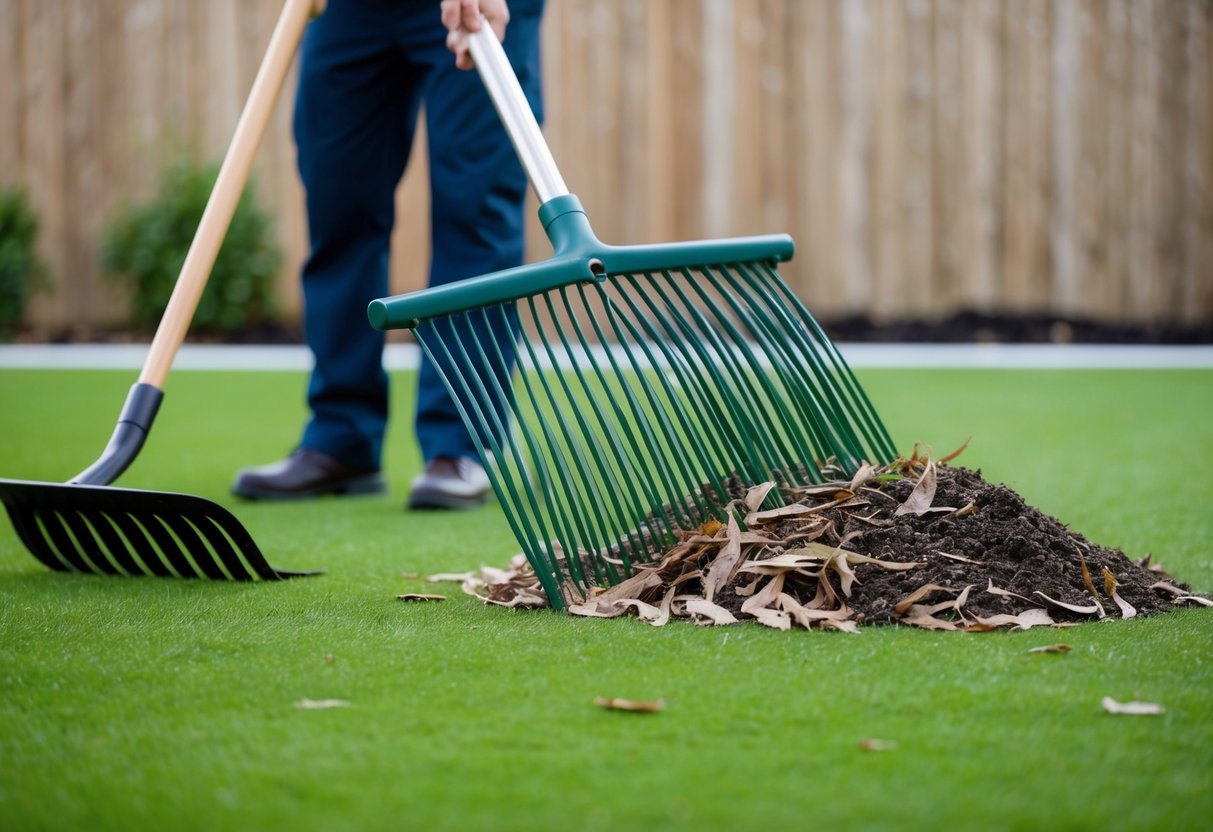
Removing debris is a key step in cleaning artificial grass. We use several methods to get rid of leaves, twigs, and other loose materials.
A leaf blower is often our first choice. It’s quick and efficient for large areas. We start at one end of the turf and work our way across, blowing debris to the edges.
For smaller spaces or stubborn debris, we opt for a specialized turf rake. These rakes have soft bristles that won’t damage the grass fibers. We gently rake in different directions to loosen and collect debris.
Sometimes we use a combination of blowing and raking. This helps us tackle different types of debris effectively.
For wet debris, we may use a rubber rake or a soft-bristled push broom. These tools can scrape off mud or wet leaves without harming the turf.
After removing larger items, we often go over the area with a turf brush. This fluffs up the grass fibers and reveals any hidden debris.
We always dispose of collected debris properly. This prevents it from blowing back onto the clean turf later.
Regular debris removal keeps artificial grass looking fresh and extends its lifespan. We recommend doing this at least once a week for best results.
Deep Cleaning Process
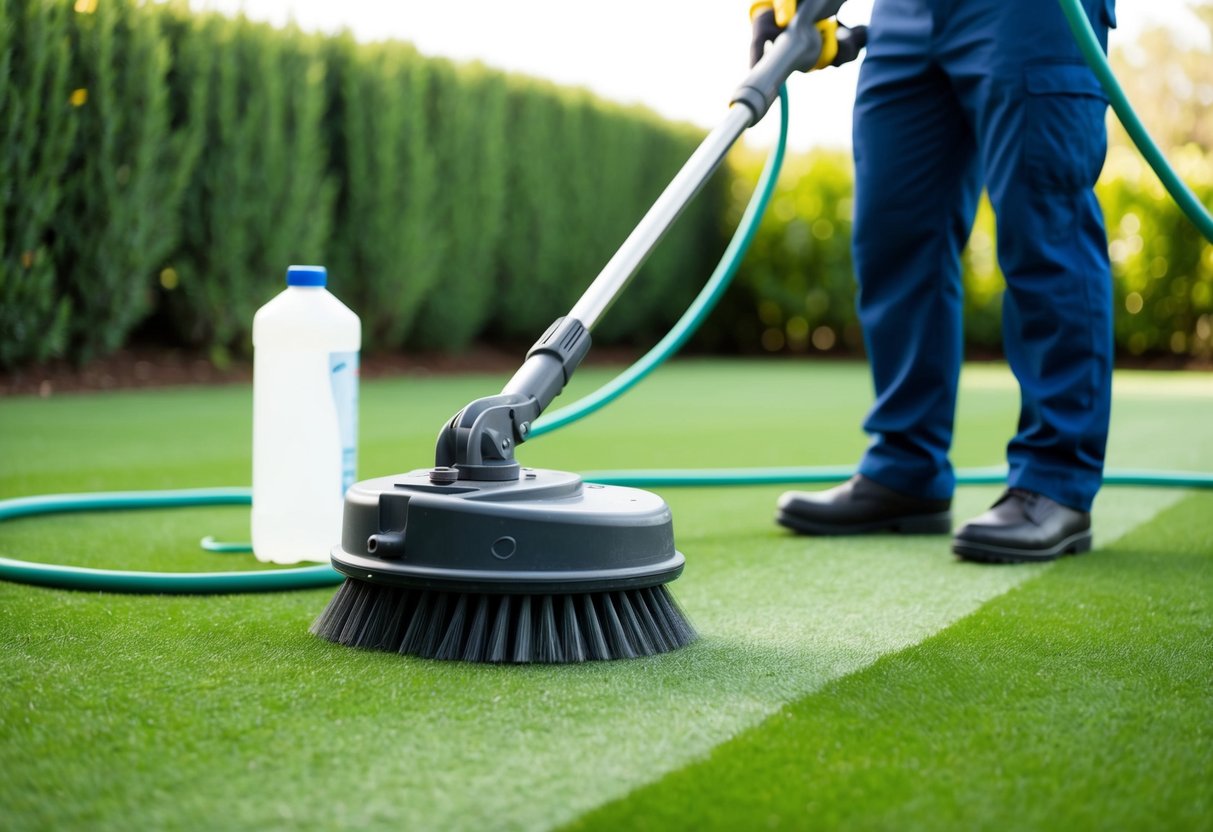
At Sparkly Turf, we take artificial grass cleaning seriously. Our deep cleaning process starts with a thorough rinse to remove surface dirt and debris.
Next, we use specialized equipment to deep clean the turf. This includes power brushes and rakes to lift embedded dirt and straighten grass blades.
We apply a non-toxic cleaner to sanitize the turf and eliminate bacteria. This step is crucial for maintaining a hygienic surface, especially for areas with pets.
Our team then uses a power broom to restore the turf’s appearance. This tool helps fluff up the grass fibers and distribute infill evenly.
For stubborn stains, we pre-treat the affected areas with a mild soap solution. We gently work it into the fibers before rinsing thoroughly.
The final step involves a meticulous inspection. We ensure no spots are missed and the turf looks pristine.
We recommend deep cleaning artificial grass twice a year for optimal results. This schedule keeps your turf looking fresh and extends its lifespan.
Our process is designed to be thorough yet gentle on the turf. We use eco-friendly products that won’t harm your lawn or the environment.
Rinse and Post-Cleaning Maintenance
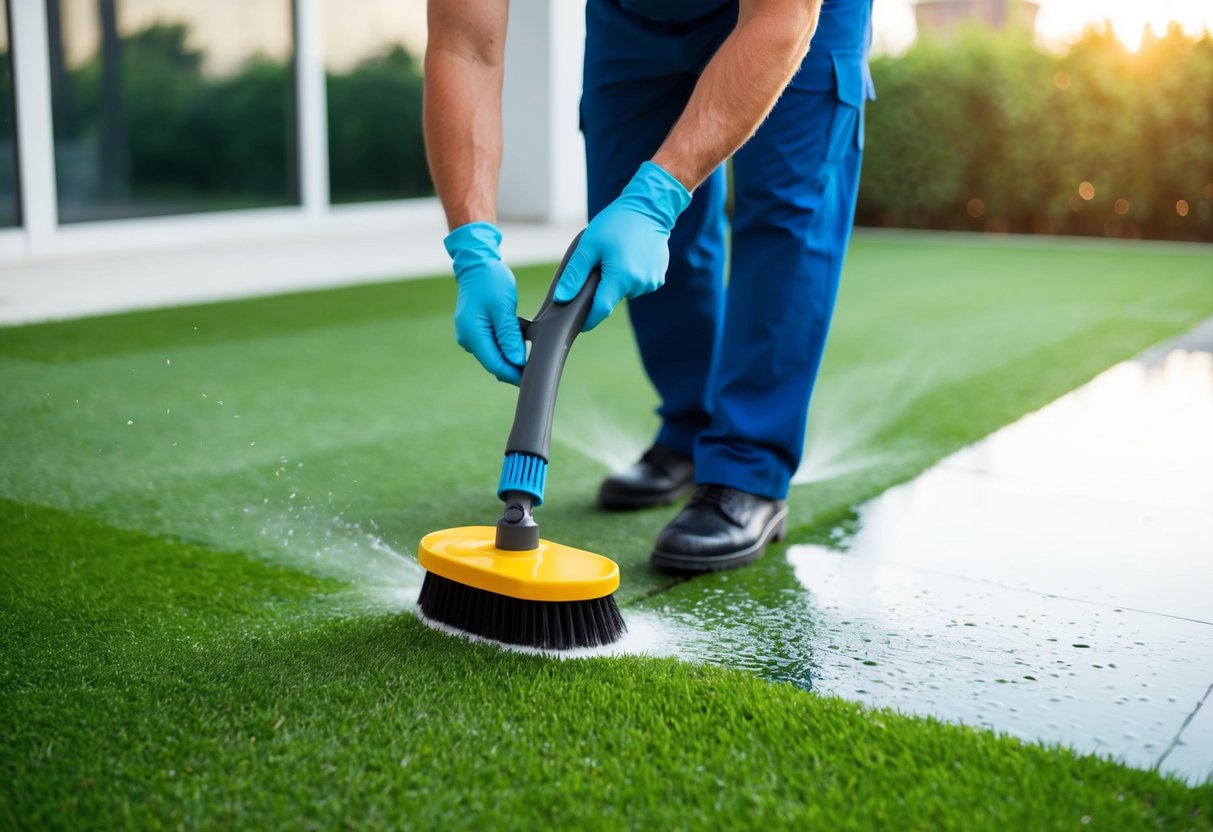
After deep cleaning artificial grass, we always do a thorough rinse. This step is crucial to remove any leftover cleaning agents and debris.
We use a garden hose with a spray nozzle to rinse the entire area. It’s important to start from one end and work our way across, making sure we cover every inch.
For larger areas, we might use a pressure washer on a low setting. This helps to flush out any remaining dirt or soap.
Once rinsed, we let the turf dry completely. This usually takes a few hours, depending on the weather.
After drying, we brush the turf to restore its upright position. We use a stiff-bristled broom or a special artificial grass rake for this.
Regular maintenance is key to keeping artificial grass clean between deep cleans. Here are some tips:
- Remove debris weekly with a leaf blower or rake
- Rinse the turf regularly, especially in high-traffic areas
- Clean up spills and pet waste promptly
- Avoid using harsh chemicals or bleach
By following these steps, we ensure the artificial grass stays clean, fresh, and long-lasting.
Addressing Common Artificial Grass Issues
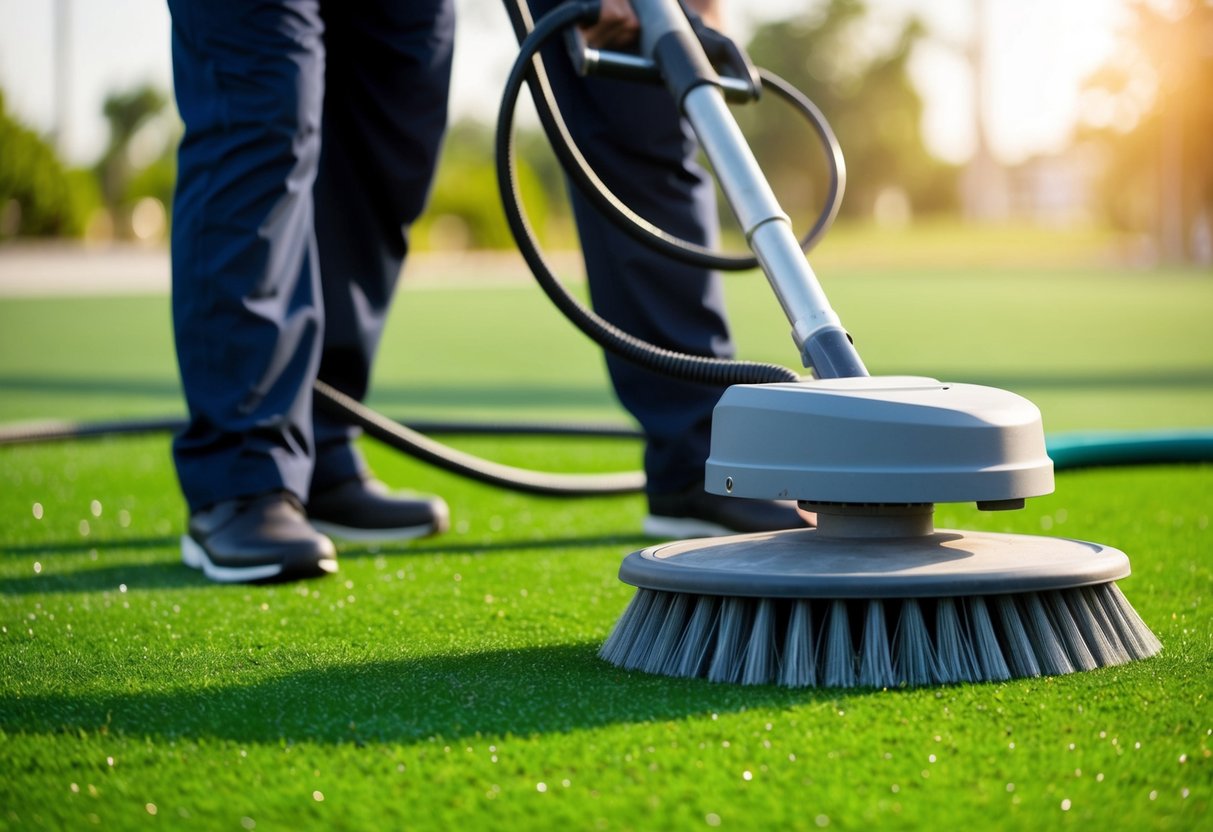
Artificial grass can face several problems that need attention. We’ll cover some common issues and how to address them.
Lifting edges is a frequent problem with artificial turf. To fix this, we recommend securing the edges properly during installation or re-securing them if they come loose.
Stains are another concern. We suggest cleaning spills promptly to prevent staining. For stubborn marks, a mild detergent and water solution often works well.
Odors, especially from pet waste, can build up over time. Regular rinsing and use of enzyme cleaners help eliminate smells.
Flattened grass fibers can make the turf look worn. We recommend using a power brush to revive the fibers and restore the grass’s natural appearance.
Drainage issues may occur if debris clogs the turf backing. Regular cleaning and ensuring proper drainage during installation can prevent this problem.
Here’s a quick guide for cleaning different stains:
| Stain Type | Cleaning Method |
|---|---|
| Food/Drink | Mild detergent and water |
| Oil-based | Mineral spirits |
| Pet waste | Enzyme cleaner |
| Organic matter | Vinegar solution |
By addressing these issues promptly, we can help maintain the beauty and functionality of artificial grass for years to come.
Professional Service vs. DIY Cleaning
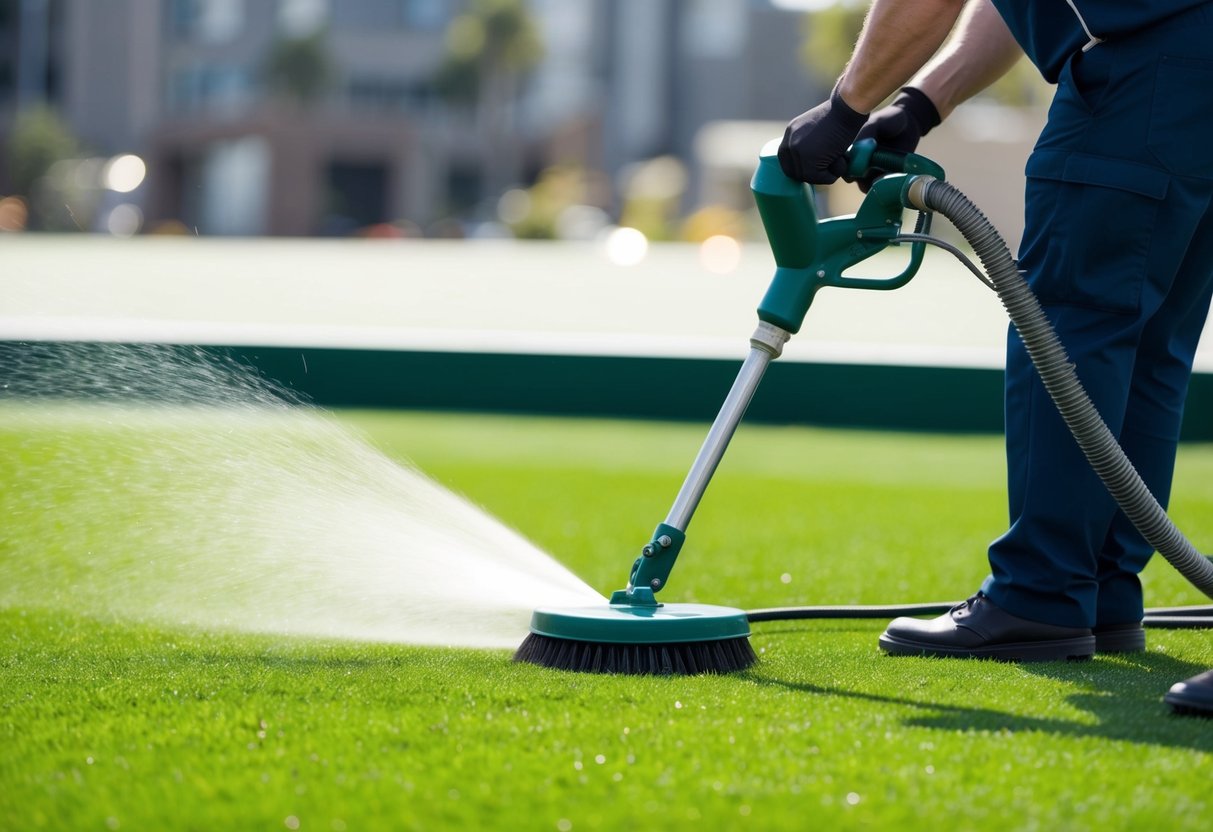
When it comes to cleaning artificial grass, we have two main options: hiring professionals or doing it ourselves. Each approach has its pros and cons.
Professional cleaning services offer expertise and specialized equipment. They know how to handle different types of turf and can tackle stubborn stains effectively. These experts use industrial-grade cleaners and tools that may not be available to homeowners.
DIY cleaning can be cost-effective in the short term. It allows for more frequent maintenance and gives us control over the products used. However, it requires time, effort, and some knowledge about proper turf care techniques.
Here’s a quick comparison:
Professional Service:
- Expertise in turf care
- Advanced equipment
- Time-saving
- Higher upfront cost
DIY Cleaning:
- More affordable initially
- Allows frequent maintenance
- Requires personal time and effort
- Limited access to professional-grade tools
We recommend a balanced approach. Regular DIY maintenance can keep the turf clean, while occasional professional services can provide deep cleaning and address any complex issues.
Remember, proper care extends the life of artificial grass. Whether we choose professional services or DIY methods, consistent cleaning is key to maintaining a fresh and attractive lawn.
Optimizing Turf Lifespan with Professional Care
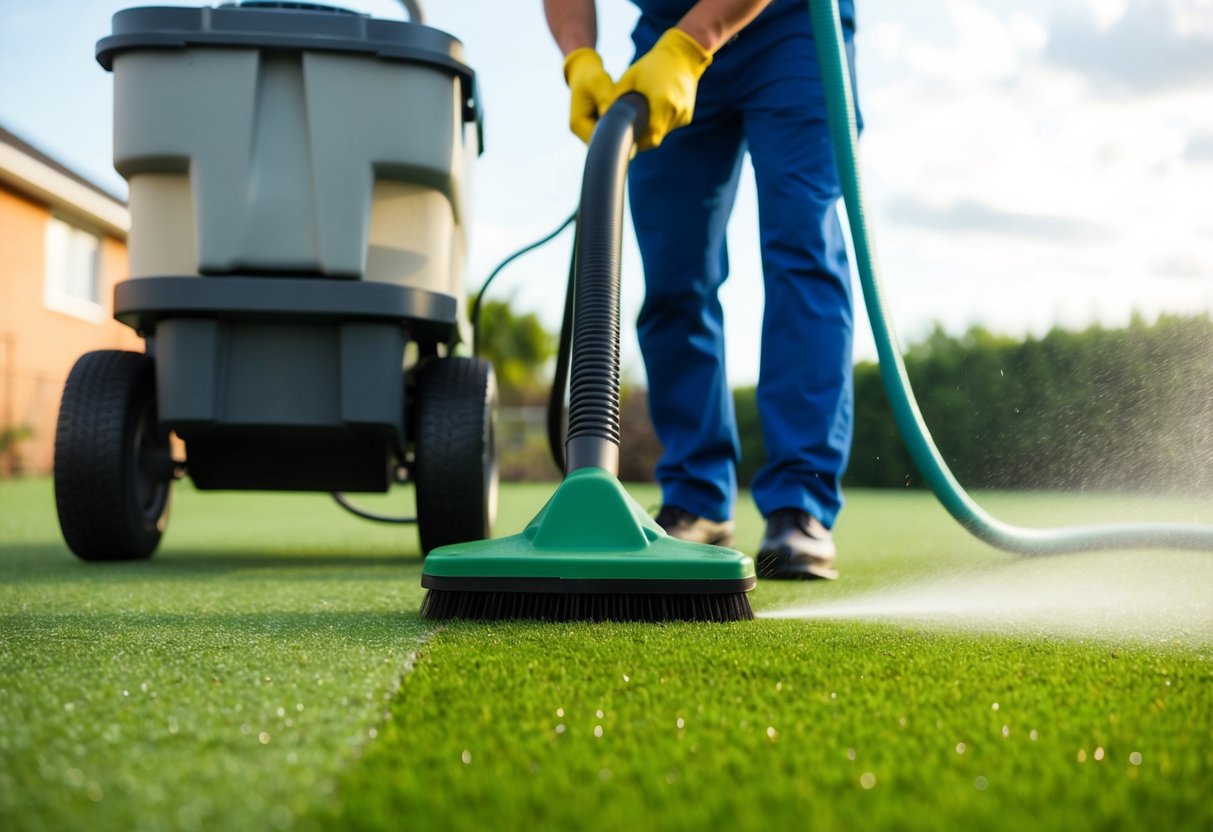
Professional care is key to making artificial grass last longer. Regular cleaning and maintenance can add years to your turf’s life.
We recommend scheduling professional cleanings at least once or twice a year. Experts have the right tools and know-how to deep clean without damaging the fibers.
Professional cleaners use special equipment like:
- Power brushes
- Industrial vacuums
- Sanitizing sprays
These tools remove dirt, dust, and bacteria that regular cleaning might miss.
Pros can also spot and fix small issues before they become big problems. This includes repairing seams, addressing drainage issues, and fixing areas with heavy wear.
Proper maintenance between professional cleanings is important too. We suggest:
- Rinsing the turf weekly
- Brushing high-traffic areas
- Removing debris promptly
By combining DIY care with expert service, your artificial grass can stay looking fresh for 15-20 years or more.
Remember, investing in professional care now can save money in the long run by extending your turf’s lifespan.
Scheduling Regular Cleaning Sessions
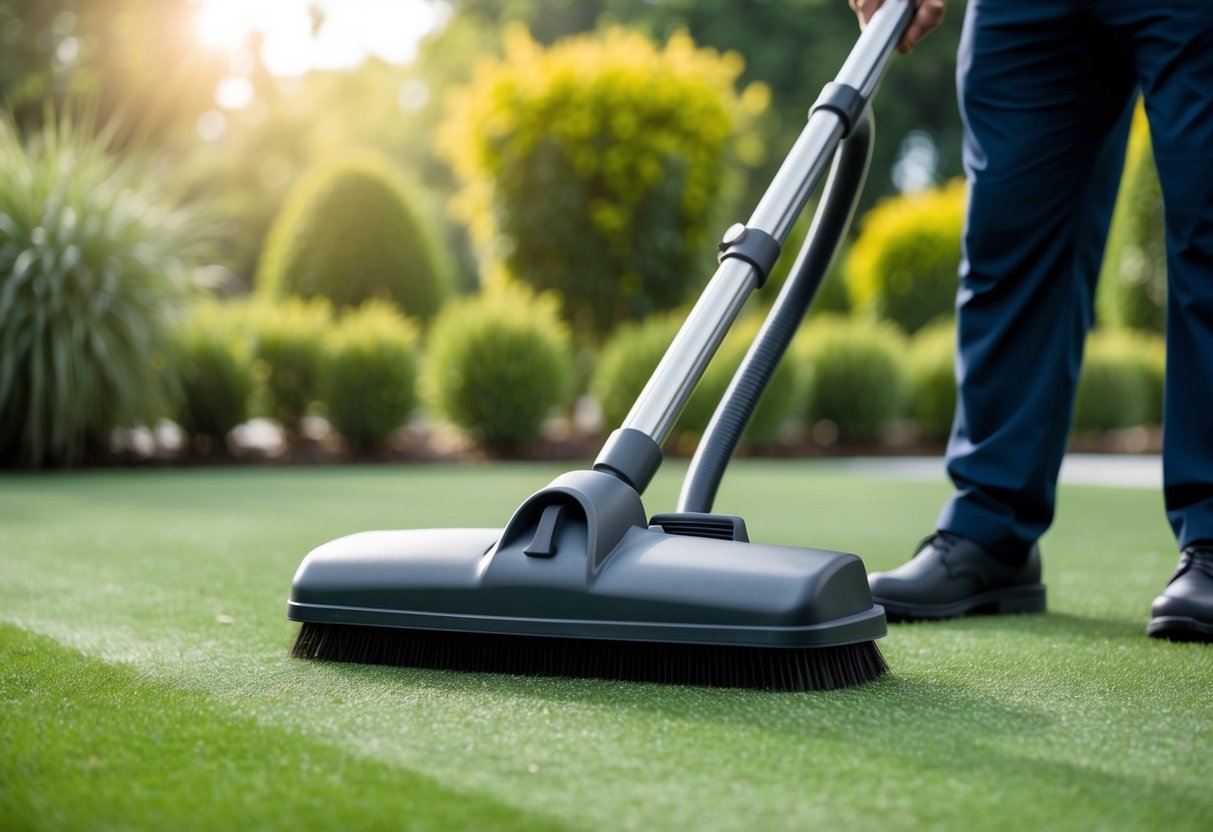
Regular cleaning is key to keeping artificial grass looking great. We recommend setting up a cleaning schedule to stay on top of maintenance.
For basic upkeep, a weekly cleaning routine works well. This involves removing debris and rinsing the turf.
Monthly deep cleans are important too. These more thorough cleanings help remove built-up dirt and grime.
Here’s a simple cleaning schedule to follow:
- Weekly: Remove debris, rinse turf
- Monthly: Deep clean, brush fibers
- Quarterly: Professional cleaning
Professional cleanings are vital for extending the turf’s life. We suggest booking these every 3-4 months.
Factors like foot traffic and weather can affect cleaning needs. High-use areas may need more frequent cleaning.
It’s smart to keep a log of cleaning sessions. This helps track maintenance and spot any developing issues.
Remember to adjust your schedule as needed. Seasonal changes might require more or less frequent cleaning.
By sticking to a regular cleaning plan, you’ll keep your artificial grass looking fresh and new for years to come.