


Pet-friendly turf cleaning in Las Vegas, the way it actually works: extract the urine deep in the fibers, kill the bacteria with pet-safe enzymes, neutralize the odor at the source, replenish the infill, and groom the lawn back upright. Same-week service. Kids and dogs back on the lawn the same hour. 100% satisfaction guarantee. Call us for a Get Free Quote, or keep reading for the full guide to pet turf maintenance, costs, and what to do between professional cleanings.
Las Vegas pet owners with artificial turf face a unique problem. The desert heat, low humidity, and frequent pet use can turn synthetic grass into a source of strong odors and bacteria buildup. Regular hosing doesn’t solve the issue because pet waste seeps into turf fibers and infill, creating smells that grow worse over time.
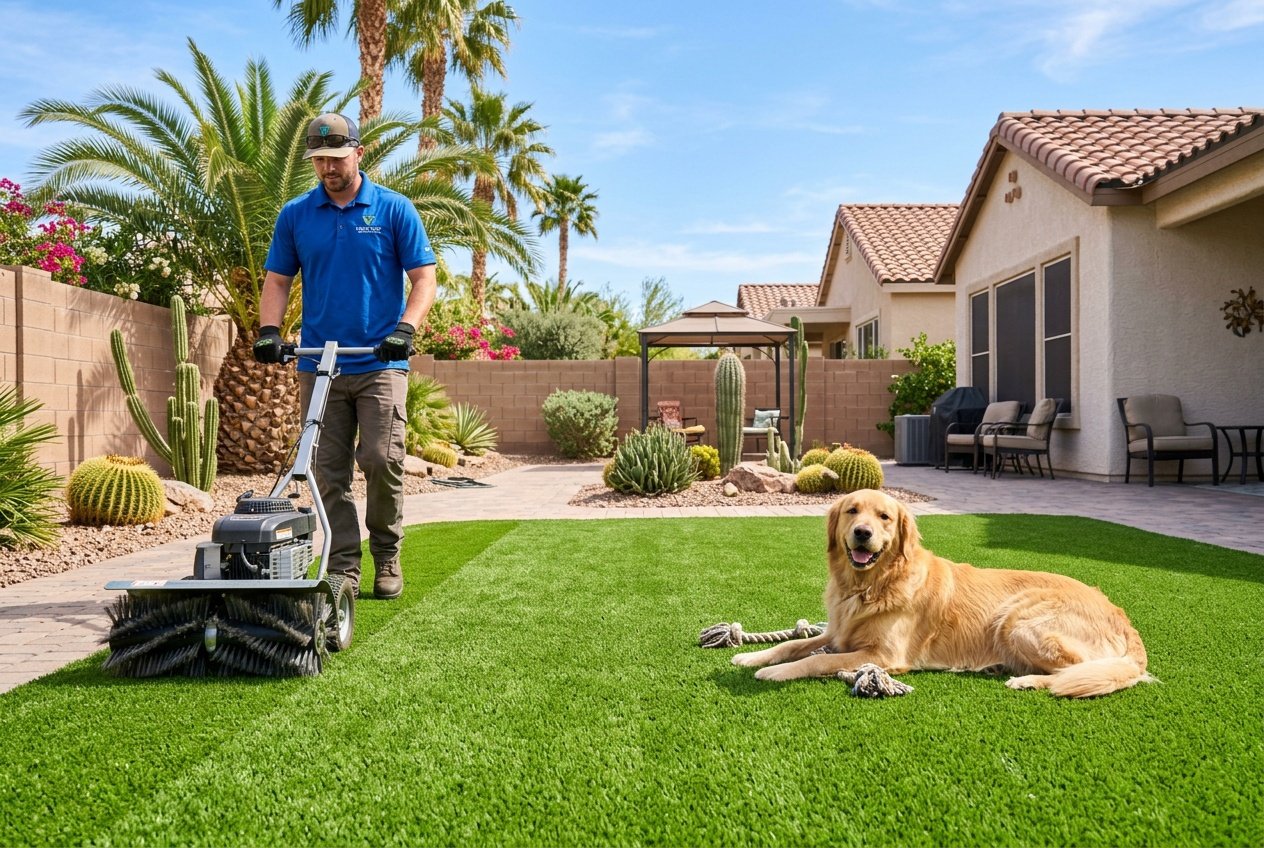
Professional pet-friendly turf cleaning in Las Vegas removes deep odors, bacteria, and debris that regular maintenance can’t reach, keeping your lawn fresh and safe for your pets. These specialized services use enzyme treatments and eco-friendly solutions designed to break down waste at the source. They also restore flattened turf blades and improve drainage, which matters more in Las Vegas because intense sun and dust wear down synthetic grass faster than in other climates.
Understanding how to maintain your pet-friendly turf and when to call professionals will help you protect your investment. Las Vegas turf cleaning services address the specific challenges desert conditions create, from stubborn odors to heat damage. With the right approach, your artificial lawn can stay clean, comfortable, and odor-free year-round.
Unique Challenges of Pet-Friendly Turf in Las Vegas
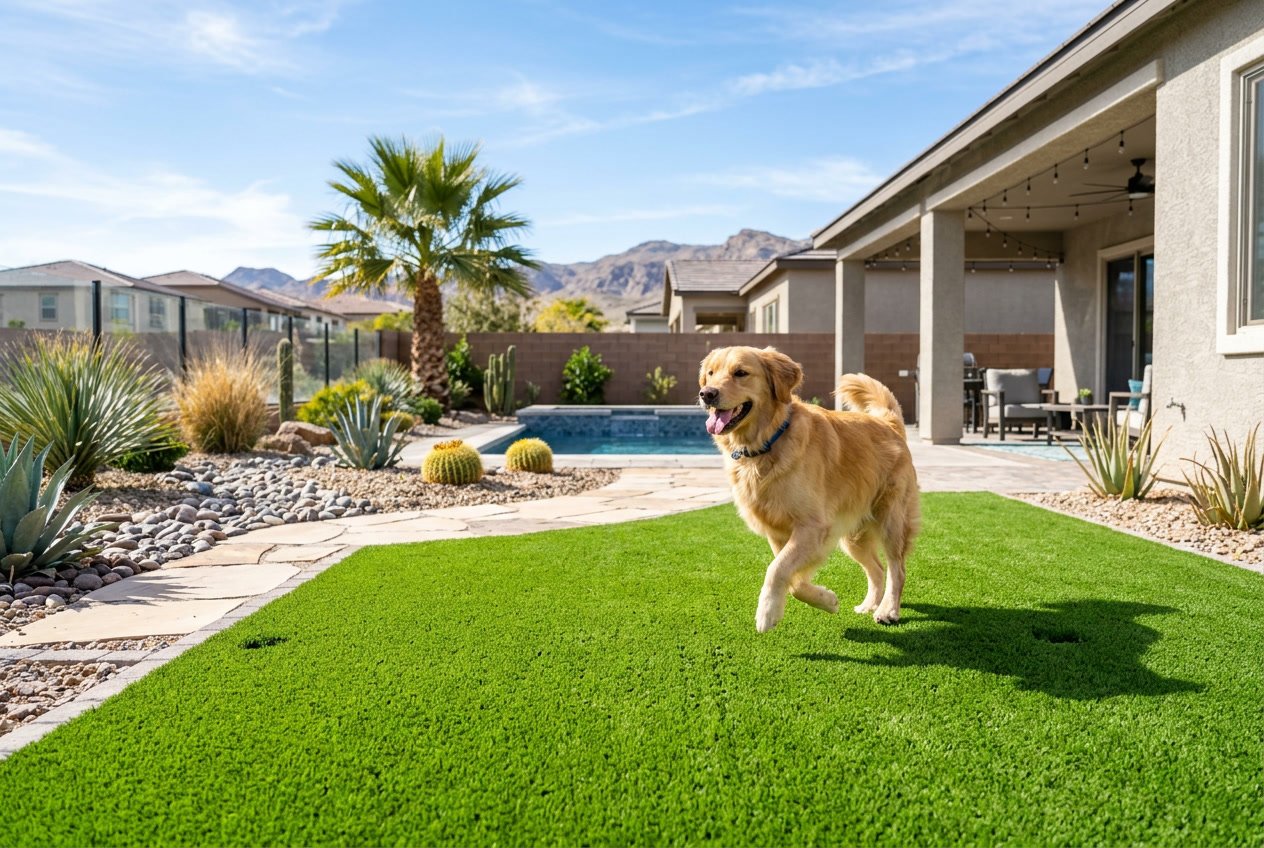
Las Vegas pet owners face specific turf problems that stem from extreme desert heat, intense UV exposure, and frequent pet use. These conditions create odor issues, bacteria growth, and turf wear that require regular attention to keep your lawn safe and functional.
How the Las Vegas Climate Impacts Turf
The desert climate in Las Vegas puts stress on artificial turf that pet owners need to understand. Summer temperatures regularly exceed 100 degrees, which heats turf surfaces and can intensify pet odors trapped in the fibers and infill.
Intense sun exposure breaks down turf fibers over time and flattens the grass blades. This makes your lawn look worn and reduces its ability to drain properly. Dust storms and dry winds deposit sand and debris into the turf, clogging drainage systems that are needed to remove pet waste liquids.
Limited rainfall means your turf doesn’t get natural rinsing that happens in other climates. Pet waste and bacteria stay on the surface longer without rain to wash them away. You need to clean and rinse your pet-friendly turf more often to prevent buildup that leads to odors and sanitation problems.
Common Pet Turf Problems and Odors
Pet urine creates the most persistent odor issue in Las Vegas turf because heat speeds up bacterial growth. When urine soaks into infill material, bacteria break it down and release ammonia smells that get worse in hot weather.
Solid waste removal seems simple, but small particles often remain in turf fibers. These particles combine with dust and pet hair to create layers of organic material that trap moisture and smells. Poor drainage from debris buildup makes the problem worse by preventing liquids from flowing through the turf backing.
Common issues you might notice:
- Strong ammonia smells that increase during hot days
- Discolored spots where pets urinate frequently
- Flattened areas from pets lying in the same spots
- Visible dust and hair caught in turf fibers
Health and Safety Considerations for Pets
Bacteria growth in dirty turf creates health risks for your pets and family. Harmful bacteria like E. coli and salmonella can develop in pet waste that isn’t properly cleaned from turf surfaces and infill layers.
Hot turf surfaces in Las Vegas can burn your pet’s paws during summer months. Dirty turf with matted fibers retains more heat than clean, properly maintained grass. Regular pet odor removal and cleaning helps turf stay cooler by improving airflow through the fibers.
Parasites and insects are attracted to organic waste trapped in turf. Fleas and other pests find breeding grounds in poorly maintained artificial grass. Professional cleaning removes waste particles and applies treatments that eliminate bacteria while staying safe for pets to walk on immediately after service.
Professional Turf Cleaning and Why It Matters
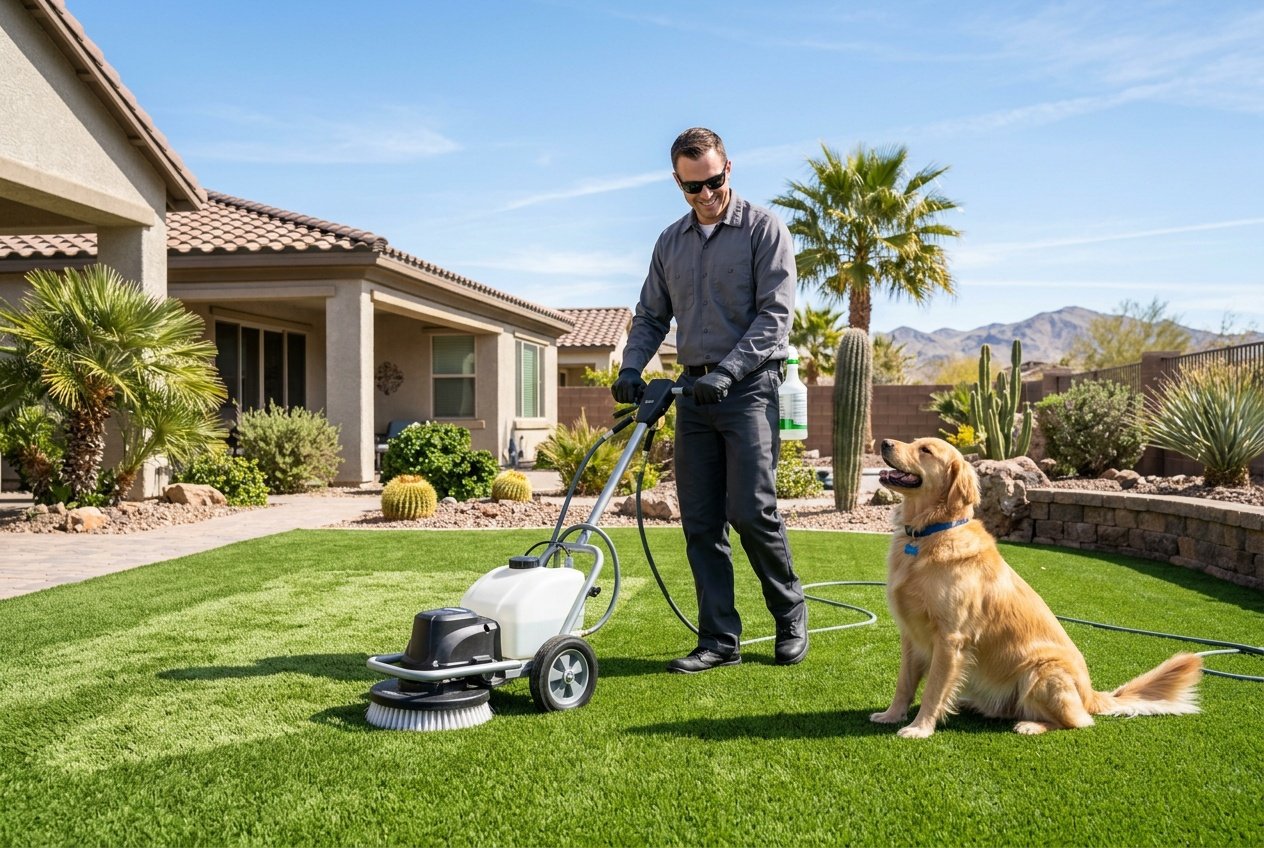
Professional turf cleaning services go beyond basic hosing and surface-level maintenance to address deep-seated problems in artificial grass. Trained experts use specialized methods to eliminate bacteria, restore turf structure, and extend the life of your investment.
Comprehensive Deep Cleaning for Artificial Grass
Professional turf cleaning tackles problems that regular maintenance cannot reach. The process starts with debris removal, pulling out pet hair, dust, and organic matter trapped deep in the fibers and infill layer.
Cleaning teams then address the backing and base layers where urine and bacteria accumulate. This deep treatment targets odor sources below the visible surface. The infill gets broken up and redistributed to improve drainage and prevent compaction.
Standard cleaning steps include:
- Debris extraction from turf fibers and infill
- Breaking up compacted infill materials
- Sanitizing the backing and base layers
- Treating odor-causing bacteria at the source
- Fiber restoration and repositioning
The entire turf system receives attention during professional cleaning, not just the top layer you can see.
Specialized Equipment and Techniques Used
Professional turf cleaning services use commercial-grade equipment designed specifically for artificial grass. Power brooms lift flattened fibers and loosen compacted infill without damaging the turf structure.
Industrial extraction systems remove embedded debris that household tools cannot reach. These machines work through multiple turf layers to pull out trapped materials. Hospital-grade sanitizers get applied with specialized sprayers that ensure even coverage and proper penetration.
The equipment allows technicians to clean faster and more thoroughly than manual methods. Professional tools also prevent the damage that can occur from using wrong cleaning products or techniques on artificial turf.
Benefits of Hiring Certified Experts
Certified turf cleaning experts know how to identify structural issues before they cause major problems. They spot loose seams, inadequate infill levels, and drainage concerns during their initial assessment.
Your turf receives customized treatment based on its specific condition and problem areas. Pet zones get extra attention for odor removal, while high-traffic areas receive fiber restoration work.
Professional services protect your investment by using pet-safe and turf-safe products. Experts understand which chemicals work without breaking down turf fibers or harming the backing material. They also complete the work efficiently, returning your outdoor space to use within hours rather than days.
Essential Routine Maintenance for Lasting Results
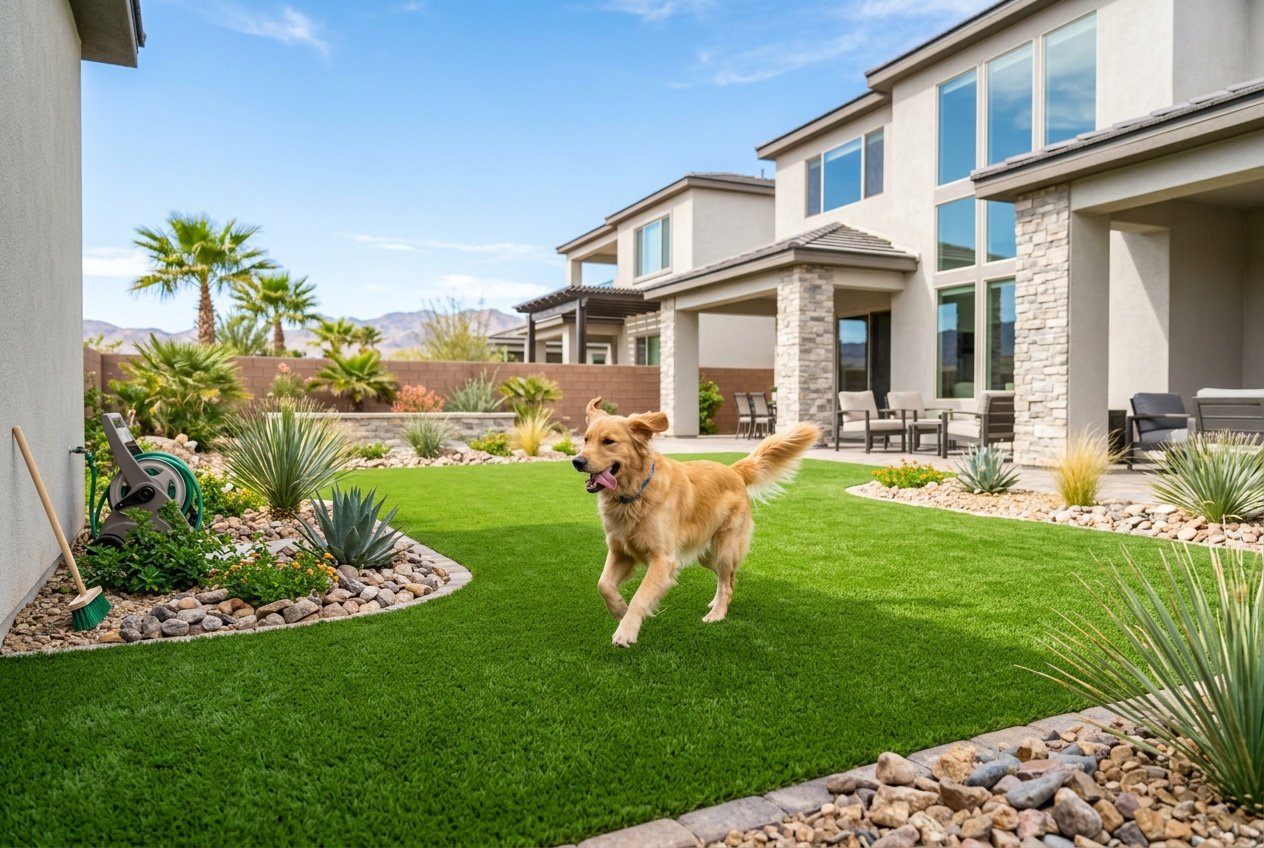
Proper artificial turf maintenance goes beyond basic cleaning to include regular infill checks, systematic inspections, and seasonal adjustments that keep your pet-friendly lawn in top condition year-round.
Infill Replenishment and Turf Grooming
Infill materials settle and compact over time, especially in areas where your pets play frequently. You need to check infill levels every few months and add more when the turf fibers start to lay flat.
Use a turf rake or power broom to distribute infill evenly across the surface. This process lifts the grass blades and restores the natural appearance of your lawn. Grooming also prevents matting in high-traffic zones where your pets run and play.
Recommended infill maintenance schedule:
- Light grooming: weekly
- Deep grooming: monthly
- Infill replenishment: every 3-6 months
Focus on areas near gates, water bowls, and favorite pet spots where infill displacement happens faster. Proper infill levels provide cushioning for your pets and help with drainage.
Regular Turf Inspection and Problem Prevention
Walk your turf weekly to spot issues before they become serious problems. Look for loose seams, exposed edges, or areas where the backing shows through the fibers.
Check drainage performance after watering or rain. Standing water indicates poor drainage that can lead to odors and bacteria growth. You should also inspect for weed growth along edges and seams.
Common issues to watch for:
- Seam separation – requires immediate repair
- Fiber damage – may need patching
- Drainage problems – often fixable with additional perforations
- Edge lifting – needs re-securing
Address small repairs quickly to prevent larger damage. Most minor issues take only a few minutes to fix but can cause major problems if ignored.
Seasonal Care and Adjustments
Las Vegas summers require more frequent rinsing to remove dust and cool the turf surface. Hose down your artificial grass 2-3 times per week during peak heat months.
Winter brings less maintenance but you still need to remove debris from trees and plants. Cooler temperatures mean less odor concerns, but you should maintain your regular cleaning routine.
Spring and fall are ideal times for deep cleaning and infill replenishment. These transitional seasons let you prepare your turf for temperature extremes ahead. Schedule professional maintenance during these periods for best results.
Tackling Pet Odors and Stains Effectively
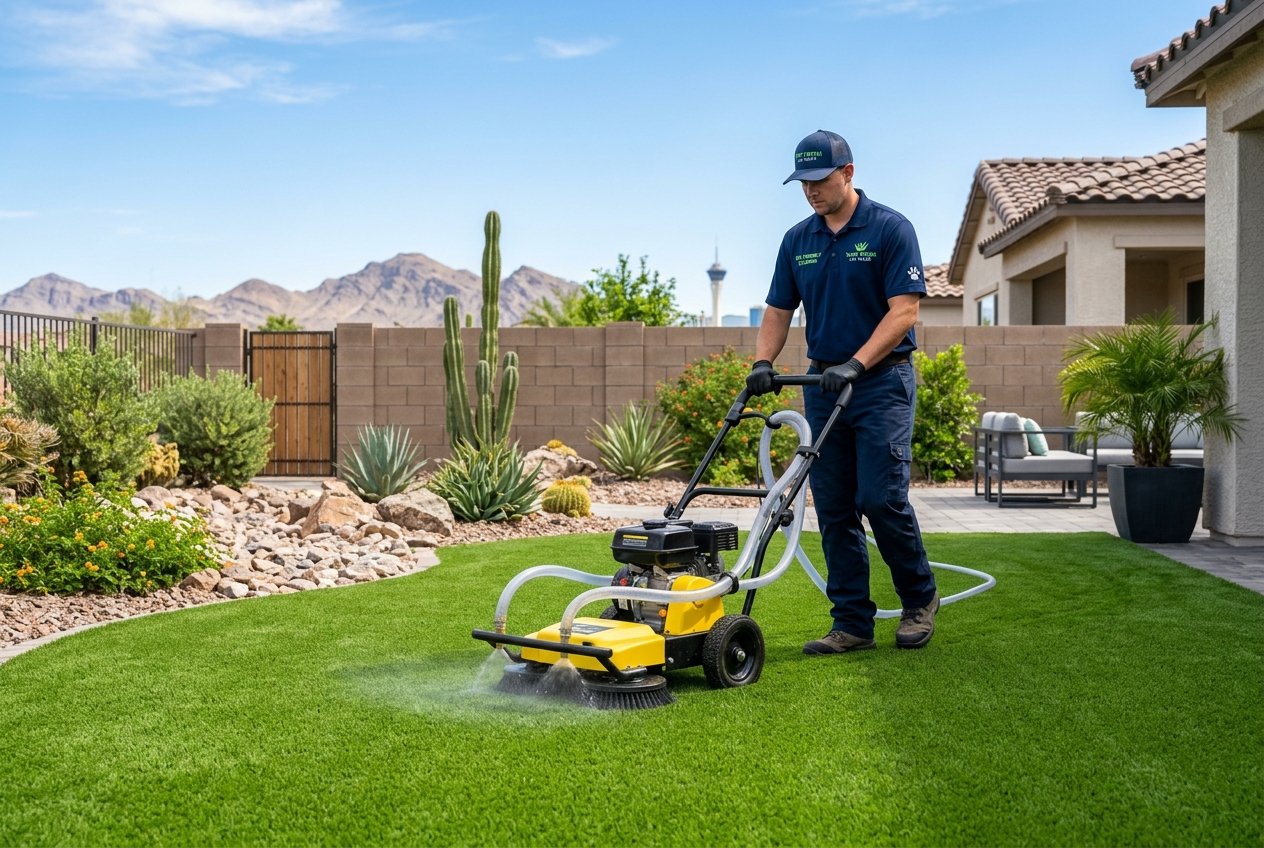
Pet waste creates stubborn odors and stains that sink deep into artificial grass fibers and infill material. Professional cleaning methods target both surface debris and the bacteria that cause lingering smells.
Pet Waste and Odor Removal Solutions
Your artificial grass needs regular cleaning to stay fresh when pets use it daily. Pet urine soaks through turf fibers and collects in the infill layer underneath. This creates a breeding ground for bacteria that produces strong ammonia smells.
Professional pet odor removal starts with thorough debris extraction. Cleaners remove solid waste and rinse away surface contamination. They then apply specialized deodorizing treatments that penetrate deep into the turf backing.
Power brooming helps lift matted fibers and redistributes infill material. This process improves drainage and prevents urine from pooling in problem areas. Some services also offer infill replacement for heavily soiled sections where odors have become permanent.
Regular maintenance keeps your pet-friendly turf fresh between deep cleanings. Hosing down high-traffic areas weekly helps dilute urine before it concentrates. Picking up solid waste daily prevents stains from setting into the fibers.
Enzyme-Based Cleaning and Sanitization
Enzyme cleaners break down the organic compounds in pet waste at a molecular level. These biological solutions target uric acid crystals that standard soaps can’t remove. The enzymes literally digest the waste particles that cause odors.
Professional artificial grass cleaning services use commercial-grade enzyme formulas designed for synthetic turf. These products are safe for pets and children while being strong enough to eliminate embedded odors. The enzymes continue working for hours after application to fully neutralize waste residue.
Sanitization follows enzyme treatment to kill remaining bacteria and germs. Pet-safe antimicrobial solutions prevent new odor-causing bacteria from growing back. This two-step process gives you longer-lasting freshness compared to surface rinsing alone.
Most enzyme-based treatments are eco-friendly and won’t harm your turf’s drainage system. They work without harsh chemicals that can damage artificial grass fibers or backing materials.
Choosing the Right Turf Cleaning Service in Las Vegas
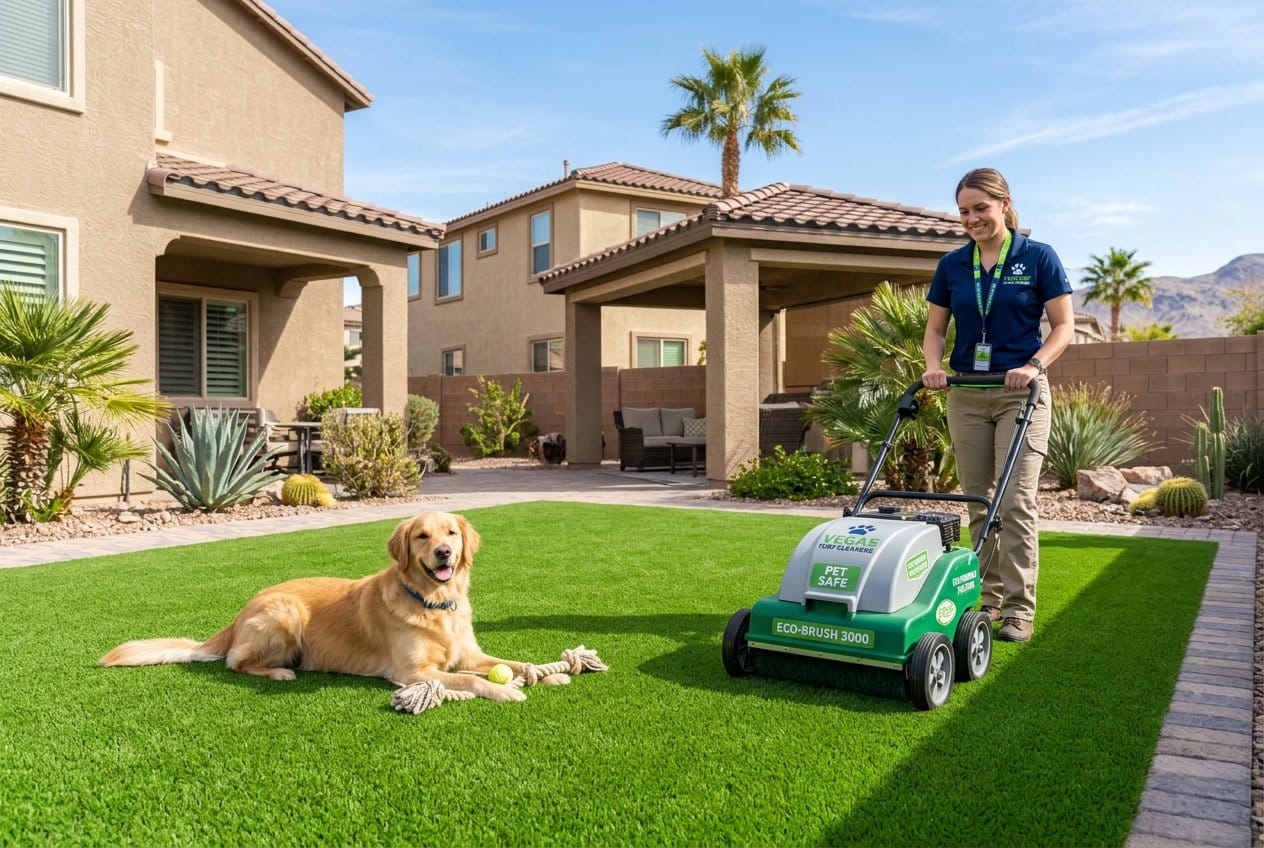
Finding a qualified turf cleaning service requires checking credentials, comparing costs, and reading what past customers say about their experience. These three factors help you pick a company that will properly maintain your artificial grass.
Evaluating Service Providers: What to Look For
A good turf cleaning company should use pet-safe and eco-friendly cleaning products. Ask if they follow proper cleaning methods that break down urine crystals instead of just covering up smells.
Check if the service provider offers different cleaning options. Most homes with pets need cleaning every 3 months. Some companies offer monthly plans while others only do one-time cleanings.
Make sure the company has experience with residential turf cleaning. Your provider should know how to handle pet waste, bacteria buildup, and debris removal. They should also understand how Las Vegas heat affects artificial grass maintenance needs.
Look for companies that provide a satisfaction guarantee. This shows they stand behind their work and will fix any problems.
Comparing Pricing and Service Packages
Turf cleaning costs vary based on your yard size and how often you need service. Most companies charge less per visit when you sign up for regular maintenance plans versus one-time cleanings.
Common service options include:
- One-time deep cleaning
- Monthly maintenance plans
- Quarterly cleaning (every 3 months)
- Bi-monthly service (every 2 months)
Get Free Quotes from at least three different companies. Make sure each quote lists exactly what services they include. Some companies bundle power brushing, deodorizing, and sanitizing together. Others charge extra for each service.
Ask about first-time customer discounts. Many Las Vegas turf cleaning services offer 20% off or $50 off your first appointment.
Importance of Customer Reviews and Experience
Read online reviews before hiring any turf cleaning service. Look for comments about how well the company removed odors and whether the cleaning lasted.
Pay attention to reviews that mention customer service. Did the company show up on time? Did they communicate clearly about what they would do?
Check how long the company has been in business. Companies with several years of experience in Las Vegas understand local conditions like dust, heat, and water restrictions. They know which cleaning methods work best for turf in the desert climate.
Look for reviews from customers who have similar needs as you. If you have multiple dogs, find reviews from other pet owners about odor removal results.
Ongoing Tips for Pet Owners to Maintain Fresh Turf
Regular care keeps your artificial turf clean and prevents odors from building up. A few simple habits and preventative measures will help your turf last longer and stay comfortable for your pets.
Simple At-Home Cleaning Practices
Rinse your turf with a garden hose 2-3 times per week to flush away pet urine before it soaks into the infill. Focus on areas where your pets urinate most often. This basic step prevents bacteria growth and stops odors before they start.
Remove solid waste immediately using a pooper scooper or bag. After picking it up, rinse the spot with water to keep the area clean.
Brush your turf weekly with a stiff-bristle broom or turf rake. Go against the grain to lift the grass blades and redistribute the infill underneath. This prevents matting in high-traffic areas and keeps the surface soft.
Use a pet-safe deodorizer after rinsing and brushing. Mix equal parts white vinegar and water, or choose an enzyme-based cleaner designed for artificial turf cleaning. These break down odor-causing bacteria without harsh chemicals that could harm your pets.
Preventative Steps for Pet Owners
Train your pets to use specific areas of your yard for bathroom breaks. This concentrates waste in one zone and makes turf cleaning easier.
Trim your pets’ nails regularly to reduce wear on the turf fibers. Long nails can catch and pull at the grass blades over time.
Keep your yard free of leaves, sticks, and debris. Use a leaf blower or soft broom to clear the surface weekly. Trapped debris can block drainage and create damp spots where bacteria thrive.
Check your turf’s drainage after heavy rain or rinsing. Water should flow through quickly without pooling. If you notice standing water, you may need professional artificial turf cleaning to clear blocked infill or address underlying drainage issues.