


Wondering whether you need a regular cleaning or a deep clean? Quick answer: Refresh (regular cleaning) is for routine maintenance every 3 to 6 months. Deep Clean is for stubborn pet odor and bacteria. Restore is for turf that has been let go for too long. Here is how to tell which one you need, and what each one costs. Call us if you would rather just have us look at it for free, or keep reading.
Artificial grass needs cleaning to stay fresh and look good. But choosing between regular cleaning and deep cleaning can be confusing. Many homeowners wonder which type of maintenance their turf really needs and when to do each one.
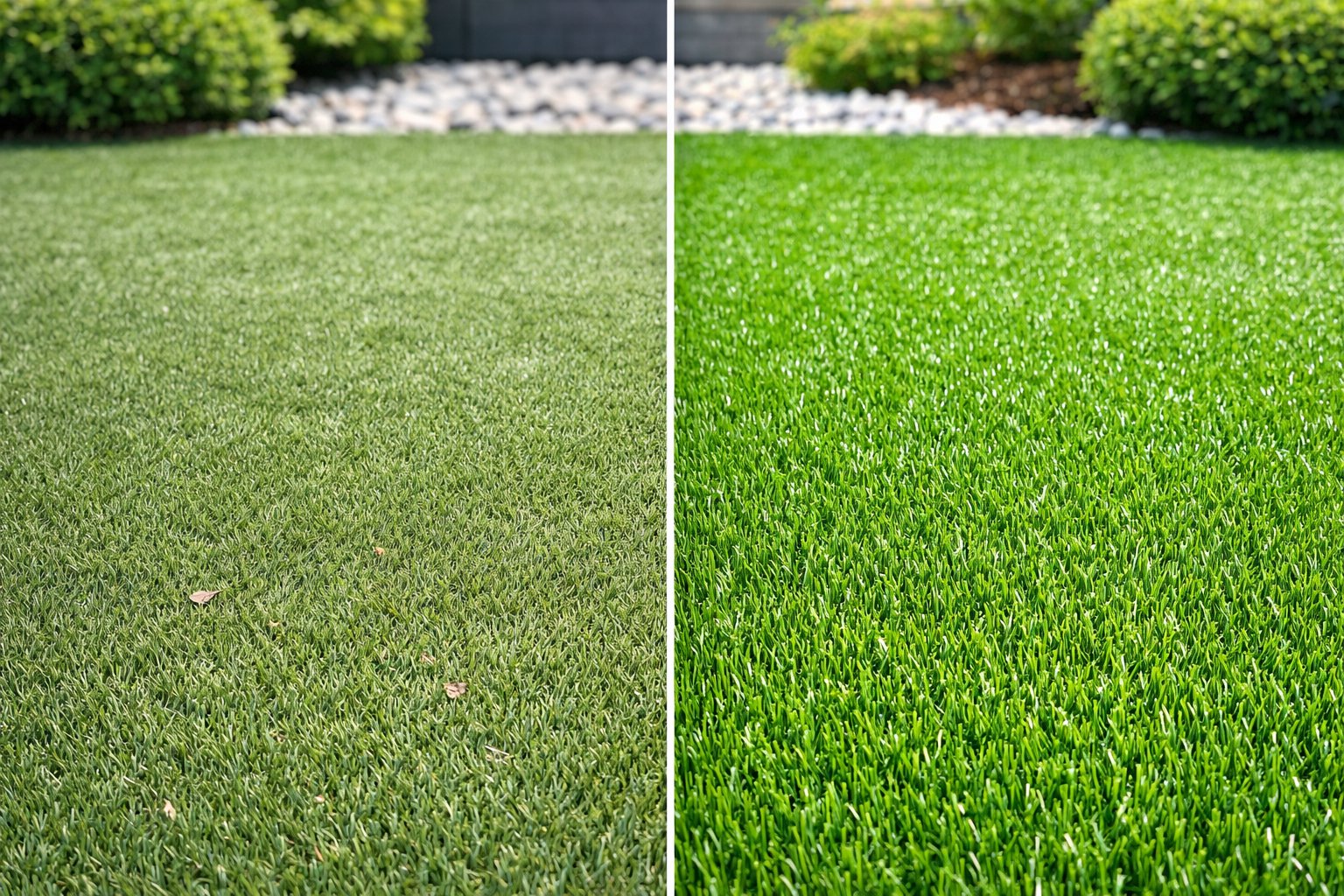
Regular cleaning handles routine tasks like removing debris and rinsing, while deep cleaning tackles embedded dirt, odors, and grime that builds up over time. Both types of cleaning play important roles in keeping your turf in great shape. The right choice depends on your turf’s condition, how much you use it, and how long it’s been since the last thorough clean.
This guide breaks down the differences between regular and deep cleaning for artificial grass. You’ll learn what each type involves, when to use them, and whether to handle the work yourself or hire professionals. We’ll cover practical methods and schedules that help you make smart decisions about your turf care.
Understanding Regular and Deep Cleaning for Artificial Turf
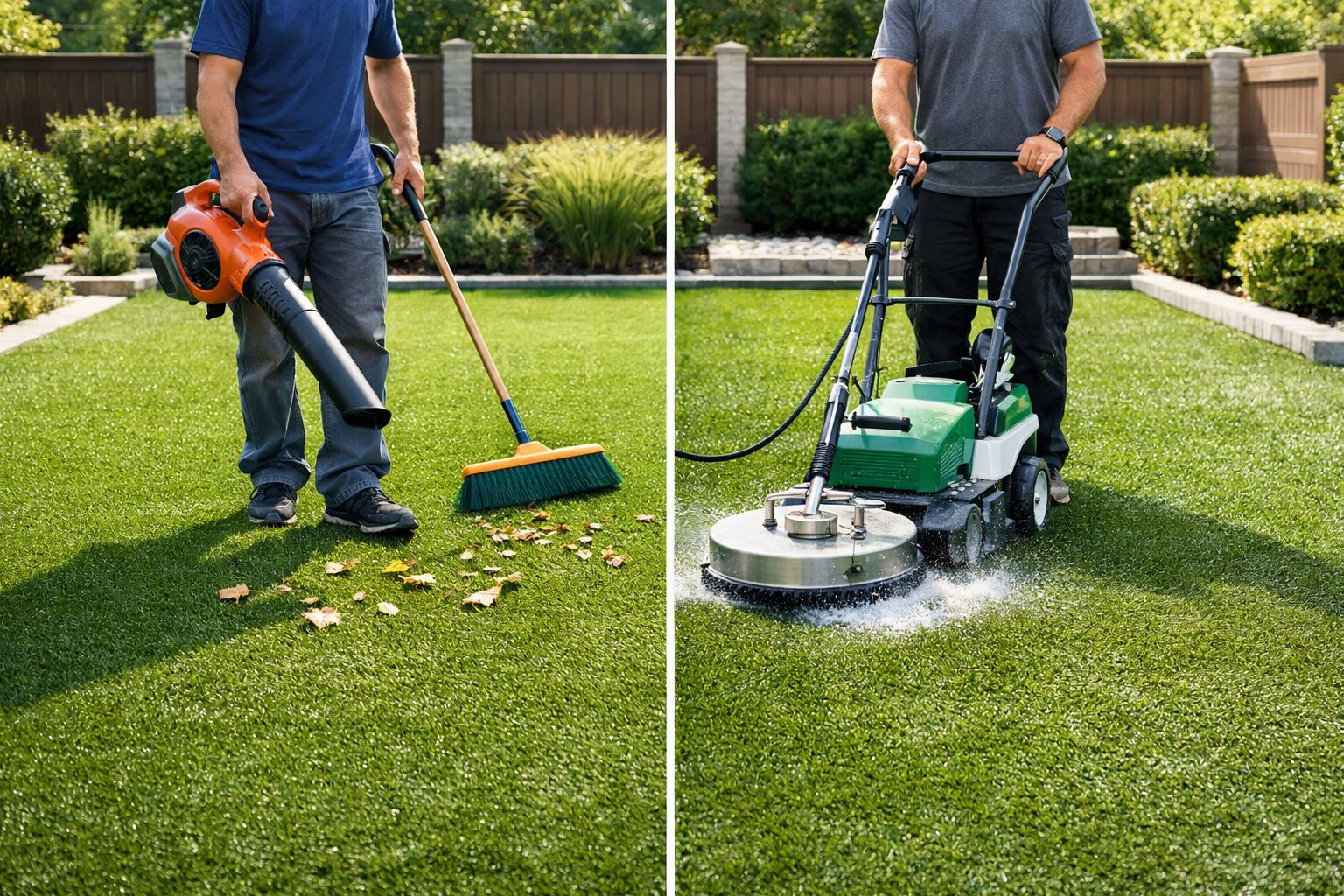
Artificial turf needs two types of cleaning to stay fresh and last longer. Regular cleaning handles day-to-day dirt and debris, while deep cleaning tackles buildup that happens over time.
What Is Regular Cleaning?
Regular cleaning is the basic maintenance you do weekly or monthly to keep your artificial grass looking good. This includes removing leaves, twigs, and other debris with a leaf blower or rake. You also rinse the turf with a garden hose to wash away dust and light dirt.
For high-traffic areas, you should brush the grass fibers to keep them standing upright. Pet owners need to pick up waste right away and rinse those spots to prevent odors.
Regular cleaning takes about 15-30 minutes depending on your lawn size. You can handle most of this maintenance yourself with simple tools like a plastic rake, garden hose, and leaf blower.
This type of cleaning prevents small problems from becoming bigger issues. It keeps your turf looking neat between more thorough cleaning sessions.
What Is Deep Cleaning?
Deep cleaning is a thorough process that removes dirt, bacteria, and buildup from deep within the artificial turf fibers. This cleaning goes beyond surface-level maintenance to sanitize and refresh your entire lawn.
Professional deep cleans use specialized equipment like power brushes and industrial vacuums. These tools reach embedded dirt that regular rinsing cannot remove. Cleaners apply eco-friendly sanitizing solutions to kill bacteria and eliminate stubborn odors.
The process includes treating the infill material between grass blades and checking for drainage problems. Deep cleaning also restores flattened fibers to make your turf look new again.
Most homeowners need deep cleaning twice a year. Areas with heavy use, pets, or lots of trees may need it more often. Deep cleaning typically requires professional equipment and expertise to avoid damaging the turf.
Key Differences Between Regular and Deep Cleaning
The main differences between these two cleaning types come down to frequency, tools, and results.
| Aspect | Regular Cleaning | Deep Cleaning |
|---|---|---|
| Frequency | Weekly to monthly | Every 6 months |
| Tools | Basic equipment (rake, hose) | Professional machinery |
| Cost | Minimal (DIY) | Higher (professional service) |
| Time Required | 15-30 minutes | 2-4 hours |
| Purpose | Surface maintenance | Deep sanitization |
Regular cleaning maintains appearance and removes visible debris. Deep cleaning addresses problems you cannot see, like bacteria growth and clogged drainage.
Your artificial turf needs both types of cleaning to stay in good condition. Regular maintenance prevents most issues, while deep cleans handle what builds up over months of use.
Why Proper Turf Maintenance Matters
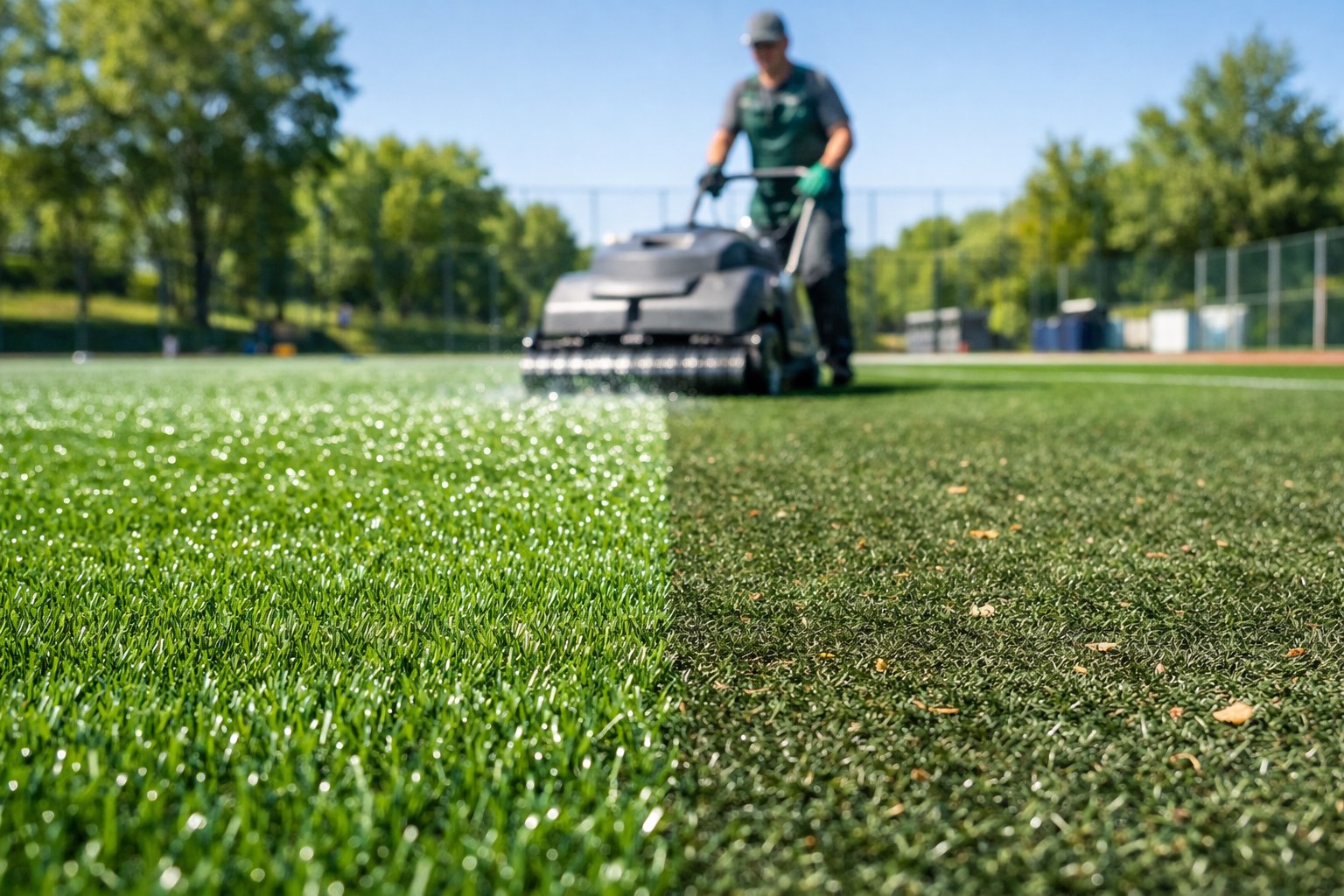
Artificial turf maintenance protects your investment and keeps your synthetic grass safe, functional, and looking its best. Regular care prevents costly damage and extends the life of your turf system.
Benefits of Consistent Cleaning
Consistent turf maintenance prevents problems before they start. When you clean your synthetic grass regularly, you stop debris, dirt, and organic matter from building up in the turf fibers and backing.
Regular cleaning provides these benefits:
- Prevents bacteria and mold growth that can create health risks
- Stops pet waste and organic debris from causing bad smells
- Keeps drainage holes clear so water flows through properly
- Maintains the upright position of turf fibers for a natural look
- Protects the UV protection coating your turf manufacturer applied
Clean turf is safer for kids and pets. Bacteria, mold, and harmful contaminants can grow in dirty artificial turf. When you stay on top of cleaning, you reduce these risks.
Your drainage system stays functional with regular care. Clogged turf backing leads to standing water, which damages the turf structure and creates breeding grounds for mosquitoes.
Impact on Turf Lifespan and Appearance
Proper artificial turf maintenance can add years to your turf’s lifespan. Most quality synthetic grass lasts 15-20 years with good care, but neglect can cut that time in half.
Dirt and debris act like sandpaper on turf fibers. When you walk on dirty turf, these particles grind against the fibers and cause them to break down faster. Regular cleaning removes these abrasive materials.
Maintenance protects your turf in these ways:
- Keeps fibers from matting down permanently
- Prevents infill from becoming compacted and hard
- Stops UV damage by maintaining protective coatings
- Reduces wear patterns in high-traffic areas
- Preserves the turf backing from moisture damage
Clean turf keeps its fresh appearance longer. Dirty, neglected synthetic grass looks dull and flat. Your turf loses its original color and texture when grime builds up on the surface.
Regular Cleaning: Methods, Frequency, and Best Practices
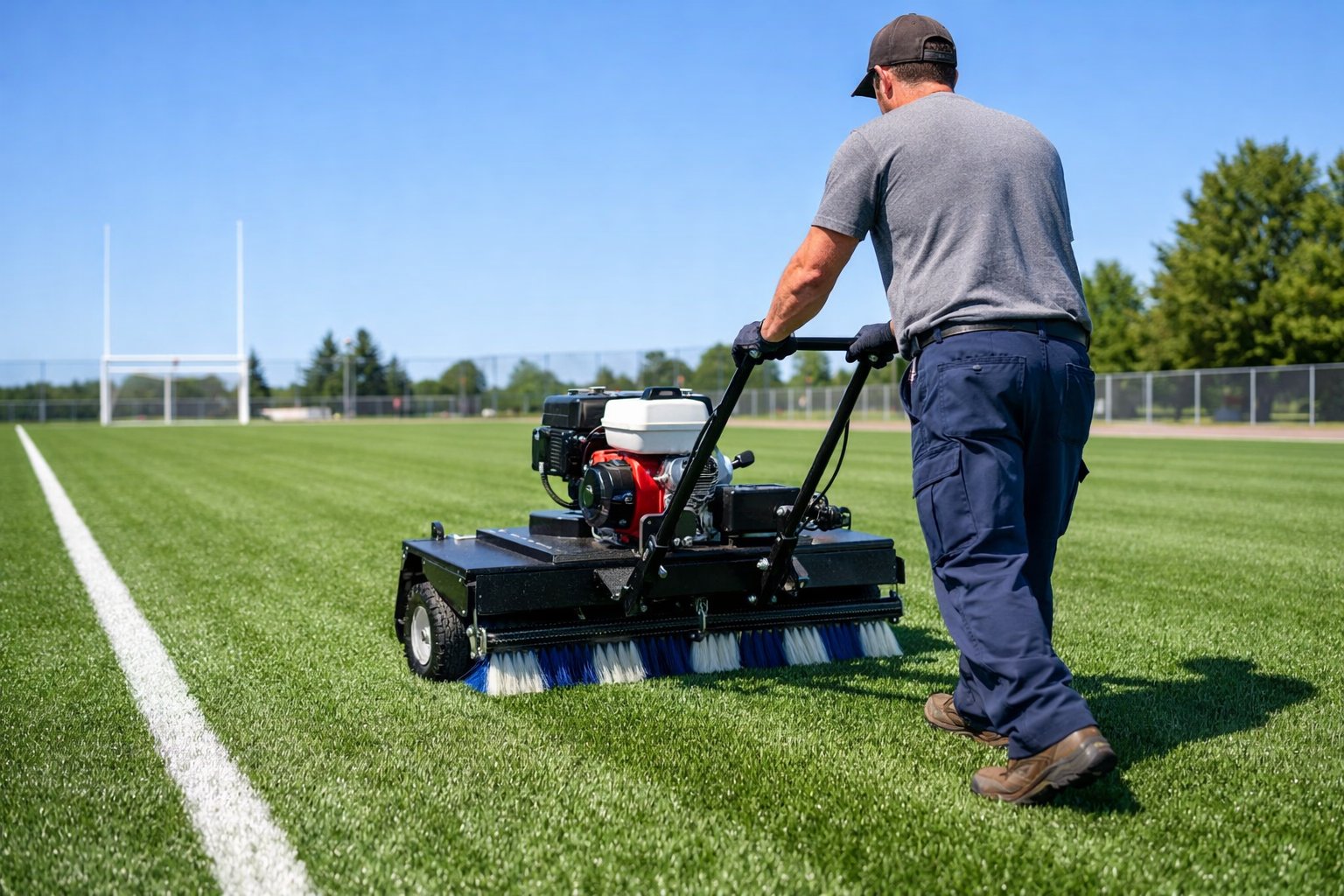
Regular cleaning keeps your artificial turf looking fresh and prevents buildup of debris, dust, and organic matter. A consistent routine with the right methods and products will maintain your turf’s appearance and extend its lifespan.
Effective Routine Cleaning Steps
Start by removing loose debris from your artificial turf using a leaf blower or stiff brush. This removes leaves, twigs, and larger particles that can mat down the fibers. Use a brush with synthetic bristles to gently lift the turf blades and restore their upright position.
Rinse the surface with a garden hose to wash away dust, pollen, and light dirt. Focus on high-traffic areas where debris tends to accumulate. For stuck-on dirt or stains, use a soft-bristle brush to scrub the affected areas before rinsing.
Check for and remove any pet waste immediately, as leaving it on the surface can cause odors and staining. After removing solid waste, rinse the area thoroughly with water to prevent residue buildup.
Setting a Regular Turf Cleaning Schedule
Your cleaning schedule depends on several factors including weather conditions, nearby trees, and how much you use the turf. Weekly cleaning works well for most residential installations with moderate use and limited tree coverage.
Plan for more frequent cleaning during fall when leaves drop or after storms that bring debris. High-traffic areas may need attention twice per week to prevent matting and maintain blade resilience.
Create a simple schedule that includes:
- Weekly: Remove debris and rinse surface
- Bi-weekly: Brush fibers and spot clean stains
- Monthly: Inspect drainage and check for wear patterns
Choosing Safe Cleaning Agents
Use mild dish soap mixed with water for most cleaning needs on your clean artificial turf. Mix one tablespoon of soap per gallon of water for an effective yet gentle solution. This mixture removes most stains without damaging the turf fibers or infill material.
Avoid harsh chemicals like bleach, strong acids, or petroleum-based products that can break down synthetic fibers or fade colors. Never use cleaning agents with oils or solvents, as these leave residues that attract dirt.
For pet odors, choose enzyme-based cleaners designed specifically for artificial grass cleaning. These products break down organic matter without harming the turf backing or infill. Always test any new cleaning agent on a small hidden area before applying it to the entire surface.
Deep Cleaning: When, Why, and How to Perform It
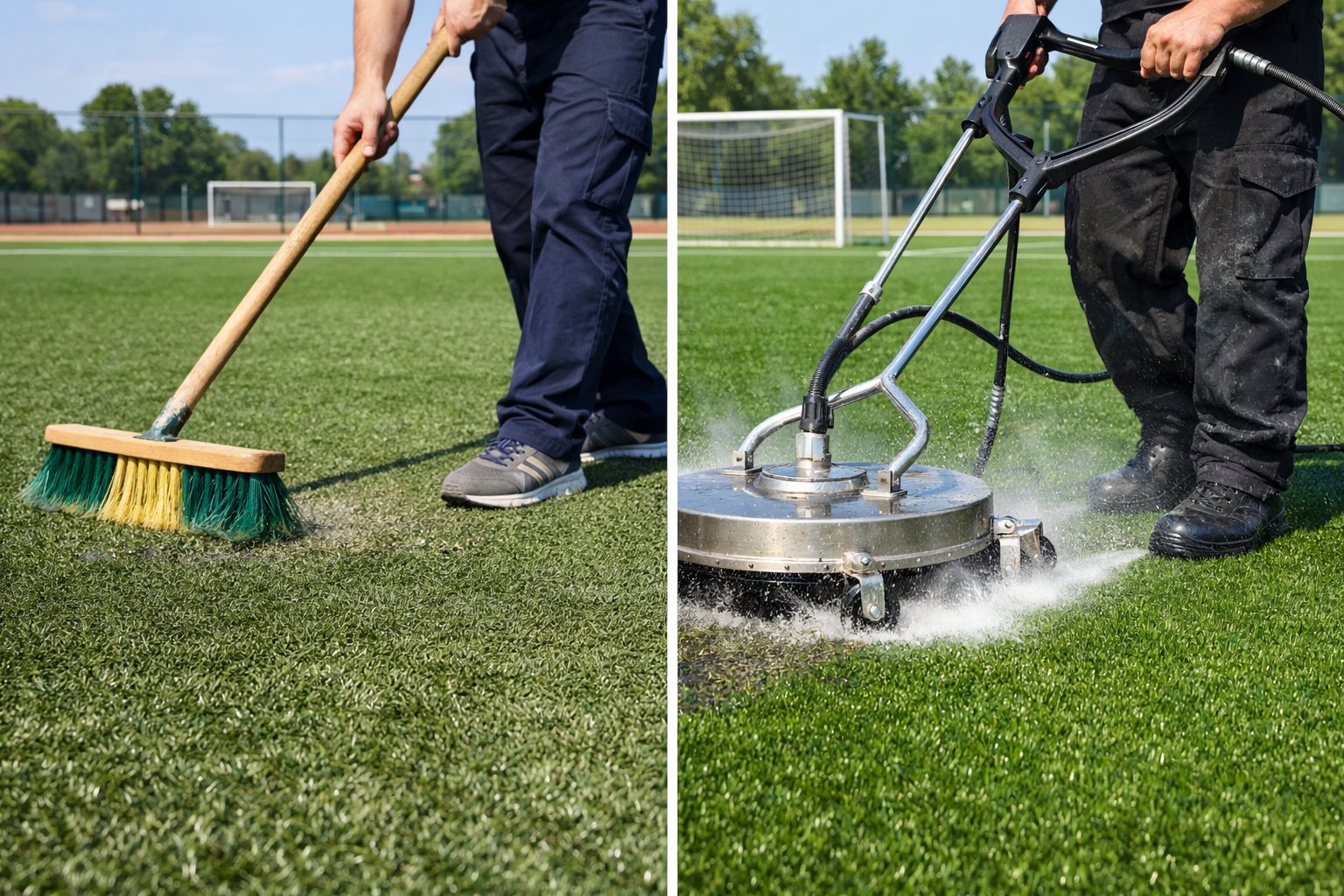
Deep cleaning your artificial turf removes embedded debris, bacteria, and odors that regular maintenance can’t address. This intensive process restores your turf’s appearance and extends its lifespan through targeted cleaning methods.
Deep Cleaning Checklist and Process
A proper deep cleaning checklist starts with clearing all furniture and objects from your turf surface. Remove loose debris with a leaf blower or stiff brush before applying any cleaning solutions.
Mix a specialized turf cleaner or enzyme-based solution according to manufacturer instructions. Apply the solution evenly across the entire surface, paying extra attention to high-traffic areas and pet zones. Let it sit for 10-15 minutes to break down organic matter and bacteria.
Use a power broom or stiff-bristled brush to work the solution into the turf fibers. This agitation lifts embedded dirt and restores the blade orientation. Rinse thoroughly with a garden hose or pressure washer set to a low setting (below 2000 PSI). Make multiple passes to ensure all cleaning solution is removed.
For stubborn stains or odors, apply a second treatment to problem areas. Professional deep cleaning services use commercial-grade equipment like truck-mounted extractors that provide more thorough results than DIY methods.
Indicators Your Turf Needs a Deep Clean
Persistent odors are the clearest sign your artificial turf requires deep cleaning. If you notice smells even after regular rinsing, bacteria and organic matter have penetrated below the surface.
Visible matting or flattening of turf fibers indicates dirt buildup weighing down the blades. Your turf should spring back when walked on. Discoloration or dark patches suggest mold, mildew, or debris accumulation that regular cleaning hasn’t removed.
Increased drainage time after rain means infill channels are clogged. Standing water or slow absorption requires immediate attention to prevent damage. Pet owners should watch for these signs more closely, as urine and waste accelerate contamination.
Frequency Recommendations for Deep Cleans
Most residential artificial turf needs a one-time deep clean once or twice per year. Schedule deep cleaning in spring and fall to address seasonal debris accumulation and prepare for weather changes.
High-traffic areas or homes with multiple pets require more frequent deep cleaning, typically every 3-4 months. Commercial installations with heavy use may need professional deep cleaning quarterly or even monthly.
| Usage Level | Recommended Frequency |
|---|---|
| Light residential use | Once yearly |
| Moderate residential use | Twice yearly |
| Heavy use or multiple pets | Every 3-4 months |
| Commercial/high traffic | Monthly to quarterly |
Schedule your deep clean during warm, dry weather to ensure proper drying time. Plan for at least 24 hours of non-use after deep cleaning artificial turf to allow complete drying and settling of infill materials.
DIY Turf Cleaning vs. Professional Turf Cleaning Services
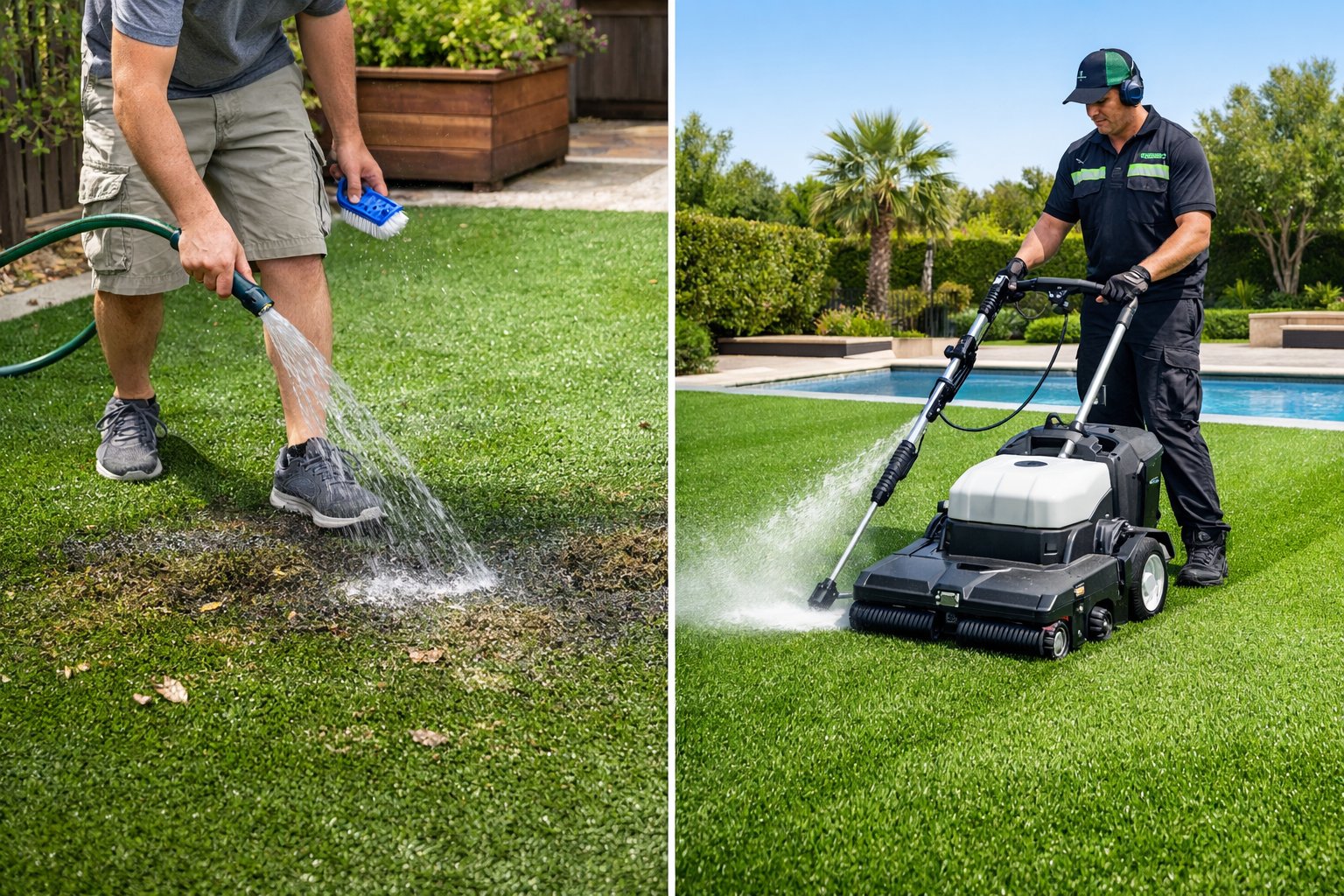
DIY turf cleaning works well for routine upkeep like sweeping debris and rinsing dust, while professional turf cleaning services tackle deeper issues such as compacted infill, embedded odors, and fiber restoration. Your choice depends on how heavily your turf is used, what problems you’re facing, and whether you need specialized equipment or treatments.
DIY Turf Cleaning: Tools and Techniques
DIY turf cleaning requires basic tools you likely already own: a stiff broom or soft-bristle brush, a garden hose with spray nozzle, and enzyme-based pet cleaners. Start by removing leaves and loose debris with the broom, then rinse the surface with your hose to wash away dust and light soiling. For pet stains, spray enzyme cleaner directly on the spot and let it sit before rinsing.
Your workflow should follow this pattern: clear debris, rinse thoroughly, treat problem areas, then brush fibers upright to restore appearance. This approach handles weekly maintenance and minor incidents effectively.
Avoid using high-pressure washers at close range because they can damage backing or wash out infill. Skip harsh chemicals like bleach or strong detergents that leave residues and attract more dirt. Keep DIY cleaning focused on surface-level tasks rather than deep remediation.
Most homeowners spend 30 to 60 minutes per session on small yards, while larger areas take several hours. You’ll need to clean more often in dusty conditions or homes with pets.
When to Call a Professional Turf Cleaning Service
Call a professional turf cleaning service when odors persist after multiple DIY attempts, when you notice matted or compacted areas, or when your turf is heavily used by pets or foot traffic. Professional deep clean services use power brooms, high-capacity extractors, and sanitizing equipment that reach infill layers and backing:areas DIY tools cannot access.
Professional turf cleaning services follow a structured process: inspect the turf for problem zones, power-brush fibers to lift them, extract embedded contaminants from backing and drainage layers, apply targeted sanitizers, and redistribute infill. This sequence addresses the full turf system rather than just the visible surface.
You should schedule professional turf cleaning if your warranty requires it, if you manage commercial or athletic turf, or if drainage problems appear. Older installations showing fiber wear or infill loss benefit most from professional attention.
Professional services prevent long-term damage that DIY methods might miss, such as backing delamination or chemical residue buildup. They also offer protective treatments that reduce UV fading and lower surface temperatures in hot climates.
Comparing Cleaning Cost and Results
DIY turf cleaning costs less upfront:you’ll spend money on brushes, enzyme cleaners, and occasional refills:but requires ongoing time investment. Professional turf cleaning services charge based on square footage, soil level, and added treatments, with larger or heavily soiled areas costing more.
| Method | Upfront Cost | Time Per Session | Depth of Clean | Longevity Impact |
|---|---|---|---|---|
| DIY | Low | 30:120 minutes | Surface only | Maintains appearance |
| Professional | Higher | Scheduled appointment | Deep extraction | Extends turf lifespan |
DIY cleaning keeps your turf looking tidy between deeper services but doesn’t restore compacted infill or neutralize deep-set odors. A professional deep clean removes contaminants from backing and drainage layers that cause long-term performance issues.
You’ll see better results from professional turf cleaning when dealing with persistent pet odors, heavy use, or visible fiber matting. DIY works well for light maintenance and immediate spot fixes but may require repeated sessions to address stubborn problems. Professional services deliver consistent, thorough results in a single visit and often include grooming and optional protective coatings that DIY cannot replicate.
Advanced Turf Care Considerations
Proper turf care goes beyond surface cleaning to include managing the materials beneath your grass and protecting the environment. These factors affect how long your turf lasts and how well it performs over time.
Managing Infill Levels and Turf Backing
Infill is the material between grass blades that keeps them standing upright and provides cushioning. Over time, this material settles or washes away through normal use and cleaning.
You should check infill levels every few months. Low infill causes your grass to look flat and feel hard underfoot. Most turf needs 1 to 3 pounds of infill per square foot to work properly.
Signs your infill needs attention include visible backing between blades, decreased bounce, and matted grass that won’t stand up after brushing. You can add more infill yourself or hire a professional for even distribution.
The turf backing needs care too. This layer allows water to drain through your lawn. Dirt and debris can clog the backing over time, creating puddles and drainage problems. Deep cleaning removes this buildup and keeps water flowing correctly.
Check drainage by pouring water on your turf. It should soak through in seconds. Slow drainage means you need professional cleaning to clear the backing.
Environmental Impact of Turf Cleaning
The products and methods you use to clean turf affect local water sources and soil. Many standard cleaners contain harsh chemicals that run off into storm drains and natural waterways.
Choose eco-friendly cleaning solutions that break down naturally. Enzyme cleaners work well for pet waste and odors without harming the environment. Mix mild dish soap with water for most basic cleaning needs.
Avoid bleach and ammonia-based products. These chemicals damage grass fibers and harm plants around your turf. They also kill beneficial bacteria in soil.
Water usage matters during cleaning. Use a hose with an adjustable nozzle instead of running water continuously. This cuts water waste while still providing effective rinsing.
Professional cleaners who use eco-friendly products and water-saving equipment create less environmental impact than some DIY methods. Ask about their cleaning solutions before hiring them.
Turf Maintenance Tips for Lasting Results
Remove debris weekly using a leaf blower or plastic rake. This prevents buildup that leads to drainage issues and matting. Metal rakes damage grass fibers, so avoid them completely.
Rinse high-traffic areas once or twice per week. This removes dust, pollen, and light dirt before they work deep into the turf. Pet areas need more frequent rinsing to prevent odor buildup.
Brush your turf monthly with a stiff-bristled broom or specialized turf brush. Brush against the grain to lift flattened fibers and restore the natural look. This also redistributes infill evenly across your lawn.
Address stains and spills right away. Fresh stains come out easier than set-in marks. Blot liquids instead of rubbing them, which spreads the stain.
Schedule professional deep cleaning twice per year. Spring and fall cleanings handle seasonal buildup and prepare your turf for weather changes. More frequent professional service works better for homes with multiple pets or heavy use.
Keep pets groomed to reduce shedding on your turf. Trim nearby trees and bushes to minimize leaves and branches falling on your lawn.